
An ugly trend has taken hold in Florida. It’s rooted in the misguided conviction that politicians and bureaucrats have the right to conduct public business and spend public money in private.
Requests for public records that for decades were routine are now met with silence, demands for outrageous fees, or face months-long delays.
This may seem like an abrupt departure from Florida’s historic embrace of government in the sunshine. But in reality, the light has been slowly dimming for a long time, aided by one-party control of state government.
It has reached the point where requests may go unanswered, particularly when the documents sought would paint an unflattering picture or expose the sources of bad ideas. They take many forms: emails, text messages, internal memos and whistleblower reports.
A lawmaker steps forward
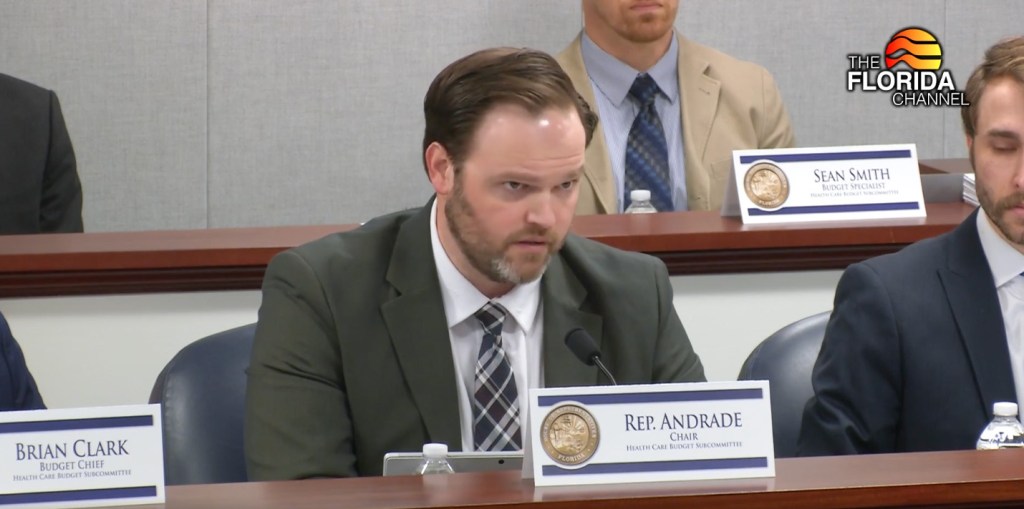
To his credit, a state legislator is determined to fix this festering problem.
Republican state Rep. Alex Andrade of Pensacola learned how hard it can be to unearth basic information about how the state spends your money. He sought documents surrounding $10 million diverted from a Medicaid settlement and then “donated” to a charity, Hope Florida — a nonprofit backed by Gov. Ron DeSantis’ wife, Casey. The money then went on to two political committees in need of money to defeat a constitutional amendment on recreational marijuana.
“It starts at the top,” Andrade said. “We see a governor act like the rules don’t matter and transparency is not something to be concerned about.”
Andrade realized that the secrecy around the Hope Florida mess was not an isolated incident. He sponsored legislation, HB 437, that for the first time in decades would strengthen Florida’s once-vaunted open-records law.
Empowering Florida citizens
It would impose time limits and penalties for government officials who thumb their noses at the law because they do not fear consequences. And while this law would surely assist the Sun Sentinel’s newsgathering, its biggest beneficiaries would be individual Floridians seeking the truth.
“That’s the beauty of it,” said Barbara Petersen of the Florida Center for Governmental Accountability, a watchdog group that has sued for access to records. “It will really help people who can’t afford to hire attorneys.”
Andrade’s bill would require governments to respond by three working days to a records request either by providing the records, denying them based on a lawful exemption or providing an estimate of the time and cost to produce them.
It would also limit how much governments can charge for gathering, reviewing and duplicating government records. Any request taking less than 30 minutes would be free. Electronic records that have already been paid for by one requester would be free to anyone else who wants them.
No more lame excuses
The bill also prevents an agency from citing a backlog of records requests to justify delays, and fees can be waived for defined public purposes, such as research and newsgathering.
Government agencies that don’t comply would face penalties, including a requirement to pay the legal fees for anyone forced to sue for access. And officials who don’t comply with public records laws could face criminal charges.
These provisions seem as if they should be law already. They certainly would have come in handy when any newspaper in the state is investigating waste, fraud, abuse or political corruption.
Passing this legislation won’t be easy. That’s why local officials should speak up and make it clear that they have no problem with a law meant to protect the Floridians that they should be serving.
On its own, this bill won’t banish secrecy. Andrade points to another problem: Across Florida, elected state attorneys have all but dropped criminal prosecutions of Sunshine law violations.
But it’s a start. It’s a broad beam of sunshine to help penetrate the increasingly murky atmosphere surrounding state government. We hope a lot more champions of public integrity will step forward to fight for and pass this long-overdue law.
The Sun Sentinel Editorial Board consists of Opinion Editor Steve Bousquet, Deputy Opinion Editor Dan Sweeney, editorial writers Pat Beall and Martin Dyckman, and Executive Editor Gretchen Day-Bryant. To contact us, email at letters@sun-sentinel.com.