
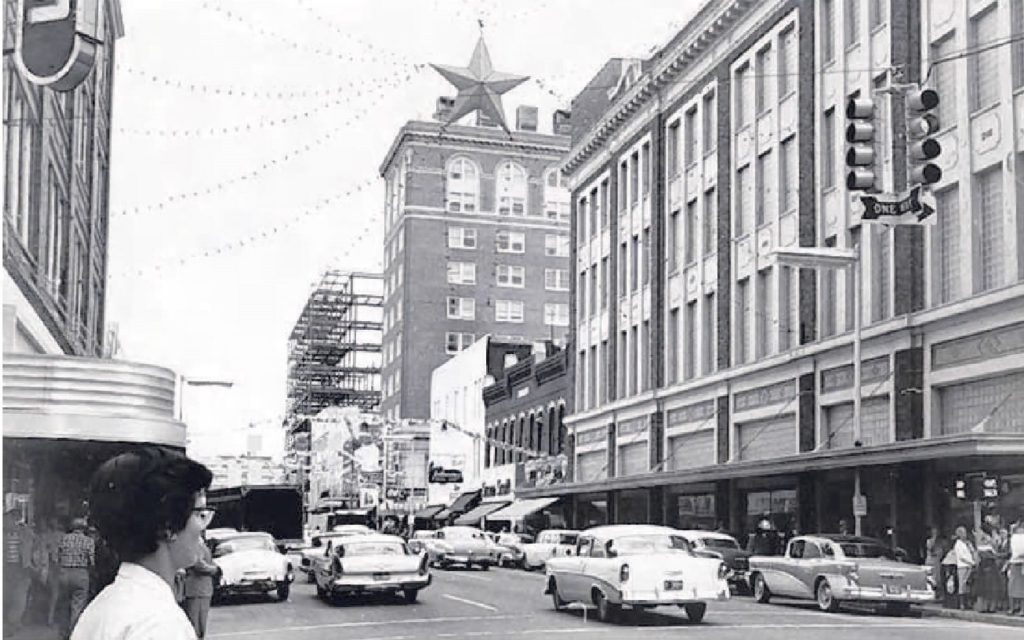
Every December, when the afternoon light warms the bricks on Orange Avenue and the first cool breeze brushes the palms, Orlando begins to glow. Shop windows fill with color, holiday music drifts through the streets, and the city settles into a rhythm that feels familiar and comforting.
In a place that changes constantly, the holiday season has become one of the most reliable markers of who Orlando is and who it has been.
One of the clearest signs appears high above downtown. Our golden Christmas star has become an Orlando landmark, and its story reaches back to the mid-20th century. The first star went up in 1955 through a collaboration between the rival department stores Ivey’s and Dickson Ives.
Welded from steel and lit by incandescent bulbs, it shone over Orange Avenue when the street was still the heart of holiday shopping. For many families the star signaled the beginning of the season. The tradition was threatened as downtown shifted, but residents rallied to keep the star shining. Their efforts led to the redesigned Jack Kazanzas Star that rises each year and remains a beloved symbol.
Lake Eola offers another chapter. Orlando’s earliest public tree lighting took place downtown in 1913 in front of the courthouse, but by 1922 the celebration had moved to Lake Eola Park. Newspapers described an evergreen glowing with tricolored bulbs as choirs and winter visitors gathered along the lake.
A decade later the park hosted a grander scene when a 30-foot tree burst into color at night and five light trimmed sailboats glided across the water.
Through the years, families kept returning, spreading blankets under the oaks while children played and carols floated across the lake. Today the Lake Eola tree rises more than 60 feet and sparkles with tens of thousands of computer-controlled lights that create animated shows to dazzle spectators. Each December the park becomes a stage for the city as music drifts across the lawn and the crowd lifts their gaze toward the first bright glow of the season.
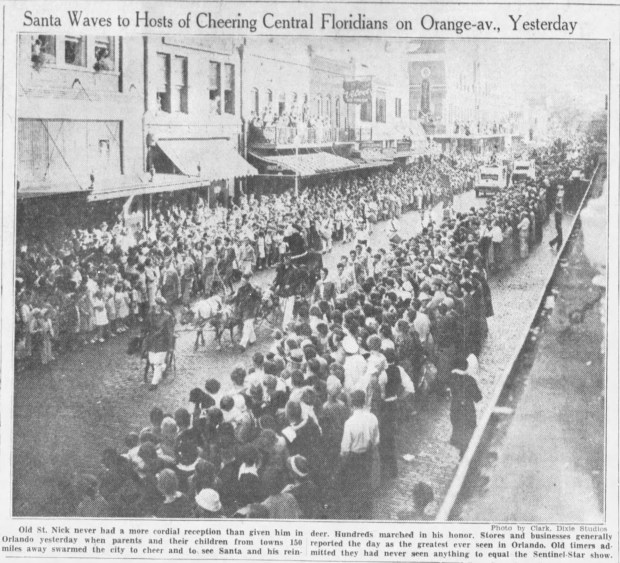 A 1933 Sentinel clipping shows Santa Claus parading down Orange Ave. in the town’s first Christmas parade. (Newspapers.com)
Parades have long carried the holiday spirit through Orlando. The city’s first large Christmas parade appeared in 1933 when the Orlando Sentinel-Star organized its Santa Claus Parade, complete with real reindeer and a promise of a magical afternoon. Schoolchildren were released early to reach Orange Avenue in time to see Santa arrive. Bands, floats and community groups filled the avenue, and thousands lined the sidewalks.
By the 1950s beauty queens, Scout troops, Shriners in tiny cars, and citrus-sponsored floats drew crowds that packed downtown. The route changed over the years and the event occasionally paused, but the festive spirit never disappeared. When families gather today for winter parades, they continue a tradition that has delighted Orlando for more than 90 years.
Some of the city’s most meaningful holiday history appears in its neighborhoods. A clipping from the Orlando Morning Sentinel dated Nov. 24, 1938, describes a citywide Christmas lighting contest divided into more than 20 sections, each with a woman responsible for encouraging participation and judging entries. The final neighborhood leader entry notes, “Colored section, Mrs. Clifford Wells, 407 West South Street.”
Clifford Irene Wells, the wife of Dr. William Monroe Wells, belonged to one of the most influential Black families in Orlando. Her appointment shows that Black residents were not merely observers of the celebration but contributors who shaped it. During segregation, Wells encouraged households in her community to decorate their homes and yards. Displays likely included paper lanterns, strings of colored bulbs, homemade wreaths, and crafted scenes made from materials at hand. Children assisted their parents as they arranged decorations, hoping their street would shine brightly when judges arrived.
The 1938 contest reveals how closely knit Orlando once was. Neighborhoods were small and familiar, connected by churches, clubs, and corner stores.
Today the city stretches far beyond those early boundaries, yet the instinct for festive competition survives. Residents still host decorating contests, still drive through glowing neighborhoods, and still carry forward a tradition of making their streets shine bright.
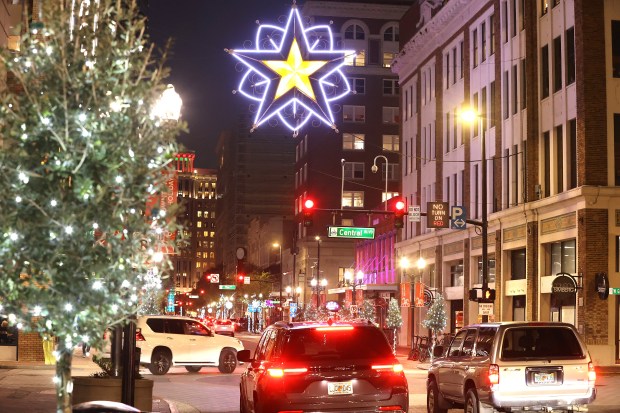 The Jack Kazanzas Star shines brightly as traffic drives by on Orange Avenue in downtown Orlando on Tuesday evening, December 12, 2023. The star is larger and brighter than those first displayed downtown in the 1950s. (Stephen M. Dowell/Orlando Sentinel)
These moments reveal something essential about Orlando. The holidays steady a place known for constant change. The star, the tree, the parades, and the decorated homes remind residents that they belong to a community with deep roots and shared memories. The lights that sparkle across Orlando each December link the present to the past and reflect the imagination of those who came before.
This year, as the bulbs glow once more and the star rises above the avenue, Orlando steps into a tradition over a century in the making. The season invites everyone to feel the continuity of a city that has always found comfort and connection in the simple act of lighting the night.
Sarah M. Boye is a graduate research assistant and teaching assistant in UCF’s history department.