
Overview:
At the Miami Book Fair, Haitian and Jamaican authors discussed their intertwined histories, new books, and the need for Caribbean solidarity amid environmental and political challenges.
By Béatrice Vallières
Downtown Miami turned into a stretch of colorful tents this weekend, drawing book lovers from across the city for the annual street fair that closes the Miami Book Fair, one of the largest literary gatherings in the country. The 42nd edition of the event, organized and hosted by Miami Dade College, wrapped up Sunday after a week of readings, panels, and performances.
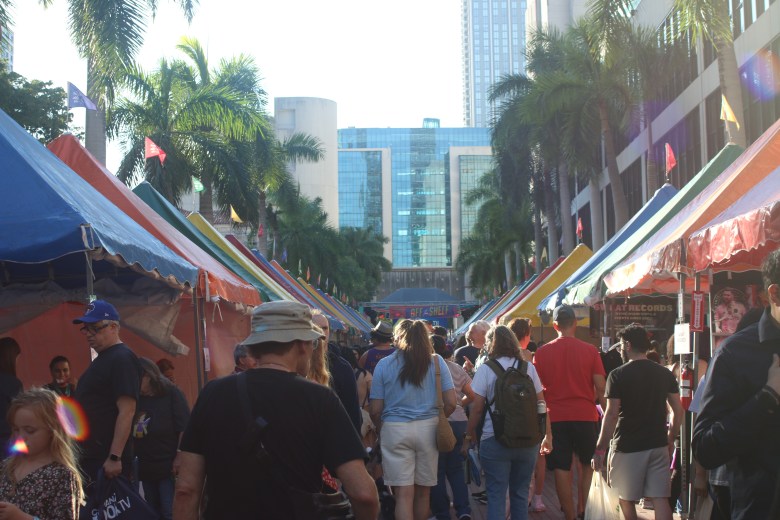 Visitors walk through vendor tents in Downtown Miami during the Street Fair at the Miami Book Fair on Sunday, Nov. 23, 2025. Photo by Béatrice Vallières for The Haitian Times.
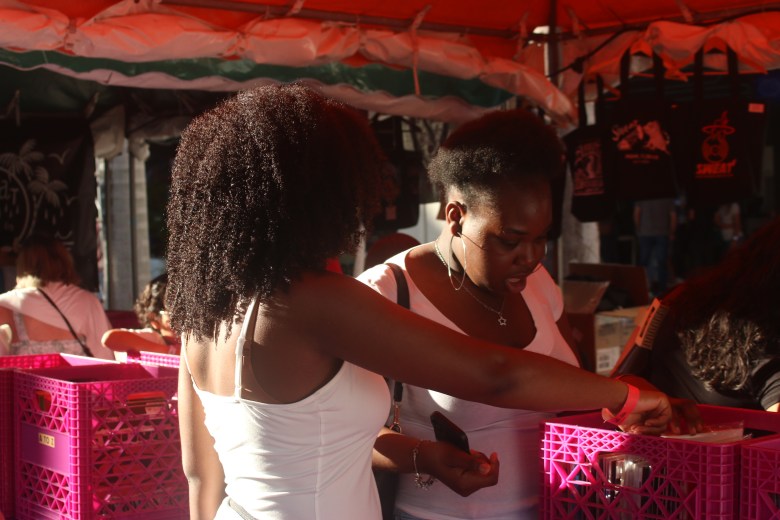 Young visitors look through vinyl records at a vendor tent during the Street Fair at the Miami Book Fair on Sunday, Nov. 23, 2025. Photo by Béatrice Vallières for The Haitian Times.
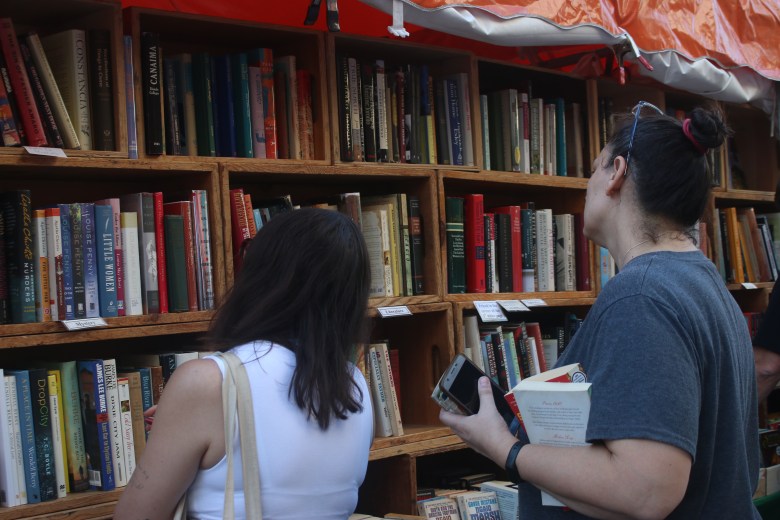 Visitors browse books at a vendor tent during the Street Fair at the Miami Book Fair on Sunday, Nov. 23, 2025. Photo by Béatrice Vallières for The Haitian Times.
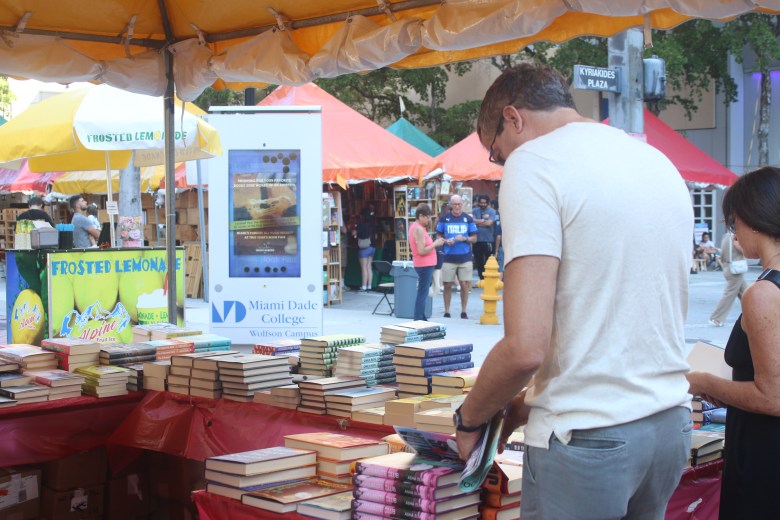 A visitor examines books on display at a vendor tent during the Street Fair at the Miami Book Fair on Sunday, Nov. 23, 2025. Photo by Béatrice Vallières for The Haitian Times.
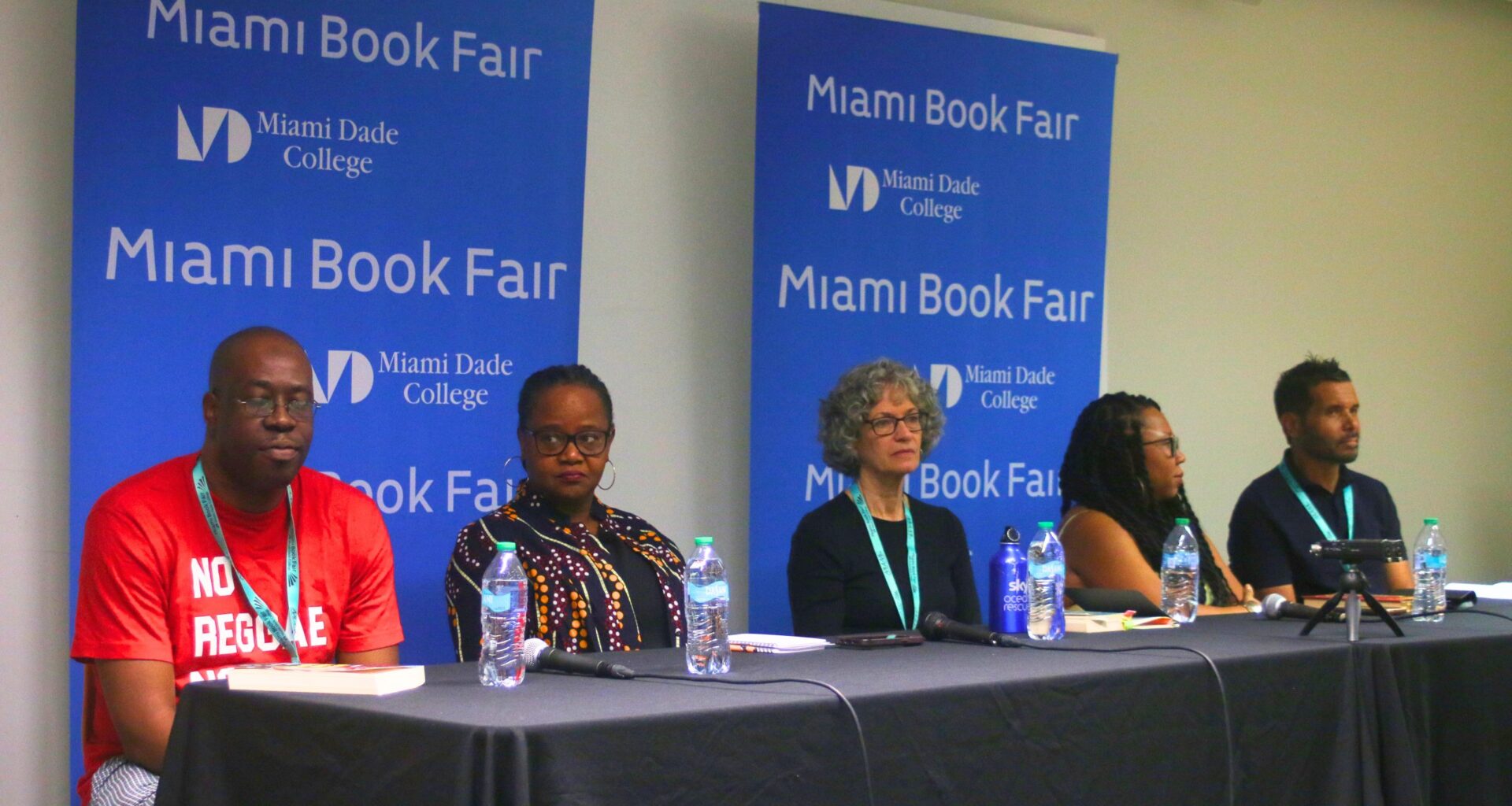
On the final day of the fair, Haitian and Jamaican literature took center stage as writers from both countries shared a platform to present their latest books and reflect on the dialogue between their literary traditions. The event, titled “Cross-Currents: Haiti, Jamaica, and the Caribbean Imagination – Fiction and Non-Fiction”, brought together Haitian-American authors Edwidge Danticat and Fabienne Josaphat, and Jamaican writers Dwight Thompson and Diana McCauley.
Moderated by journalist Fabian Lyon, the discussion was part of the fair’s ReadCaribbean programming, which throughout the week featured panels on Haitian health, Vodou, and revolutionary figures in literature, as well as live dance and music events.
M.J. Fièvre, coordinator of the ReadCarribean program, said Sunday’s panel grew out of a reflection on the deeper ties between Haiti and Jamaica. “There’s always been this sense of brotherhood between the two countries,” she said in an interview with The Haitian Times.
Fièvre pointed to the countries’ historical ties, beginning with the Taínos, the Indigenous people who inhabited the Caribbean before European colonization, and continuing through their histories of colonization, enslavement, and revolutionary movements.
“Just as we have a lot in common, there’s also a lot that is so different that sometimes the debates about culture and history are very, very vivid. So I always thought it would be interesting to have a conversation about what makes us the same and what makes us different,” she explained.
And, she added, “this year was particularly fruitful in terms of new books coming from both countries.”
Sunday’s panel gave each author the chance to introduce and read from their latest books, as well as answer audience questions.
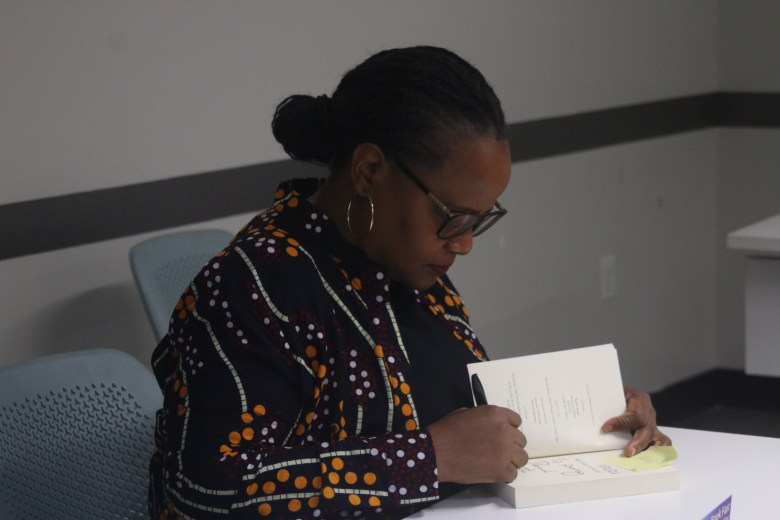 Haitian-American writer Edwidge Danticat signs a book after taking part in a panel discussion at Miami Dade College during the Miami Book Fair on Sunday, Nov. 23, 2025. Photo by Béatrice Vallières for The Haitian Times.
Danticat presented Watch Out for Falling Iguanas, her latest children’s picture book set in Miami and illustrated by Jamaican illustrator Rachel Moss. Josaphat discussed her historical fiction, Kingdom of No Tomorrow, which tells the story of a young Haitian-American woman who joins the Black Panther Party in the late 1960s.
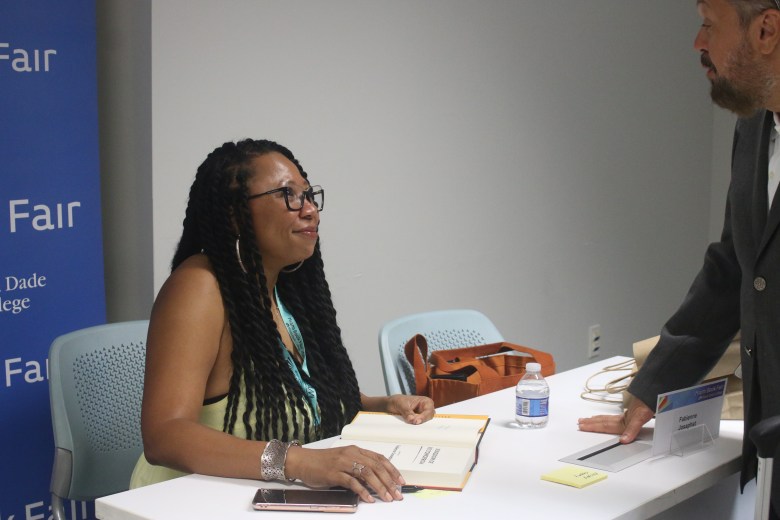 Haitian-American writer Fabienne Josaphat signs a copy of her second novel, Kingdom of No Tomorrow, after taking part in a panel discussion at Miami Dade College during the Miami Book Fair on Sunday, Nov. 23, 2025. Photo by Béatrice Vallières for The Haitian Times.
Dwight Thompson presented his second novel, My Own Dear People, which explores the theme of toxic masculinity in Jamaican society through the story of a teenager haunted by his silence after witnessing an assault. McCauley discussed A House for Miss Pauline, her novel set in rural Jamaica, featuring a 99-year-old protagonist reflecting upon her past and her secrets.
The recent passage of Hurricane Melissa, which caused catastrophic damage in Jamaica and led to several deaths in Haiti last month, hovered over the discussion as moderator Fabian Lyon began by acknowledging the storm’s toll in both countries. “Why not come here and really talk about our commonalities and how, going forward, maybe we can build a closer bond than what we have right now,” he said, opening the panel.
Speaking with The Haitian Times, authors emphasized the need for solidarity between countries in the wake of environmental disasters and tightening immigration policies that continue to affect Caribbean immigrants in the United States.
“There isn’t that solidarity that’s necessary for us as Caribbean people to really present ourselves or establish ourselves on the global stage as a united force,” said Thompson in an interview with the Haitian Times, pointing to efforts in the 1960s to build regional unity after Jamaica’s independence.
“The more we can have these conversations, the better it is. And literature is a great ambassador for that,” Edwidge Danticat told The Haitian Times.
Panelists also reflected on the cultural ties and distinctions that shape Caribbean identity.
“I think there is such a thing as Caribbean-ness, as well as we’re all very different,” McCauley told The Haitian Times.
“The people who live in the Caribbean have survived. They’ve survived crimes, crimes against humanity. They’ve survived governments that have let them down. They’ve survived hurricanes and earthquakes. Lots of tragedy and trauma,” she said. “And at the end of it, they still laugh. And that’s Caribbean-ness.”
Haiti’s position within the mostly English and Spanish-speaking Caribbean can feel more complicated, Josaphat told The Haitian Times. “And I love that we are now coming together and really having a discussion around what our authors are producing and how our narratives come together, where we converge, where our similarities are.”
Like this:
Like Loading…
Related