
Since taking office, President Donald Trump has been forcing higher education to reform, going after institutions like Harvard University and cutting deals with other selective colleges.
The Trump administration’s attacks on higher education didn’t come out of nowhere.
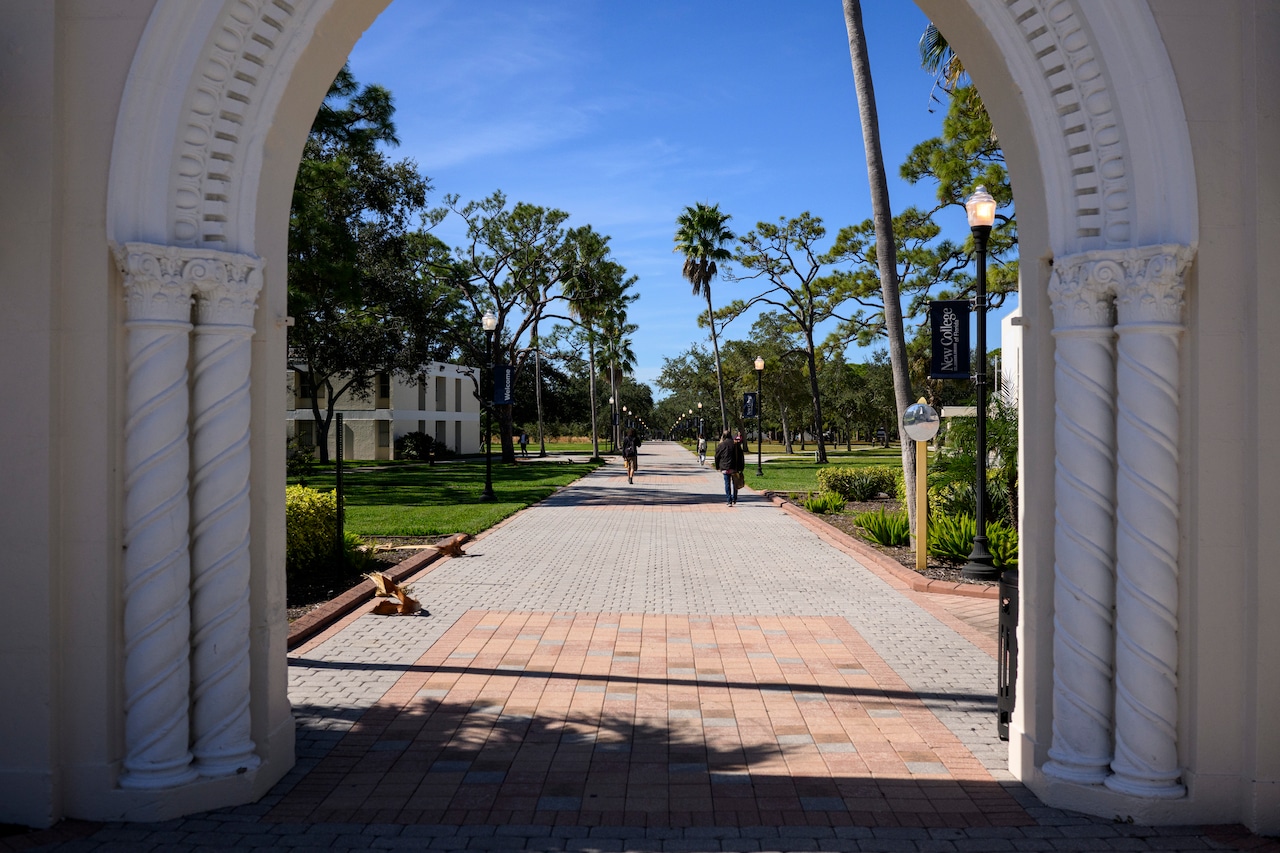
MassLive recently published an article examining how, in 2023, an overhaul of New College of Florida, the state’s only public liberal arts college, has been a blueprint used by the Trump administration to inform attempts at overhauling higher education.
Since 2023, the majority of board-of-trustees positions at New College are now in conservative hands, gender studies and diversity, equity and inclusion work was abolished, the college broke ground on a divisive new collegiate athletic program and more than 100 of the college’s fewer than 700 undergraduates left the institution at the time.
Richard Corcoran, New College’s current president, wrote a book about how he “took on powerful progressive interest groups, broke their monopoly and paved the way for higher education reform across America.”
Here are MassLive’s five takeaways.
1. New College has been a blueprint for Trump’s overhaul of higher ed
The changes at New College of Florida have been recognized by higher education leaders and community members as a blueprint for the Trump administration to push universities in Massachusetts and across the U.S. toward conservative values.
Under political pressure from the Trump administration, Harvard has resisted most demands to make changes similar to those at New College — but it has given in to some demands, too, like renaming its s diversity, equity and inclusion center. The federal government demanded in April an overhaul of Harvard’s leadership structure, admissions and hiring or face billions in federal funding cuts.
Read the full story: How a small Florida college became Trump’s blueprint to threaten higher ed in Mass.
Corcoran embraces the comparison between New College and the Trump administration’s pressures on higher education, stating that it would be a “very high compliment.”
2. Conservative activist Christopher Rufo is key
A key force in changing Harvard and New College has been Christopher Rufo, an opponent of critical race theory and a member of the New College Board of Trustees, who was appointed by DeSantis in 2023.
In November 2023, Rufo said New College was the “opening move in a conservative counterrevolution.”
Rufo notably led a campaign in 2024 against Claudine Gay, the former president at Harvard and its first Black president. After facing accusations of plagiarism from Rufo and following a controversial congressional hearing on antisemitism, she later resigned.
Rufo also worked to successfully oust the first female president of the college, Patricia Okker.
3. Hampshire College was a landing spot for New College students
More than 50 New College students — about 8% of the undergraduate student body in 2023 — transferred to Hampshire College in Western Massachusetts.
The students MassLive spoke with saw Hampshire as a landing spot away from the changes happening at New College.
On paper, Hampshire is similar to what New College was before the changes, both small colleges with an alternative feel, narrative evaluations instead of traditional grading and large LGBTQ+ student populations.
4. Tensions arise at New College
Corcoran, New College’s president, envisions New College as a marketplace of ideas, one where all viewpoints can be represented on campus. In an op-ed for the Wall Street Journal in 2023, he argued that New College was a haven for “Harvard refugees” as Harvard made the news for its protests in reaction to the war in Gaza. Corcoran even offered free tuition.
But more than 1 in 7 students left New College at the time of the changes, many of them stating they did not feel comfortable at the changed college. Many faculty members left, as well.
Some students, like New College senior Jackson Dawson — who has worked with the Trump administration — agree that all viewpoints can be shared on campus. Dawson said he used to be afraid of loudly disagreeing with his high school teachers. However, at New College, he has been able to push back on controversial topics without being nervous about the repercussions.
Other students like Mimi Fuller said that it hasn’t been the vision she has experienced on campus, in part because the gender studies program was abolished.
There is a tension over what true academic freedom is and a division between the kinds of students who buy into the vision of the New College administration and those who resist it, Fuller said.
5. The pressures are only continuing at a federal level
There are differences between New College and Harvard.
A public institution, New College is dependent on its state governor’s wishes, whereas private institutions like Harvard and Hampshire have a greater ability to fight back against government pressure, said Kim Scheppele, a professor at Princeton University’s School of Public and International Affairs. And yet, Harvard is reliant on federal funding through its research.
Other institutions threatened by the Trump administration are also vulnerable to federal funding cuts, like those that have made deals with the federal government — including Columbia University, the University of Pennsylvania and more recently, Northwestern University.
Despite the differences, though, the end goal for the Trump administration is similar, Scheppele said.
“It’s to either make them all into Trump University or kill them,” she said.