
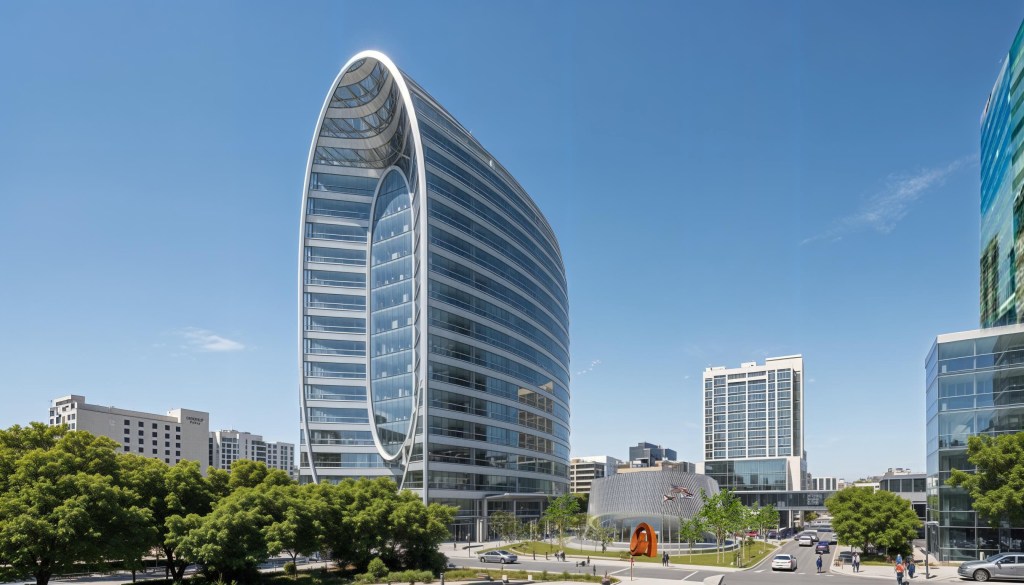
It has been two-and-a-half years since Fort Lauderdale’s flood-ravaged City Hall had to be abandoned. A gaping hole sits where a fortress-like gray box served as the nerve center of government since 1969.
From rented temporary quarters in a nearby building, the dynamic and ever-growing city chugs along, and plans are moving forward for a new City Hall to serve Broward’s largest city for the next 50 years.
Four teams are competing for this lucrative signature project. All four will make detailed pitches to city commissioners Tuesday. The meeting agenda anticipates the city will rank the proposals and begin detailed negotiations with the top-ranked team.
Our advice is to be methodical and prudent, even though delays tend to drive up construction costs.
The pitfalls of P3s
The new City Hall is a public-private partnership or P3, in which developers pitch unsolicited proposals designed to save time and money. But it doesn’t always work out that way, and P3s are plagued by a lack of transparency.
Considering the complexity of this latest public-private partnership and the city’s dismal track record with P3s, it is time to slow down. The city should exercise maximum due diligence and engage the public in this critical decision even more than the “reimagining City Hall” exercise done so far.
City leaders should also consider the less costly alternative of moving into the high-rise Broward school district headquarters conveniently located just south of the New River which a majority of school board members have tentatively agreed to sell or lease.
After two-and-a-half years, a few more months won’t make much difference. It might even save a lot of money.
City of Fort Lauderdale
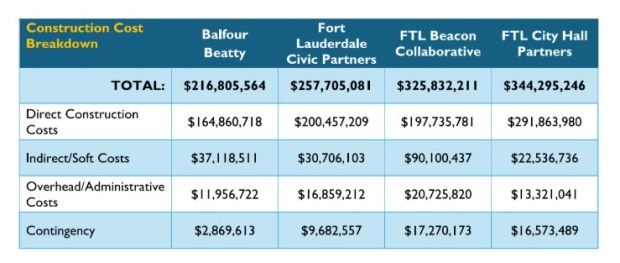
Cost projections for the new Fort Lauderdale City Hall vary widely, from a low of $217 million to a high of $344 million.
The project teams are Balfour Beatty, Fort Lauderdale Civic Partners, FTL Beacon Collaborative and FTL City Hall Partners. Cost estimates range from Balfour Beatty’s $217 million to FTL City Hall Partners’ $344 million, according to a consultant’s analysis for commissioners and staff. Because of severe flood damage to the old City Hall, some costs will be covered by federal FEMA money.
Follow the money
FTL City Hall Partners’ team includes CORE Construction, Stiles Corp. (a name synonymous with the growth of downtown), and prominent City Hall lobbyists Stephanie Toothaker and Rubin Turnbull & Associates.
The potential for political influence is always lurking in the shadows in any big-money project, and this one is no exception.
Commissioner Steve Glassman’s political committee, Back to Basics FTL, reported taking in $5,000 from CORE Construction and $2,500 from Rubin Turnbull & Associates on the same day, July 23. The two hefty checks raise obvious questions. Glassman did not respond to two Editorial Board requests for comment.
Glassman was a prolific fundraiser in the 2024 election. But taxpayers have a right to know why he needs money now when the next city election is nearly three years away.
One of the city’s financial consultants, PFM Financial Advisors, said of FTL City Hall Partners’ plans: “Although the financing method is robust and well-defined, its long-term cost profile ranks as the least favorable option for the city from an affordability standpoint.”
In response, at the Editorial Board’s request, project director Alex Barrett of Plenary Americas, a major investor in City Hall Partners, said: “Our team is committed to meeting any affordability target set by the city … We strongly believe that the city is better served by realistic estimates that reflect true project conditions rather than overly optimistic figures at this stage that will increase during the next phase of project development.”
Broken P3 promises
Fort Lauderdale and P3 projects have a history that does not inspire confidence.
Consider the controversial pickleball complex at Snyder Park; a sweetheart stadium deal for the InterMiami soccer team where a promised city park has not yet been built; the 100-year lease at the signature Bahia Mar marina that raised tensions between public land and private profit; and most recently, the One Stop Shop fiasco.
In that last case, the city commission agreed to an overly generous giveaway of downtown green space for an entertainment venue only to break the deal when the developer’s financing collapsed. The city looked gullible and taxpayers have every right to be skeptical about the next P3 — which is City Hall.
A big paperwork problem
The city last Wednesday released more than 1,600 pages of expert analysis and financial details on the proposals. It’s full of complex financial information that’s very useful but not easy to digest.
The city uploaded the mass of data the afternoon before Thanksgiving while many residents were preoccupied with holiday plans. That’s not fair to taxpayers.
Another potential pitfall is not of the city’s making. With the governor and the Republican supermajority in the state Legislature seeking to undermine public faith in cities and counties to build support for massive property tax cuts, a $300 million expenditure on a government building is guaranteed to attract unwanted attention in Tallahassee.
The margin of error here is too small and the risks are far too great for the city to plunge ahead.
The Sun Sentinel Editorial Board includes Opinion Editor Steve Bousquet, Deputy Opinion Editor Dan Sweeney, editorial writers Pat Beall and Martin Dyckman and Executive Editor Gretchen Day-Bryant. To contact us, send an email to letters@sun-sentinel.com.