
We’re taught to be smart around electricity, but there’s no escaping the shock of electric bills for energy customers in Tampa.
Tampa Electric Company (TECO) just announced their fourth rate hike in a year. In January, residential customers faced a $9.14 increase per 1,000 kWh, a $20 increase per 1,000kWh in March, and a 10% rise in fuel costs in June. The most recent jolt to TECO’s customers comes in the form of an additional $5.51 for every 1000 kWh used. The average residential customer can expect their bills to increase by $939 per year compared to December 2020.
And consumers? Pay up or be left in the dark.
TECO is a government-granted monopoly, meaning they are the only energy supplier for their 860,000 customers in West Central Florida. If you want to turn on your lights, keep your apartment cool, or watch TV, you have no alternative but to buy your electricity from TECO.
On paper, granting a monopoly for utility companies — like TECO — makes sense. Building a power grid for a city requires massive infrastructure investment — power plants, transmission lines, and more. Having multiple electric companies may be inefficient (and messy — think of all the powerlines!)
But this monopoly privilege has consequences. With no alternatives, customers are stuck paying higher prices when TECO raises rates.
In theory, consumers are protected from skyrocketing prices by government regulation. In TECO’s case, the Florida Public Utilities Commission (FPUC) oversees the company and must approve rate increases. When TECO requests a rate hike — to adjust to market conditions, make infrastructure improvements, or cover repair costs, the FPUC is supposed to analyze the request and determine what price increase is reasonable. The Commission’s role is to protect consumers while allowing TECO to earn a “fair” profit. But there’s a problem.
Economics teaches us that regulators face two distinct but important challenges when overseeing utilities.
First, there is what economists call the principal–agent problem. This occurs when the owner (the principal) of an asset is different from the manager (the agent) of that asset. In this case, the elected officials at the FPUC are the principals, working on behalf of consumers, while TECO is the agent. If the goals of the principal and the agent diverge, the agent has an incentive to act in ways that serve its own interests rather than those of the principal.
Second, regulatory agencies often depend on the very companies they oversee for information and expertise. This makes some sense — if you’re a regulator trying to understand the intricate details of electricity production and distribution, you’d turn to experts for guidance. Who are the experts? The utility.
But what incentives does the utility have when providing that information? Are they likely to volunteer data suggesting they don’t need a rate increase or could operate on a reduced budget? Of course not.
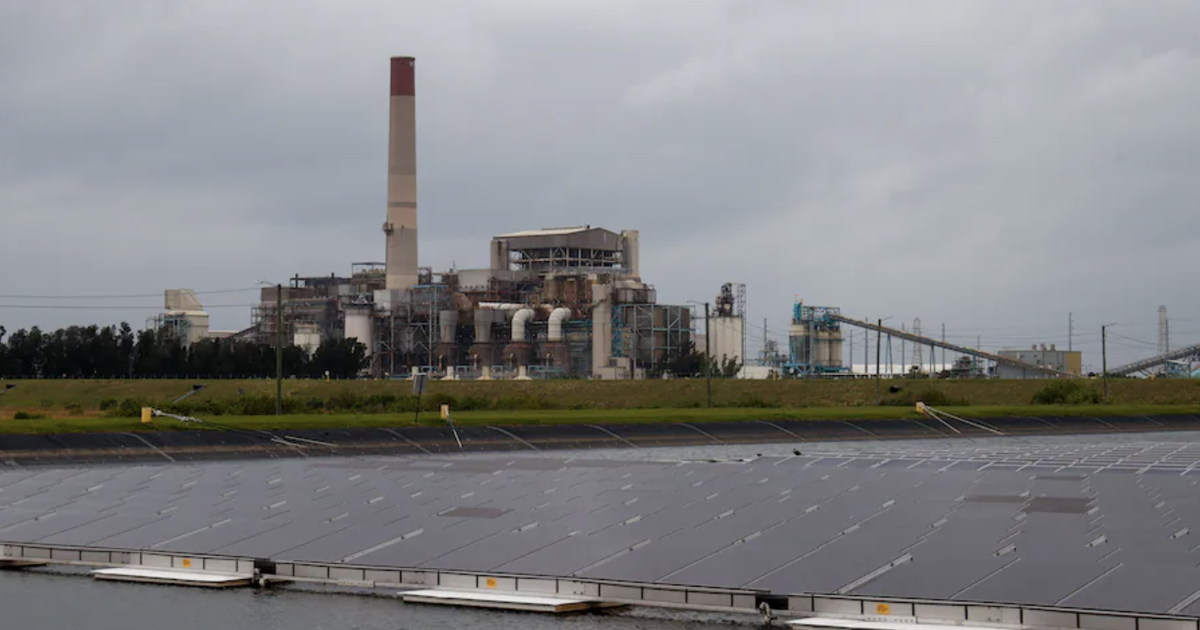
TECO argues that their rate increases are necessary to fund energy storage facilities and solar plants. But this surge in prices isn’t about amping up power, it’s about profit. These rate increases ultimately serve shareholders’ interest first, not the public need for affordable electricity.
TECO’s rates are set to guarantee investors a 10.5% return on equity, a figure that exceeds the national average of 9.75%. Functioning as a target profit margin for shareholders, this so-called “midpoint return” is a key factor in calculating customers rates. In practice, the higher the approved return, the higher the electricity rates consumers pay, since those payments must guarantee a certain profit level.
Electricity is a necessity. Consumers can’t just find another alternative. These compounding price increases have real consequences for Tampa Bay families, especially for low- and middle-income families or individuals on fixed incomes. When their bills go up, they must decide what gets cut — food, power, rent, or something else.
This is all the more important when considering that prices in the bay area region have increased well above national averages, with grocery prices rising 4.3% between March 2024 and March 2025 — the largest increase among continental U.S metro areas.
There are solutions. First, the FPUC should rely less on potentially biased information given by TECO itself and more on independent economic analysis. Second, allowing Tampa consumers a choice of electricity providers would provide consumers with an option and TECO some healthy competition.
Without a change in competition, expect more supercharged bills.
Maxime Holletscheck is an economics student at the University of Tampa and a member of the Adam Smith Society.
Abigail R. Hall is an Associate Professor of Economics at the University of Tampa and a Senior Fellow at the Independent Institute in Oakland, California.