
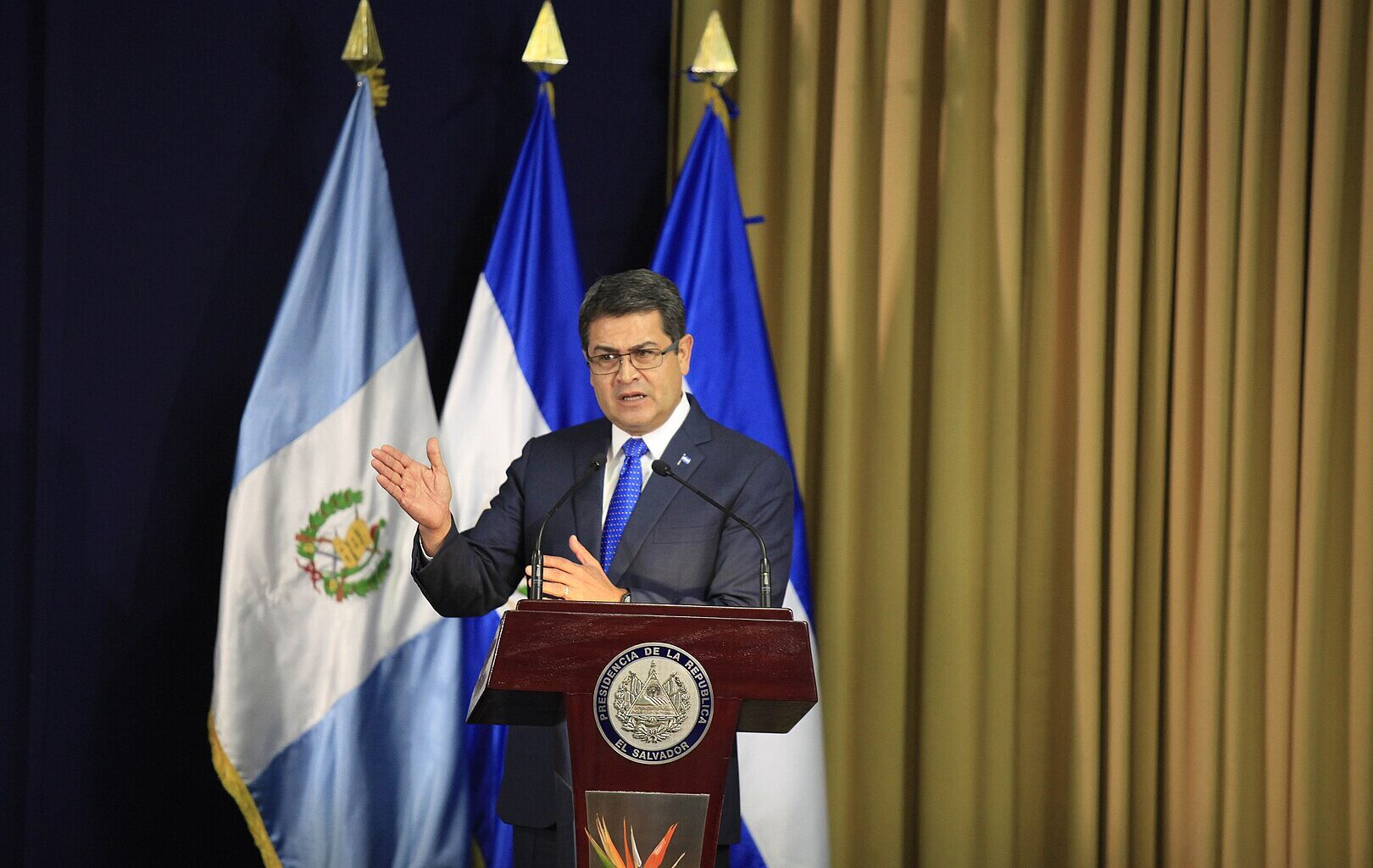
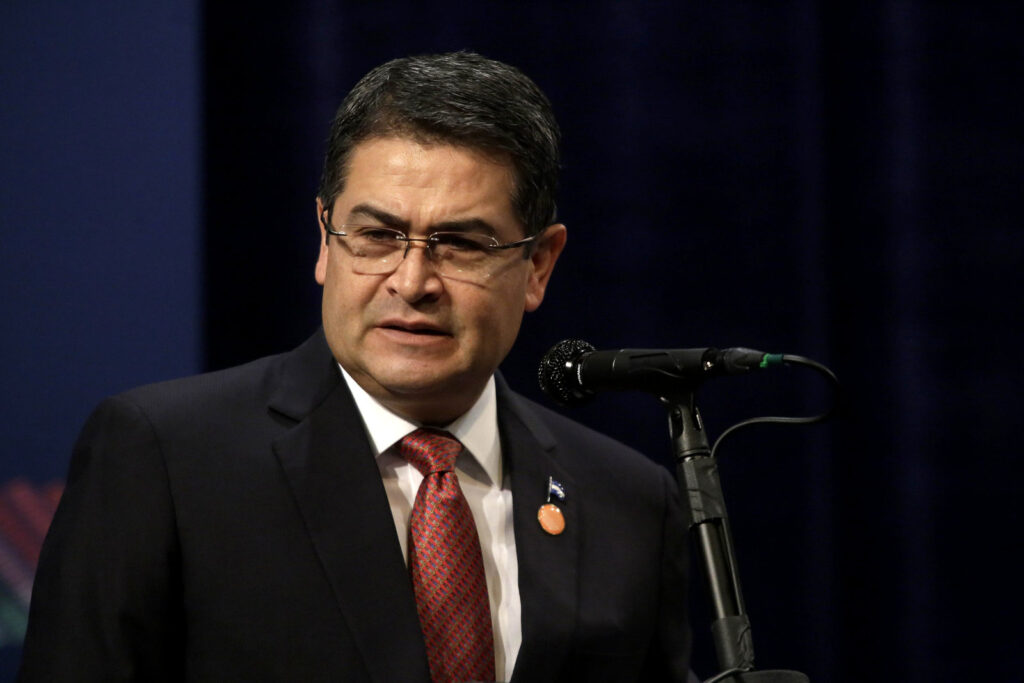
Former Honduras’ President Juan Orlando Hernandez was pardoned by U.S. President Donald Trump. Credit: Wikimedia Commons.
Former Honduran president Juan Orlando Hernandez — convicted in a U.S. federal court of conspiring to traffic hundreds of tons of cocaine and sentenced to 45 years — was released from a West Virginia prison after receiving a presidential pardon from Donald Trump. The move, announced at the end of November and confirmed by multiple outlets such as Reuters immediately reignited debate over how American authorities once treated Hernandez and whether Washington at times prized political utility over strict law-enforcement consistency.
U.S. prosecutors portrayed Hernandez as more than a corrupt politician: The Justice Department detailed an allegation that he accepted millions in bribes from major trafficking networks and used state power to protect the flow of cocaine to the United States.
According to The New Yorker, before Hernandez was sentenced to 45 years, in its sentencing materials, the Department said Hernandez helped turn Honduras into a virtual “narco-state,” protecting traffickers in exchange for cash that bolstered his political rise. Those conclusions were central to the Manhattan prosecution that led to his conviction.
Trump pardons Honduras’ Former President Juan Orlando Hernandez: How US authorities viewed his role in the drug trade
Yet the picture in Washington was long more ambivalent. For years, Hernandez was publicly treated as a partner in U.S. regional security efforts — a leader the United States could work with on border control, migration and counter-narcotics initiatives.
That pragmatic relationship — described in longform reporting and diplomatic coverage — helps explain part of the controversy now: Critics argue that if Hernandez was at once a U.S. ally and later proven to be a major trafficker, it exposes uncomfortable tradeoffs in U.S. policy toward Latin American leaders.
Equal justice for all?
So, to what extent did American officials regard Hernandez as a “good drug trafficker” in the sense of being useful, or at least tolerable, to U.S. interests? The answer is complicated.
On one hand, U.S. law enforcement ultimately pursued Hernandez aggressively. His extradition to the U.S., the high-profile Manhattan trial, the guilty verdict, and the 45-year sentence reflect a decisive view by prosecutors that he was a dangerous player whose crimes required the strongest response available.
According to what has been published by the Justice Department, that record — and the detailed witness testimony presented at trial — suggests U.S. authorities concluded Hernandez’s trafficking role was grave and that he was culpable.
On the other hand, diplomatic and security records, plus reporting from the past decade, show Washington continued to cooperate with Hernandez’s government even as allegations accumulated. Human rights reporters and investigative journalists have argued that the U.S. relationship with Hernandez exemplified a pattern in which geopolitical and security priorities sometimes muted public pressure over corruption and illicit ties.
In that narrow political-utility sense, magazine Responsible Statecraft reported that Hernandez could be seen as a leader who remained useful to U.S. regional objectives — at least until political winds changed and prosecutions moved forward.
Trump’s pardon shows counter-drug effort is ‘based on lies and hypocrisy’
Critics say Trump’s pardon crystallizes the contradiction: A president who once touted aggressive counternarcotics measures has now absolved a man the Justice Department described as having facilitated mass cocaine shipments into the U.S. Opponents argue the pardon weakens American credibility, giving the impression that political calculation — including signals about backing a conservative candidate in Honduras’ elections — can supersede legal findings. Supporters of the pardon, and Hernandez himself, have insisted the conviction was politically motivated and unfair, although British outlet The Guardian has a different angle: “The American counter-drug effort is based on lies and hypocrisy.”
Beyond immediate politics, the episode raises a structural question for U.S. policy: Can long-term counternarcotics goals be advanced if tactical alliances with corrupt or compromised officials are tolerated? If Washington at times prioritized short-term cooperation, the eventual criminal findings against Hernandez suggest the strategy carried a heavy cost — the erosion of moral authority when prosecutions occur.
The pardon does not erase the trial record; it does, however, change who faces the legal consequences of that record.
Hernandez’s release will also reverberate in Honduras, where investigators at home continue to probe corruption from his years in power. Whether the pardon alters the country’s political trajectory — and how Washington will manage ties with Tegucigalpa going forward — remains to be seen.
For U.S. counter-narcotics agencies and prosecutors, the case will likely remain a touchstone: A reminder that prosecuting state players is possible, and that policy coherence matters if Washington hopes to sustain long-term legitimacy in the hemispheric fight against drug trafficking.