
On July 1, Florida finally confronted decades of injustice and helped a group that has truly known oppression by passing a law that says if you’re pregnant you no longer have to face the punishing trek from row 3 in the parking lot, to the grocery store.
Here’s how the new law works. If you’re pregnant, you can now legally use disabled parking spaces. Any stage of pregnancy counts. You don’t need to show a medical complication. No doctor needs to verify mobility impairment. Just two pink lines on a stick and boom, front row parking wherever you go. Those exact same parking spaces that exist because I need that extra room to get my wheelchair ramp out without turning the parking lot into a demolition derby that features me as accidental roadkill.
When questioned in a committee hearing about why someone who’s pregnant should suddenly qualify for a disability accommodation, the bill’s sponsor, Rep. Fiona McFarland, offered a starkly honest explanation. She said, “I feel very strongly that pregnancy is not a disability. I just want to be able to park up front.”
I know pregnancy can be difficult and I want parents supported but when policy is built on the belief that walking is annoying, what you create is not equity. What you create is a Black Friday parking lot every day for people with disabilities.
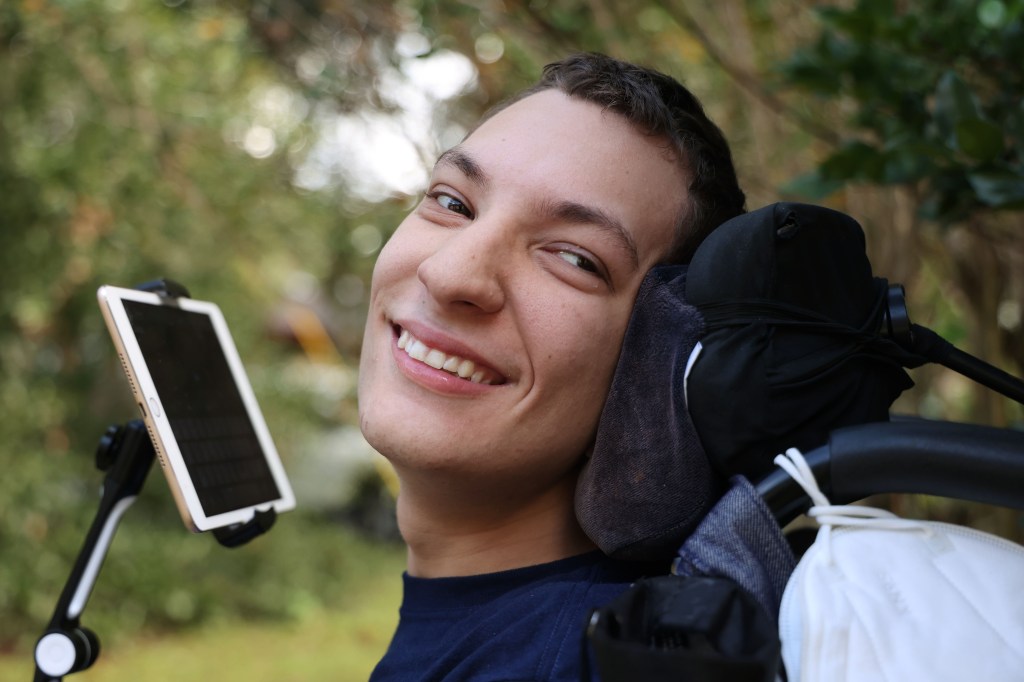
Meanwhile, let me tell you what disabled parking actually looks like for me. I have cerebral palsy and use a wheelchair. Accessible parking is not a luxury, it is the only safe way I can exit and enter my van. Every year, I travel across the state to speak at legislative delegation meetings, ironically about how Florida is 49th in the nation for funding the disability services I need to survive. And every year, we arrive to find no empty accessible disabled spaces. So my mom unloads me in the middle of the parking lot like an airport baggage cart, she then parks in a regular spot, and prays no vehicle backs into me as I wait.
Voting is equally hazardous. My local library has a total of three accessible spaces. In November 2024, we circled the lot for 30 minutes like we were trying to win the Daytona 500. By lap 10, I was half expecting a pit crew to show up and refuel the van.
And here’s the important part: The law already said if you’re pregnant and experiencing real physical limitations, then you’ll qualify for a disability placard. Accessibility is supposed to be a civil right, not a party favor you hand out during a legislative session. What this law does is it tells us we have to share our lifelines with people who are using them as a perk.
Instead of improving maternal health outcomes, child care, or disability services, lawmakers decided to take an accommodation we need and give it to someone with a baby bump sipping a giant lemonade that says “Mommy To Be” in glitter, just so they don’t have to walk an extra 30 feet. Maybe 40!
Maxwell: Accessible parking wasn’t created for pregnant moms
You can’t expand equality by shrinking someone else’s rights and it’s not compassion if it introduces new danger. I’m all for supporting pregnancy, just don’t do it at the expense of my safety.
Most people don’t think about accessibility until the day they suddenly need it. A broken ankle. A complicated pregnancy. A parent who can’t walk far anymore. A disability you never planned for and never asked for. And when that day comes, you’ll hope the people before you defended these rights. Today, those people are Olivia Keller, a public policy manager and disability advocate who has now challenged the law in court; and attorney Matthew Dietz, the clinical director of the Disability Inclusion and Advocacy Law Clinic at Nova Southeastern University, who filed the suit. They are fierce advocates, and I’m proud to call them my friends.
And if this new law doesn’t sit right with you, contact your state lawmakers. Remind them accessibility shouldn’t be negotiable. Not for me. Not for Olivia. Not for anyone with a disability.
JJ Holmes is a 21-year-old college student and disability advocate from Longwood, and a 2025 Central Floridian of the Year.