
By: Lauren Comander | December 03, 2025 | 10 min. read |
The new director of UHealth’s Cardiac Catheterization Laboratory is at the forefront of treating some of the most complex cardiovascular conditions.
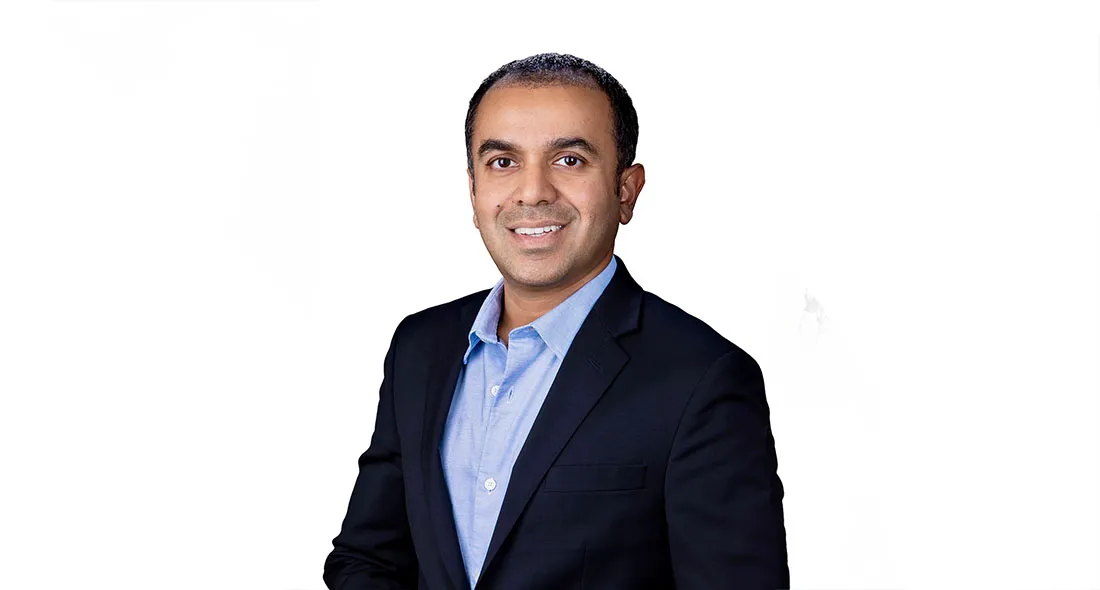
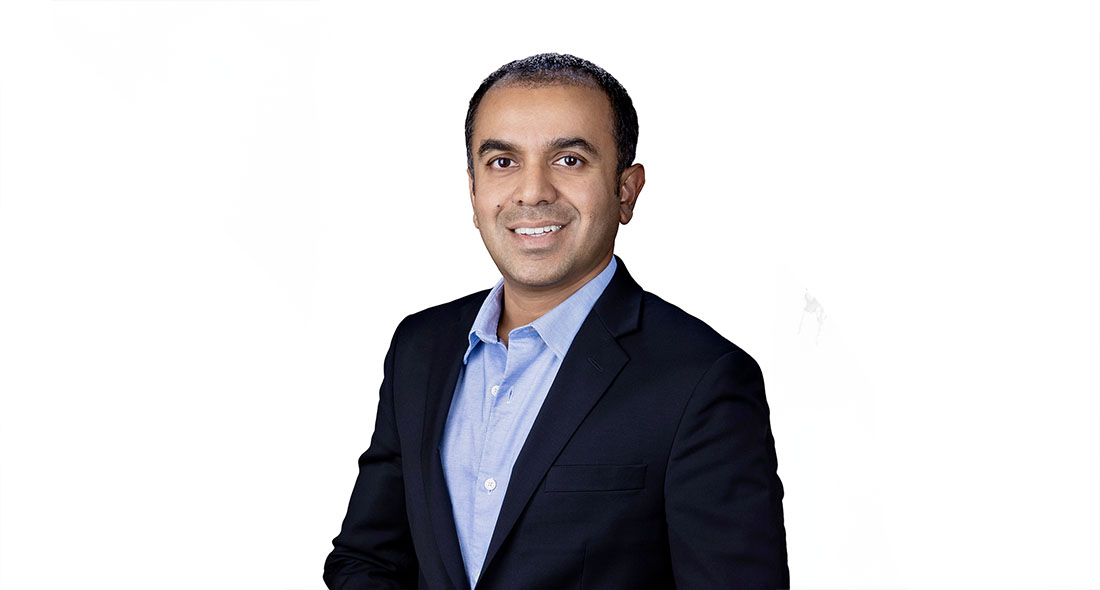
Aditya Bharadwaj, M.D., a trailblazer in high-risk cardiac interventions, brings his innovation, clinical excellence and deep commitment to patient outcomes to South Florida. Having played a pivotal role in developing cardiogenic shock care systems across the U.S. and Asia-Pacific, Dr. Bharadwaj is at the forefront of treating some of the most complex cardiovascular conditions, ranging from calcified lesions and bifurcation disease to chronic total occlusions and multivessel coronary disease in patients who are ineligible for open-heart surgery.
The new director of the Cardiac Catheterization Laboratory and director of clinical cardiovascular research at UHealth—University of Miami Health System, Dr. Bharadwaj is an associate professor in the University of Miami Miller School of Medicine’s Division of Cardiovascular Medicine. His robust research profile includes principal investigator and national leadership roles in major clinical trials and more than 80 peer-reviewed articles in leading cardiology journals.
Beyond the clinic and the cath lab, Dr. Bharadwaj is involved in professional societies like the American College of Cardiology and the Society for Cardiovascular Angiography and Interventions and is an invited speaker at major, national meetings. His goal is to not only participate in global conversations on best practices and innovations but to help lead them.
Raised in India by his mother, a social worker for blind and orphaned children, and his father, a space scientist, Dr. Bharadwaj grew up in an environment that prioritized service and science. We spoke with him about his vision for advancing interventional cardiology and what inspired his move to Miami. His answers are lightly edited for length.
What initially drew you to cardiology and then later to interventional cardiology specifically?
Growing up, I enjoyed working with my hands, building models and creating artwork, while also loving science and math. Medicine combined the intellectual rigor of science with the art of caring for people, listening, connecting and empathizing. Interventional cardiology, a highly specialized field, is the perfect marriage between science and art.
In the cath lab, procedures like placing stents or valves demand extreme precision, fine motor skills and dexterity. Even one millimeter can significantly change outcomes. It truly is an art grounded in science.
Equally important is the human side. I often meet patients in their most vulnerable moments, when they’re having a heart attack, severe chest pain, critical illness. And I connect with their families, too. Being able to earn their trust and make a difference in their lives is a true blessing.
You trained and practiced in India, Detroit, Loma Linda and New York. How have those diverse experiences shaped the way you practice medicine today?
We are all shaped by our life experiences. Medical school in India exposed me to a wide spectrum of disease. I moved to the U.S. to do research. Training across different regions gave me insight into different health care systems, patient populations and practice styles.
Quality and patient care always comes first. We’re already doing very well, and my goal is to maintain and continually improve those standards.
Dr. Aditya Bharadwaj
One pivotal experience was my interventional cardiology fellowship at Mount Sinai in New York, one of the busiest and most respected interventional cardiology training programs in the country. Training with leaders in the field at the cath lab table taught me techniques and clinical thinking. It also opened my eyes to clinical research. Being involved in major clinical trials laid the foundation for my academic and research work, including what I later pursued at Loma Linda University.
At Loma Linda, you helped build high-risk interventional and cardiogenic shock programs. What lessons from that experience will you bring to position UHealth as a destination center for complex cardiovascular disease?
The high-risk PCI program treats patients with complex coronary artery disease who are not good candidates for open-heart surgery. Using advanced techniques and technologies in the cath lab, we open blockages and often support the heart with specialized devices. Some patients have a large amount of calcium in their arteries so we may perform atherectomy using a tiny, diamond-tipped burr spinning at 150,000 RPM to remove calcium before placing a stent.
Devices used to support the heart are undergoing significant innovation. I had the honor of being the first physician to implant the smallest percutaneous heart pump in the Western half of the U.S. as part of an FDA pivotal trial.
Cardiogenic shock care is another major focus of mine. It involves interventional cardiology, advanced heart failure and cardiothoracic surgery. At Loma Linda, we built a structured program to rapidly identify and treat these critically ill patients using advanced mechanical circulatory support and evidence-based protocols.
I’ve also helped develop cardiogenic shock programs at hospitals in the U.S., Asia and the Middle East. I want to bring that same vision to the University of Miami, to build UHealth into a true referral center for high-risk PCI and cardiogenic shock.
As director of the Cardiac Catheterization Laboratory, what is your vision for the program over the next five years?
My vision is built on four pillars. Quality and patient care always comes first. We’re already doing very well, and my goal is to maintain and continually improve those standards.
Second, I want to grow the clinical volume and expand the University of Miami’s footprint across South Florida. That includes establishing ourselves as a leading center for complex coronary interventions, high-risk PCI and structural heart procedures.
The questions we pursue in research are directly relevant to improving patient outcomes and, in that sense, research and clinical care are not separate. Research becomes a natural extension of our commitment to providing the best possible care.
Dr. Aditya Bharadwaj
Third, I’m passionate about education and that includes training the next generation, our interventional and general cardiology fellows, nurses and technologists who work in the cath lab, as well as physicians in the community.
Fourth is clinical research. Interventional cardiology is rapidly evolving, with new devices and techniques coming to market all the time. As a major academic center, we should be at the forefront of that innovation. My goal as director of clinical cardiovascular research is to bring these efforts together, strengthen our infrastructure and expand our involvement in clinical trials so that our patients have access to the latest therapies.
How do you plan to integrate cutting-edge research with day-to-day patient care?
Cardiology, especially interventional cardiology, is one of the most evidence-based fields in medicine, driven by data and clinical trials. As a large academic center, the University of Miami should generate that evidence. There is already substantial research happening here, and my role is to coordinate and grow those efforts, ensuring our patients have access to innovative therapies through clinical trials.
The questions we pursue in research are directly relevant to improving patient outcomes and, in that sense, research and clinical care are not separate. Research becomes a natural extension of our commitment to providing the best possible care.
What attracted you to UHealth and the University of Miami at this point in your career?
The University of Miami has an excellent reputation and strong cardiology program. That alone was a major draw. I was recruited by UHealth’s chief of cardiology, Yiannis Chatzizisis, M.D., Ph.D., whose vision closely aligned with my own. Our connection and our shared goals for the future of cardiology at the University of Miami were very important to me.
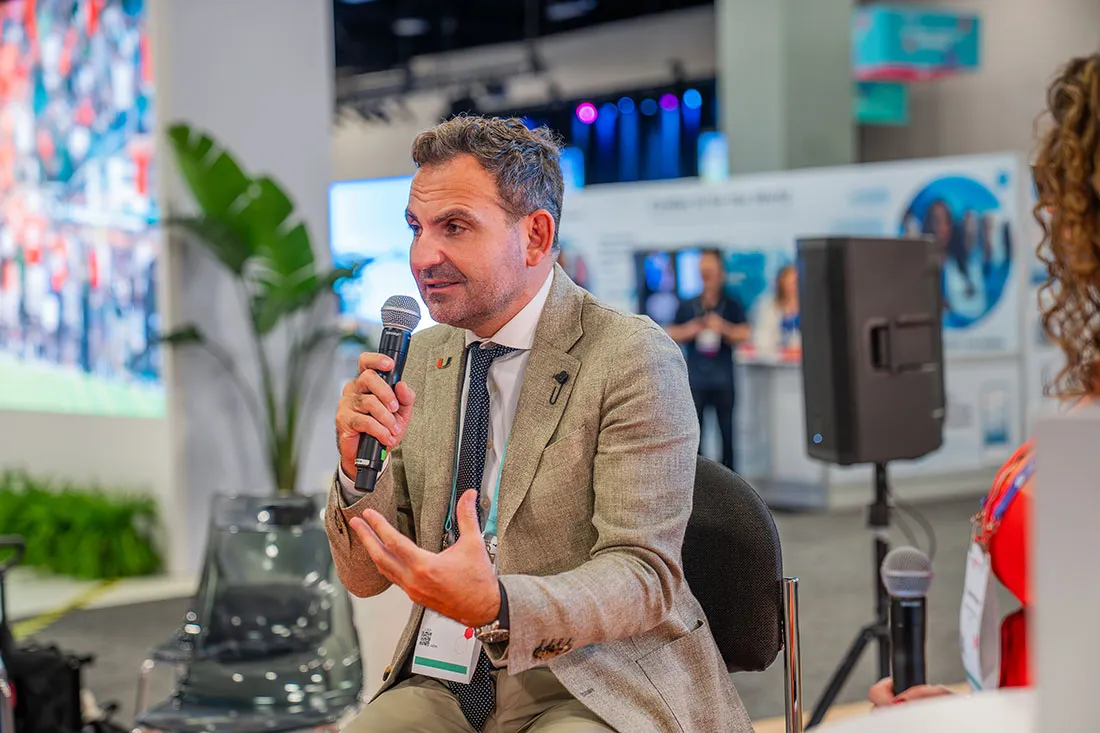 Dr. Bharadwaj was attracted to the vision of UHealth chief of cardiology Dr. Yiannis Chatzizisis.
Then there’s the city of Miami itself. I’ve always loved how vibrant it is here. The people, the culture, the beaches and the incredible food scene strike a wonderful balance between a dynamic, exciting city and family-friendly suburbs. My wife, who also happens to be an interventional cardiologist, and our two young sons have supported me immensely with this cross-country move. My boys are excited to be a part of the growing Miami soccer scene
How do you unwind outside of work?
My family and I often travel to Europe and South America. These trips are one of the main ways I recharge. I also enjoy working out. Living in Miami, you can’t help but be inspired by how fit and health-conscious people are, so it is a great environment to stay motivated.
And, of course, I love spending time with my boys, taking them to the park, playing soccer, biking. Miami is a wonderful place for all of that.
Tags: cardiac catheterization, cardiology, Division of Cardiovascular Medicine, Dr. Aditya Bharadwaj, Dr. Yiannis Chatzizisis, heart attack, heart care, technology