
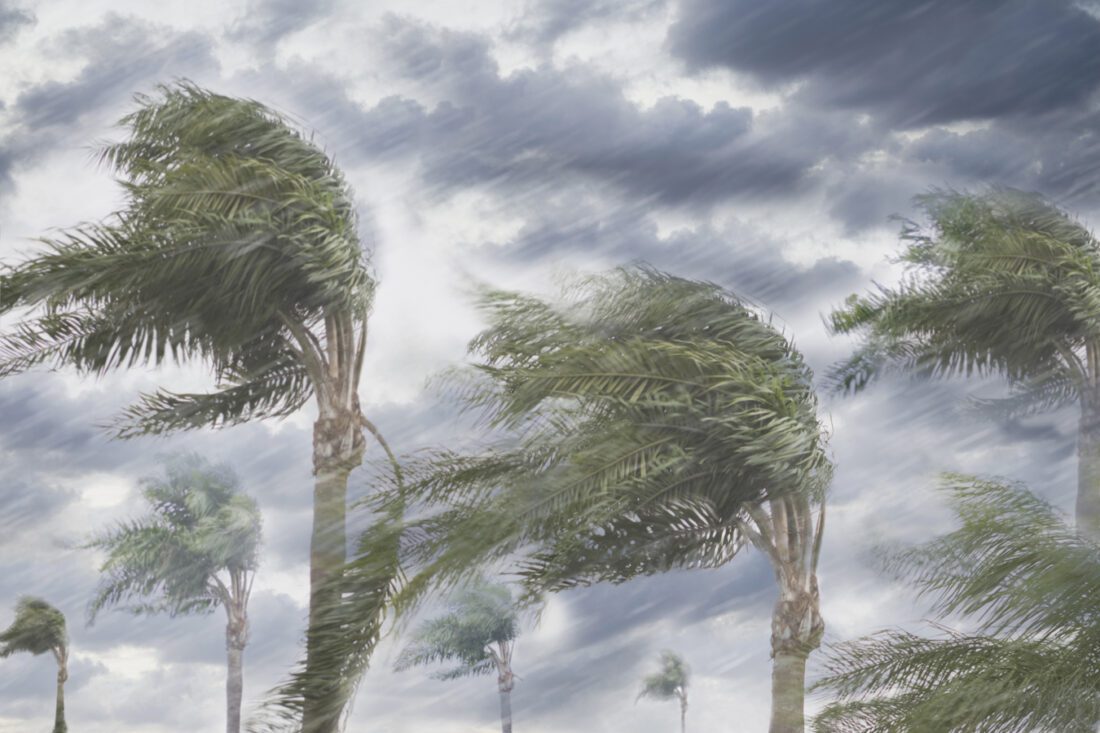
While some areas of the world weren’t as fortunate, it was a relatively mild 2025 Atlantic hurricane season for Southwest Floridians, and United States as a whole.
This year’s hurricane season saw 13 named storms and five hurricanes, with Hurricane Melissa being the most powerful having ravaged the Caribbean as a Category 5 event.
Nov. 30 marked the official end to the Atlantic hurricane season and, according to Accuweather experts, was the first season in a decade without a hurricane making landfall in the United States.
“The U.S. benefited from a combination of unique atmospheric conditions, the timing of cold fronts pushing across the East Coast and a lot of luck to make it through the peak of the season without a single hurricane landfall,” said AccuWeather Chief Meteorologist Jonathan Porter in the outlet’s hurricane season wrap-up.
“This reprieve is welcome after recent catastrophic hurricane strikes like Helene and Milton last year. The U.S. has endured 17 hurricane landfalls in the past five years. Many families and businesses are still struggling to recover.”
AccuWeather experts state the estimated total damage and economic loss from tropical storms and hurricanes in the Atlantic basin in 2025 is between $55 billion to $61 billion, which experts state is roughly one-eighth of last year’s catastrophic total.
“”This hurricane season will be remembered for brief bursts of extreme intensity between long, quiet stretches with no tropical activity,” stated AccuWeather Lead Hurricane Expert Alex DaSilva. “The climatological peak of the season was remarkably quiet for the (second) year in a row.”
While there weren’t many, three of the five hurricanes formed this year grew to Category 5 level, which is one shy of the record set in 2005.
Lee County officials stated that this year’s hurricane season brought increased activity across the Atlantic, but Lee County was fortunate to avoid significant impacts. Even in a quiet year locally, every system is a reminder that preparedness and resilience must stay at the forefront.
“We never take a quiet season for granted,” said Benjamin Abes, director of Lee County Public Safety. “Each near miss reinforces why preparation, coordination and investment in public safety are essential every single year.”
Public Safety’s chief of Emergency Management John Scultz said, “While we are grateful Lee County avoided major impacts, our posture never wavered.”
Officials said the county’s new Public Safety Center performed “exceptionally well” during this season’s monitoring and readiness events. The expanded space, technology upgrades and improved interoperability enhanced both situational awareness and decision-making, according to officials.
“The expanded Public Safety Center proved its value immediately,” Abes said. “Our departments worked side-by-side with greater speed, clarity and collaboration than ever before.”
Scultz added, “”This season demonstrated that our new Public Safety Center is not just a building, it’s a capability multiplier.”
With the 2025 season in the rear-view, being prepared for what’s on the horizon is a round-the-clock effort.
While the storm season lasts six months, the planning, mitigation, training and public education that make county officials resilient occur every week of the year. This includes updating emergency plans, conducting countywide shelter training, enhancing outreach to its Special Needs registry and hosting public preparedness workshops.
“Hurricane readiness is never turned off. Behind the scenes, our teams work every month to strengthen systems, train staff and support residents,” Schultz said. “Preparedness is a year-round discipline. Whether it’s improving plans, partner communication or expanding our outreach in vulnerable communities, we build readiness every single day.”
Officials said several initiatives are underway to expand Lee County’s resilience before the next storm season. These include additional real-time weather monitoring systems, enhancements to the ReadyLee program, investments in special needs outreach and continued upgrades to real-time decision-making systems. During the offseason, residents are encouraged to review their evacuation zones, update their emergency plans and prepare their homes early.
“We’re investing in smarter technology, stronger partnerships and more accessible preparedness tools so residents have what they need before a storm ever forms,” Schultz said. “The offseason is the best time for residents to get ready. Preparedness isn’t an event — it’s a responsibility we all share, long before a storm is on the map.”
For more information on Lee County’s Emergency Management, as well as its All Hazards Guide and emergency information, visit www.leegov.com/publicsafety/emergencymanagement.
To reach CJ HADDAD, please email cj