
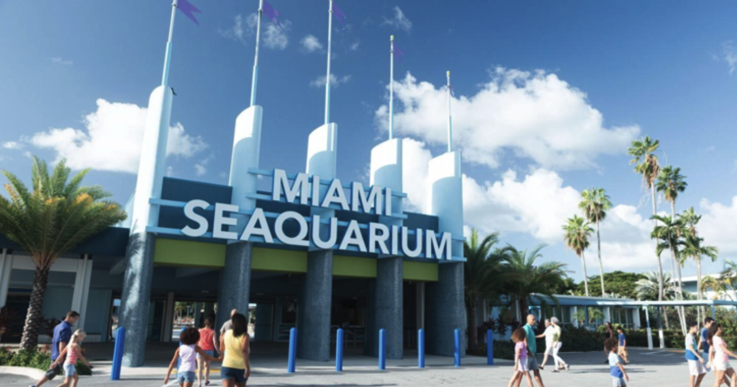
With a simple, uncontested sweep of “yay” votes, Miami-Dade County’s Board of Commission on Tuesday officially cleared the way for developer David Martin and a subsidiary of his Terra Group to revitalize the land where the iconic Miami Seaquarium had sat since 1955.
Martin’s $100 million development plan for the 38-acre waterfront property off the Rickenbacker Causeway will include at least a boating marina, dry-dock storage, restaurants, shops, a walkway, a learning center and an aquarium (without marine mammals).
Martin also has said he hopes to keep the iconic gold geodesic stadium dome intact for another usage.
Tuesday’s Commission meeting was the first attended by newly appointed Vicki Lopez, Key Biscayne’s former State Representative, who takes over for Eileen Higgins, who has advanced to a Dec. 9 election runoff for the Miami Mayor post.
Commissioners asked no questions before voting unanimously to endorse what, in essence, is a 99-year lease on the county-owned property. In addition, Martin reportedly paid $23 million to take over the remainder of the Mexico-based Dolphin Company’s lease.
A bankruptcy judge already had approved the transaction between Martin and Miami-Dade County, but the Board of County Commission had the final say.
Martin already has gained approval to build a luxury condo building on Key Biscayne at the former site of the Silver Sands Beach Resort, as well as a padel court center and a small business office (which will first house Terra Group’s sales team for the condo) at the “Entry Block” to the Village. Martin is actually helping fund some improvements on Key Biscayne, as well.
In addition, his Coconut-Grove-based team reportedly has deals with Miami-Dade County for a county-funded hotel by the Miami Beach Convention Center and a housing complex on parking lots near a county office complex in South Miami Dade.
According to documents unveiled by the Miami Herald, the lease that was approved Tuesday “requires Martin to pay Miami-Dade at least $3 million a year — double the Seaquarium’s minimum rent — and share up to 5% of the redeveloped property’s annual revenue.
Meanwhile, the hundreds of the existing marine sea life and other “residents,” such as flamingos and penguins, will be transferred to zoos and other sanctuaries across the country, from Key Largo to Seattle.
That decision came to the dismay of thousands of animal advocates, who said it could be risky for many of the animals.
The Seaquarium closed Oct. 12 after Dolphin Company officials came to the realization that, after legal entanglements, it was the best solution in the interest of both parties after facing an eviction from Miami-Dade Mayor Daniella Levine Cava.
Martin has said he hopes to open the new “Fisherman’s Village” on the Seaquarium site sometime in 2030.