
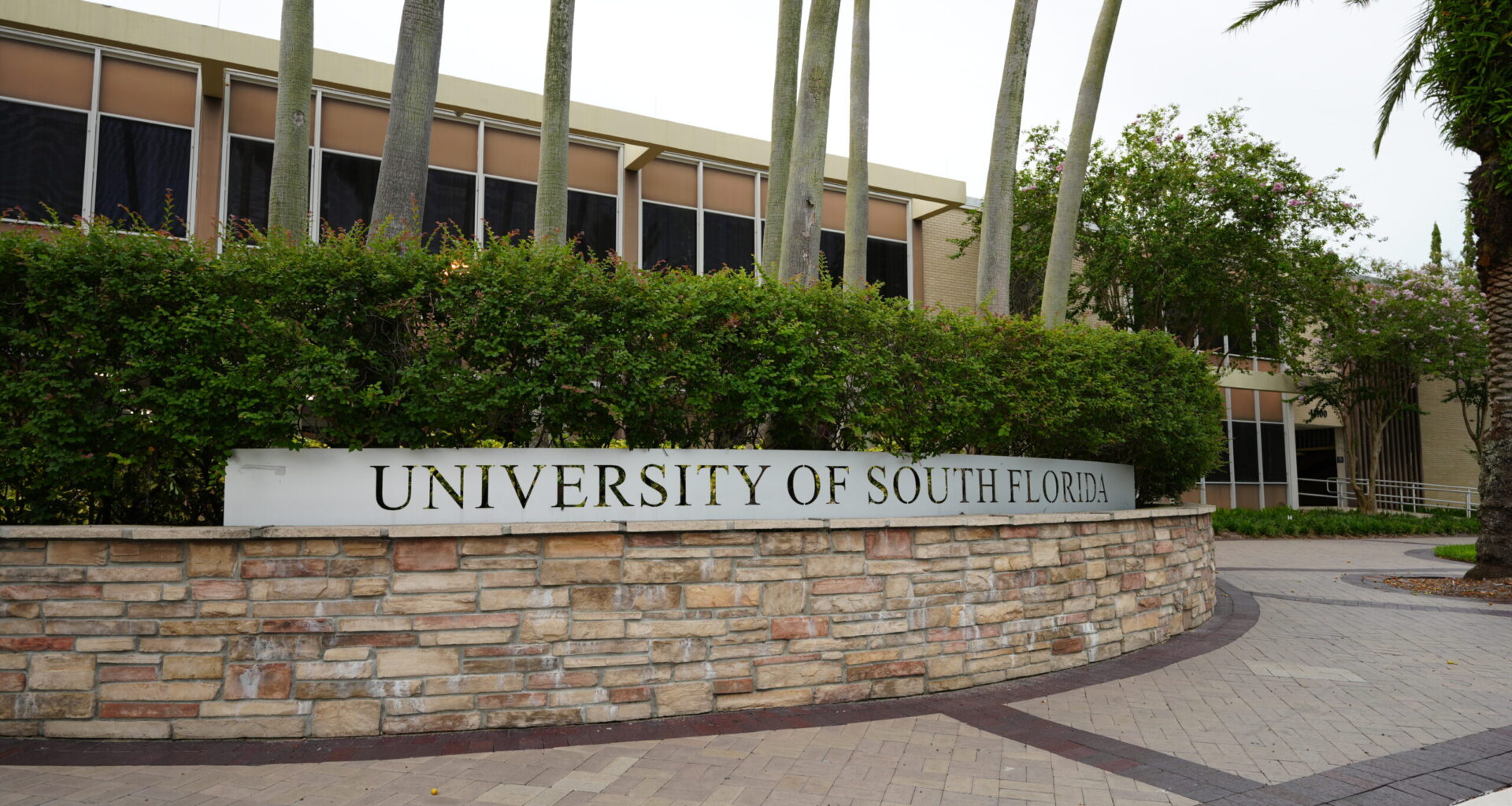
 Stricter state thresholds and internal benchmarks have prompted faculty preparation and student concern. ORACLE PHOTO/RACHELL ROSS
USF’s annual degree productivity review identified 15 academic programs that fell below state and institutional thresholds — placing them “under consideration of termination.”
The review was presented during a Nov. 18 Board of Trustees meeting and highlighted programs across multiple USF colleges, including bachelor’s, master’s, doctoral and specialist tracks.
During the meeting, Provost Prasant Mohapatra told university trustees that USF uses Board of Governors standards every three years to identify programs at risk, citing the review as an “early warning system.”
The BOG evaluates degree programs statewide based on the number of graduates produced over the most recent three-year period, according to the BOT.
Mohapatra said USF identified 36 programs that fell below the thresholds after a deeper review, and ultimately placed 15 “under consideration for termination.”
These include USF’s Africana studies bachelor’s program, Latin American studies bachelor’s and master’s programs, a gerontology master’s program, and the social work doctoral program.
The list also includes several master’s programs in education, such as English teacher education, mathematics teacher education and social science teacher education.
USF spokesperson Althea Johnson said no official decisions have been made regarding termination.
Johnson said any changes would follow a multistep process involving faculty councils, the BOT, the BOG and the university’s accrediting agency.
Some USF faculty in the affected programs said they have already been preparing for potential changes in case the university ultimately recommends their program for termination.
Related: USF prepares for major changes to gen ed curriculum by 2026
Debra Dobbs, the director of the School of Aging Studies, said she has been aware of enrollment concerns within her programs for over a year.
Gerontology, which falls under the School of Aging Studies, was included on the most recent list of programs under consideration for termination.
Dobbs said low undergraduate enrollment and overlapping master’s programs contributed to the applied aging sciences master’s program being considered for termination.
But Dobbs said the department has already taken steps to restructure its programs in response to university findings.
The aging studies undergraduate major was replaced with the health care administration degree in fall 2022 — a shift she said was partially a response to low enrollment and an effort to provide students with more flexible tracks and internship opportunities.
Dobbs said enrollment in the new major has increased significantly — from fewer than 10 students in 2020 to more than 110 over the past three years.
The department worked to ensure students were not left without required coursework during the shift from aging sciences to health care administration, she said.
“I feel that anyone who wanted to major in the aging sciences program could still major in health care administration and get the same courses,” Dobbs said.
Related: USF replaced sociology as a gen ed requirement. What does that mean for students?
Nicolas Thompson, the director of the School of Interdisciplinary Global Studies, said the Latin American studies program is undergoing review after “several years” of not producing enough graduates.
Thompson said meeting the productivity requirements became even more difficult after the BOG increased the minimum number of graduates that programs must produce over three years this past summer.
This new minimum requires at least 20 graduates over three years for master’s programs — and comes after USF applied its own stricter internal threshold of 30 graduates within the same timeline.
Adriana Novoa, a USF professor of Latin American history, said the changes to the Latin American studies program also reflect the state’s “increasing restrictions” on what can be taught in public universities.
Novoa said the termination of the program wouldn’t only affect graduate students — it would also limit exposure to Latin American coursework.
“[Terminating the program] is absolutely outrageous in the state of Florida, where there is such a large Hispanic population,” Novoa said.
Novoa said state restrictions on higher education extend beyond the Latin American studies program and reflect increasing limitations on teaching race, gender and global regions in Florida higher education.
“The state is basically at war with teaching certain subjects,” Novoa said, “Hispanic students will not learn anything about their own history.”
The BOG approved regulations in 2024 that prohibit the use of state or federal funds for diversity, equity and inclusion programs in state universities.
Since then, USF has revised course offerings and removed webpages containing DEI content.
Novoa said eliminating the program will limit opportunities for students planning to enter career fields where cultural and religious expertise is often required — including medicine, education and international affairs.
“This is a tremendous loss for students because they are not receiving the education that is normal and mainstream in other states,” Novoa said.
Related: USF students oppose proposal to remove sociology as general education requirement
Isabella Garcia, a sophomore psychology major, said she had been considering pursuing a master’s degree in gerontology at USF — a program she hoped would allow her to work with older adults in clinical and community settings.
Garcia said learning that a program in the department was placed under consideration for termination was “disappointing.”
“I’ve always been really interested in aging and mental health,” Garcia said. “A gerontology master’s feels like the perfect next step for me.”
Garcia said she had been planning her remaining undergraduate coursework to prepare for the program.
However, the uncertainty surrounding the program’s future has left her unsure of what her path might look like and has forced her to rethink plans she had already begun shaping.
“It’s hard to hear that something you were counting on might not be there anymore,” she said. “I thought I had a clear direction, and now I don’t know what options will be available.”
Still, Garcia said she hopes USF will consider the value the program provides to students interested in aging-related fields, as the subject fills an “important need” in Florida and nationwide.
“People are living longer, and we need professionals who understand aging,” Garcia said. “Programs like gerontology shouldn’t be disappearing — they should be growing.”
This story has been updated.