
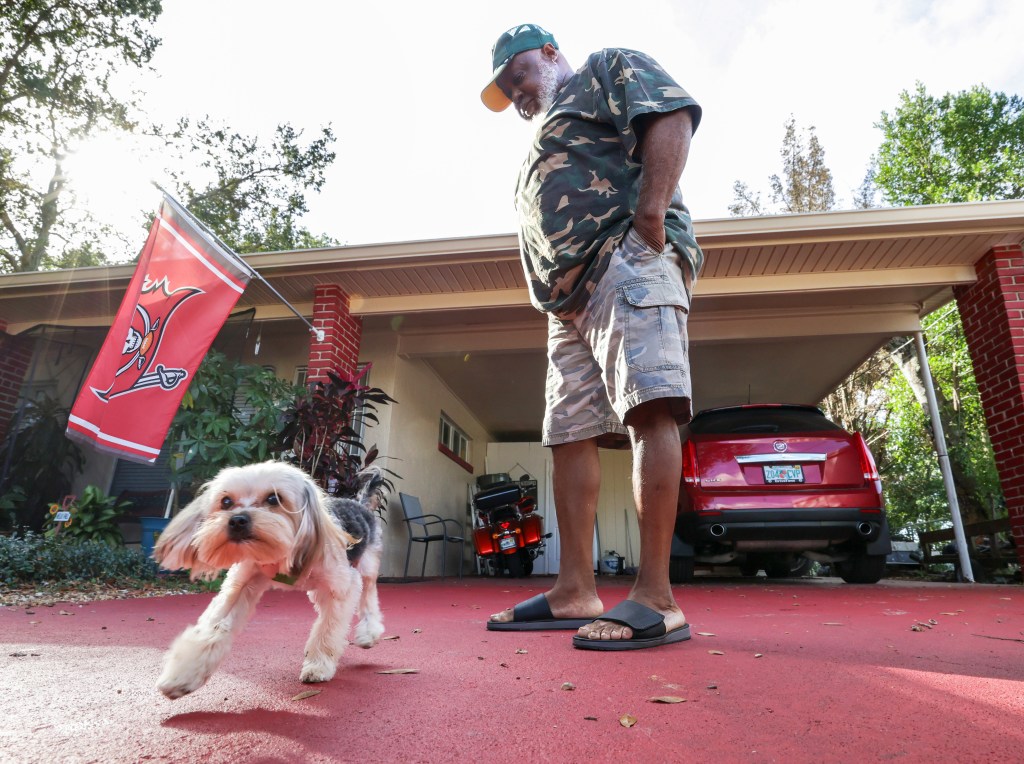
For years, Rodney and LaShonda Alexander used a collection of receptacles to catch rainwater that came through the leaky roof on their Pine Hills home.
“We had coolers, mop buckets. We had so many of those long plastic storage containers, we had to put those out, too,” said Rodney Alexander. “We went through years of hell.”
The couple’s roof was damaged in 2018 and, when they couldn’t afford repairs, the problems grew worse as time passed. After sustaining further damage from Hurricane Ian in 2022, the ceiling began collapsing.
But this year, their troubles came to an end when Habitat for Humanity Greater Orlando & Osceola County gifted them a new roof and other repairs.
The agency, best known for building new homes for low-income families, has a partnership with Orange County that aims to help preserve homes mostly by replacing their failing roofs.
Last year, the county invested an additional $1.4 million in that program. That money has allowed Habitat to help families whose homes were damaged by Hurricane Ian, like the Alexanders, make critically needed repairs they have been unable to afford.
“Orange County is committed to uplifting our residents and, when we work together with our community partners, we can make a life-changing difference for families who need it most,” Orange County Mayor Jerry Demings said in an email.
So far in 2025, Habitat provided major repairs to 65 homes in Orange. The additional funding from the county, which is now exhausted, paid for 21 of those repair jobs.
To qualify for the repairs, a family’s household income must be below 80% of the area median, meaning they annually earn less than $67,540 for a family of two and $84,300 for a family of four.
“We work with teachers and firefighters, first responders, preschool teachers, LPNs,” said Catherine McManus, the agency’s CEO. “Everyone is struggling for housing affordability and the need for Habitat is greater probably than it has been in decades.”
The Alexanders’ roof was first damaged in a storm. The repairs cost less than the deductible on their homeowner’s insurance, so their insurance carrier did not cover it. And the couple did not have money to pay for it themselves.
“Nothing outside of patchwork had been done to the roof in all that time, and we were continuing to get more and more damage,” Rodney Alexander said. “No matter how much I went up there and tried to patch it, you still had water and you still had rain coming in.”
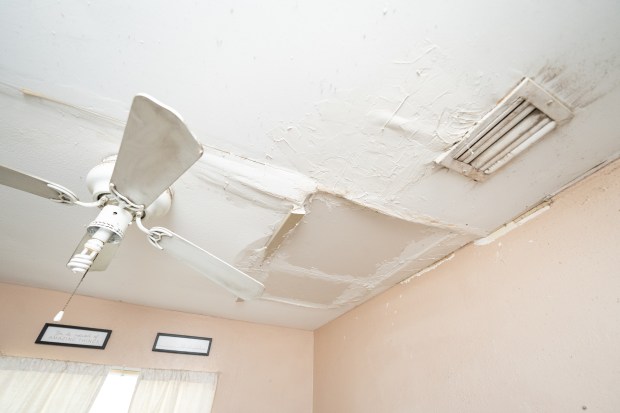 Water damaged caused by Hurricane Ian in LaShonda and Rodney Alexander’s Pine Hills home. April 2025. (Provided by Habitat for Humanity Greater Orlando & Osceola County)
That water caused a myriad of other problems, including a buildup of mold. In 2023, Rodney’s wife was hospitalized for four months due to a thyroid issue. The doctors told the couple that prolonged exposure to mold likely exacerbated her condition.
“Because of their inability to maintain their home, it became an unhealthy home,” McManus said. “We see that so frequently, that the home is just no longer healthy due to mold or it is unsafe.”
The damage was also a financial burden on the couple. Their insurance premium increased due to the state of the home. Their energy bill skyrocketed because of holes in the roof.
Lashonda was out of work for months, so the couple was living off Rodney’s disability payments.
“Every now and then I’d go out and get sheetrock, change that out,” he said. “But you got water still running through the rafters.”
Earlier this year, a friend told them about the Habitat program. The couple soon had a housing counselor, who helped them apply for home repairs and enrolled them in a financial literacy class.
“It’s like buying a house or a car. They go through your whole bank account. They let you know where you’re overspending, or where you’re under spending and stuff like that,” Rodney Alexander said.
The couple got a total of about $83,000 in work done to their home.
Along with the new roof, the nonprofit paid for mold mitigation, a new air conditioner, flooring, drywall and electrical work. It took about two months for the repairs to be done, and during that time, Habitat paid for the Alexanders to stay in an Airbnb.
The repairs were completed in July. Soon after, the couple was able to get their yearly homeowners insurance premium reduced. And their power bill went from about $500 a month to $200.
Since its founding in 1986, Habitat has built more than 450 affordable homes in Central Florida and repaired more than 600 homes. But rising costs are making it harder for the non-profit to continue its work.
“We’re getting hit from all sides. Material costs have risen significantly. The tariffs aren’t helping any,” McManus said. “The cost of land has truly more than doubled in the past several years. That makes it difficult to sell a home affordably.”
She is grateful for the extra infusion of cash from the county and the work it allowed her agency to do.
“You don’t think about a new roof or a new HVAC as something that is life changing. But for so many people in our community, it truly is,” McManus said.
With their roof leaking, the Alexanders wouldn’t have their 6-year-old granddaughter over to their house because they didn’t want to expose the child to mold. Now they can host her for the first time in years.
“To know that your grandchild can come and help bake cookies or open Christmas presents, that’s why we do what we do. It helps people live a better life. The life that they want to live,” McManus said.