
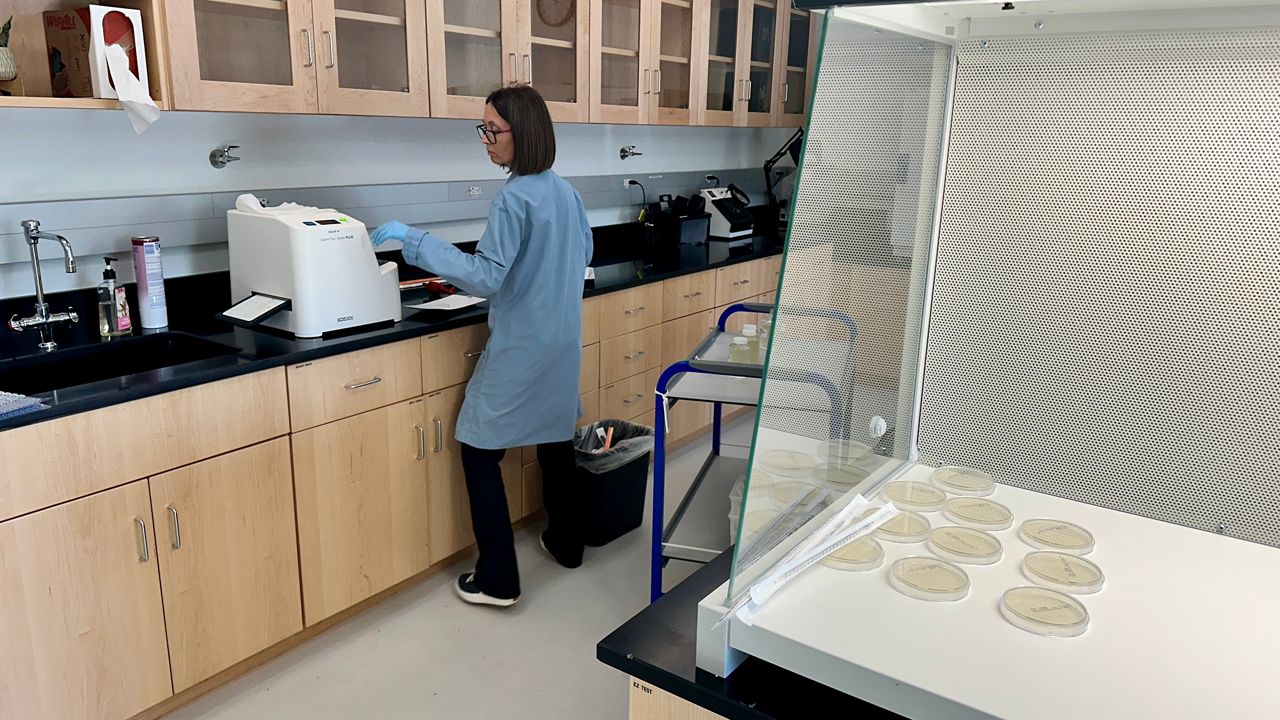
ST. PETERSBURG, Fla. — St. Petersburg unveiled the city’s first purpose-built water testing laboratory on Tuesday, which protects the environment and aims to ensure drinking water flows during hurricanes.
What You Need To Know
St. Petersburg unveils new water testing lab on Tuesday
The storm-hardened facility cost about $9 million and has 8 labs
The lab tests stormwater, beach surface water, drinking water and wastewater
Pinellas County, Hillsborough County and Gulfport also utilize the regional asset
“Clean, healthy water is essential for everything we do,” said John Palenchar, Water Resources Director. “Whether it’s the water we drink, the beaches we enjoy, or the environment that we depend on that supports us.”
The new facility cost about $9 million and is a nationally accredited environmental laboratory that prioritizes public health. City leaders held a ribbon-cutting on Tuesday and invited the public for a tour.
Mayor Kenneth Welch said the new facility would stand up to storms much better than the old lab, which was in an administration building. Welch said staff was scrambling in the old lab after Hurricane Milton last year.
“Our old retrofitted lab lost power,” he said. “Our staff had to run more than 180 drinking water tests in one day so that we could lift the boil water notice.”
The new lab is storm-hardened and has modern equipment. The facility has commercial power, backup generator power and a second backup generator.
“This isn’t just about the hurricanes,” said Copley Gerdes, City Council Chair. “This is about making sure that every day, whether the sun is out or not, that our people have a place to do the work that is needed for our city.”
There’s a total of 8 different water testing labs inside the facility. Palenchar said the metals lab tests to make sure the city’s industrial customers are properly disposing of their wastewater.
“We have to ensure that they’re not discharging any of those metals, those harmful metals into our system, because those would pass through our treatment,” he said. “Metals aren’t treated in a domestic wastewater plant.”
Palenchar said the nutrients lab tests for nitrogen or phosphorous in surface water from Tampa Bay or the Gulf beaches which can create red tide blooms.
“The most, I guess, important nutrient that we measure in the Bay is nitrogen,” he said. “That really is an indicator of how much nutrient pollution is going into our Bay, which feeds algae growth and blocks the light from getting to the seagrasses.”
Special overhead red lights are used in the chlorophyl lab to test water from Tampa Bay for plant matter.
“If there’s a lot of plant matter like algae, algae is photosynthesizing. So it uses chlorophyl. That’s a good indicator of the cloudiness in the water,” said Palenchar. “It’s what the Tampa Bay Estuary program uses to measure. It’s a performance measure of the health of Tampa Bay.”
Palenchar said the microbiology lab is the most popular by the number of analysis run and impacts every single type of water.
“Stormwater, beach surface water, drinking water, of course, and wastewater,” he said. “So all those different water types have microbiology components that need to be monitored to make sure that those waters are healthy for either human contact or, in the case of drinking water for drinking.”
Palenchar said the lab is a regional asset, which Pinellas County, Hillsborough County and Gulfport also utilize.