
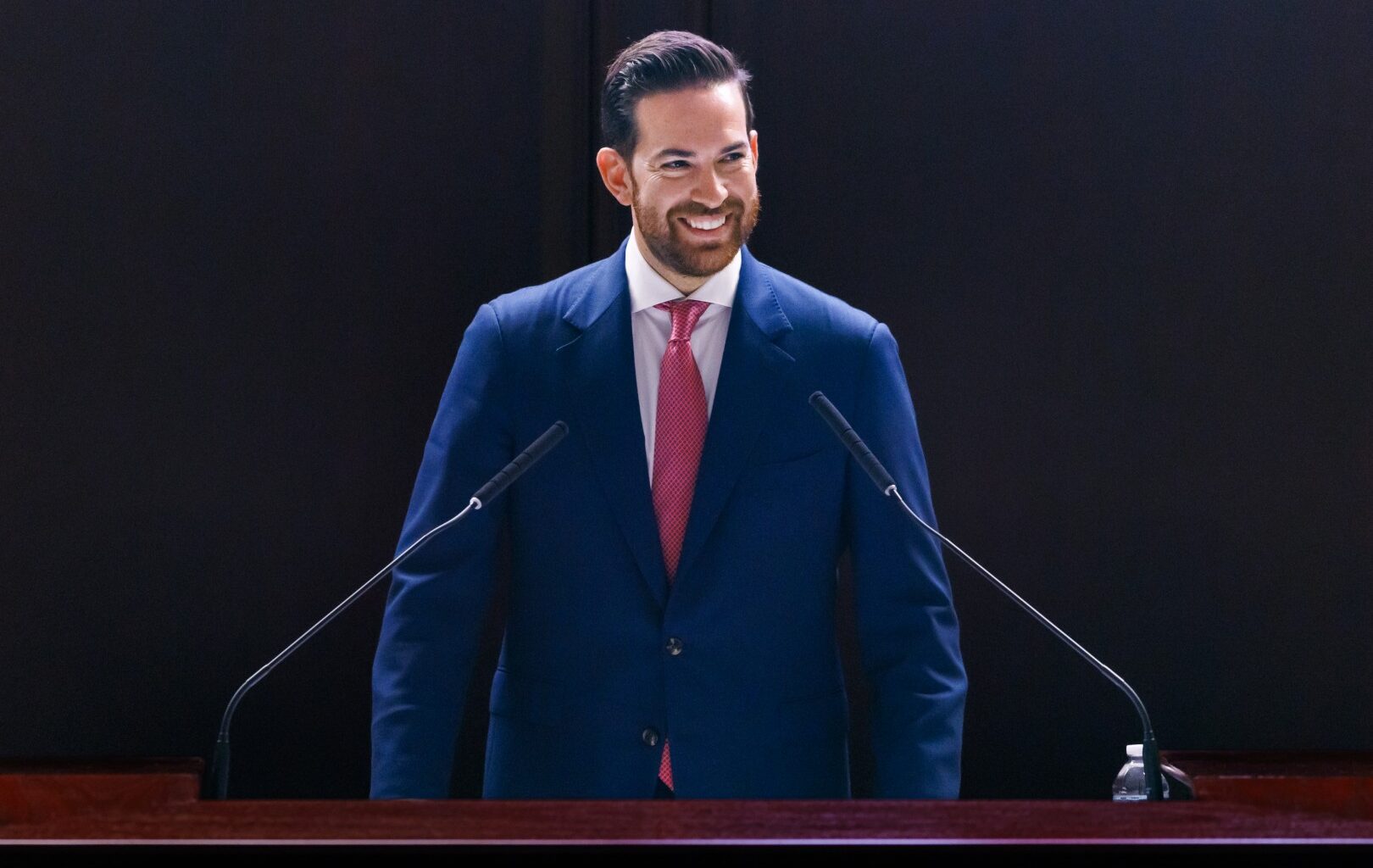
House Speaker Daniel Perez has unveiled a health care agenda he says will align Florida with President Donald Trump’s new federal framework, tighten safety-net programs and push down prescription drug costs while loosening regulations on providers.
Branded as “Florida’s New Frontier in Healthcare,” the package is built around the “Big Beautiful Healthcare Frontier Act” (HB 693), sponsored by Rep. Mike Redondo, and the Prescription Reduction Incentives and Competition Enhancement Act, or PRICE Act (HB 697), sponsored by Rep. Jennifer Kincart Jonsson.
Perez framed the initiative as a state-level follow-up on the health care provisions in the federal “One Big Beautiful Bill,” which passed earlier this year and included sweeping changes to public health care programs, including an 80-hour-per-month work requirement for Medicaid starting in 2027.
Redondo’s bill focuses on major public programs, including Medicaid, the Children’s Health Insurance Program (CHIP) and the Supplemental Nutrition Assistance Program (SNAP).
The bill would limit eligibility for certain undocumented immigrants, reduce retroactive Medicaid and CHIP coverage to two months, tighten work requirements for “able-bodied adults” on SNAP up to age 64 and narrow parental exemptions to those with children younger than 14. It also directs agencies to step up address checks, remove deceased recipients more quickly and bring payment error rates in line with federal standards.

“President Trump’s bold leadership through the One Big Beautiful Bill set the standard for real, results-driven healthcare reform, and Florida is proud to lead the way in implementing that vision at the state level,” said Perez, a Miami Republican.
“We are taking decisive action to cut red tape, grow our healthcare workforce, expand patient choice, and protect taxpayer dollars while ensuring families can access high-quality care when they need it most. In partnership with the President’s leadership, Florida is delivering real results.”
On the market side, the bill would slash regulations such as Certificate-of-Need requirements for nursing homes, hospice providers and intermediate care facilities for people with developmental disabilities; join interstate licensure compacts for physician assistants and EMS professionals; authorize independent practice for all advanced practice registered nurses, including psychiatric nurse practitioners, nurse anesthetists and clinical nurse specialists; remove supervisory caps on physician assistants; and expand the scope of practice for dental hygienists.
It also adds new transparency rules around out-of-network referrals and how patient payments are applied to deductibles.
“These policies reflect President Trump’s healthcare vision, which calls for fewer bureaucratic obstacles, more providers on the frontlines, and more freedom for patients to choose where and how they receive care,” said Redondo, also a Miami Republican.

“The Big Beautiful Healthcare Frontier Act ensures Florida is not just complying with federal reforms. We are leading their implementation to expand access, strengthen our workforce, and deliver better healthcare outcomes for families across our state.”
The PRICE Act, meanwhile, targets prescription drug prices and Pharmacy Benefit Managers, or PBMs, who have been subject to increased scrutiny in recent years.
PBMs negotiate with drug manufacturers on behalf of insurance companies to purchase drugs at reduced prices or promise additional rebates. They have been pejoratively referred to as “middlemen” due to “spread pricing” — a term describing the practice of charging an insurer one price for a drug and paying the pharmacy a lower cost while pocketing the difference.
The PRICE Act would prohibit PBMs from forcing pharmacies to dispense drugs at a loss or steering business to PBM-affiliated manufacturers when cheaper generic or biosimilar alternatives are available. PBMs would have to reimburse out-of-network pharmacies at the same rates as in-network pharmacies, and the Office of Insurance Regulation would be directed to adopt rules governing PBM contracts.
It would also institute “frozen formularies,” barring insurers and PBMs from dropping drugs, moving them to higher-cost tiers or otherwise raising out-of-pocket costs during a plan year, so long as manufacturers agree to keep prices stable over that period.
The bill would create a “most favored nation” model for prescription drugs by requiring manufacturers to report international pricing data and directing the Agency for Health Care Administration (AHCA) to set a benchmark price based on the lowest price paid in comparable, market-based countries, excluding single-payer systems.
Insurers, Medicaid plans and pharmacies would be barred from paying more than the AHCA benchmark, and insurers would be required to use savings to reduce premiums and patient cost-sharing.
“This bill is about restoring fairness, competition, and transparency to a system that has become deeply tilted against patients,” said Kincart Jonsson, a Lakeland Republican.
“Following President Trump’s leadership on drug pricing reform, Florida is standing up for families at the pharmacy counter by demanding market-based pricing, cracking down on abusive PBM practices, and ensuring patients can rely on stable access to the medications they need.”