
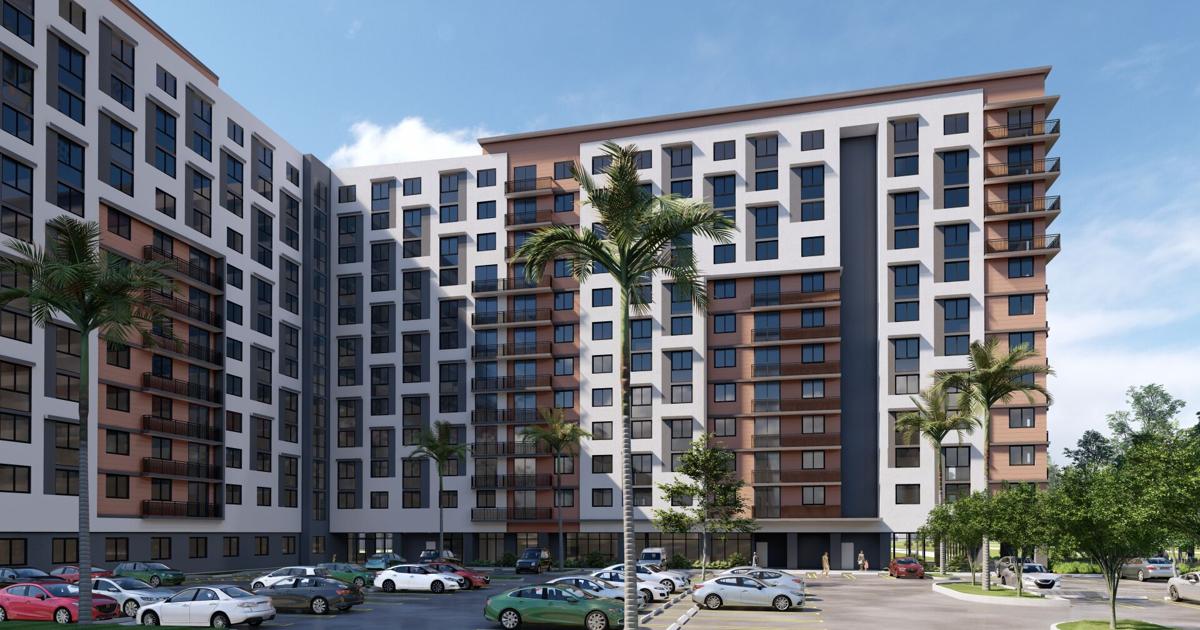
Last week, Related Urban Development Group and Miami-Dade County broke ground on Residences at Palm Court, a 316-unit mixed-income community in North Miami-Dade. The development will include affordable and market-rate homes, as well as a Jessie Trice Community Health Center.
Located at 950 N.W. 95th St., Residences at Palm Court will replace 191 public housing units in West Little River. A dedicated senior component will allow existing residents to return without displacement or added cost, according to a press release.
“The start of construction marks another milestone in our mission to build dynamic, inclusive communities that serve all Miamians,” said Albert Milo Jr., president of Related Urban. “Above all, I’m proud to reaffirm the promise we made to this community: every senior currently living on-site will be welcomed into the new development without displacement or cost. More than just housing, this project represents a long-term investment in this community’s dignity, health, and opportunity.
The development is funded in part by $3.5 million from the county’s Home Investment Partnerships Program.
A new 5,000-square-foot Jessie Trice Community Health Clinic will provide direct access to physical and mental healthcare for residents and the surrounding community. The Jessie Trice Community Health System has served Miami-Dade County since 1967 and is the first federally qualified health center in Florida.
Each apartment will include full-size energy-efficient appliances, granite countertops, impact windows, central air conditioning, and luxury vinyl flooring. Select units will offer in-unit washers and dryers. Community amenities will include a fitness center, co-working spaces, a multipurpose room, a computer lounge, walking paths, bike storage, dog park, and on-floor laundry.
“This community represents the best of what we can achieve when public and private sectors work together,” said Nathan Kogon, Miami-Dade’s director of Housing and Community Development. “We’re building housing that protects seniors, supports families, and strengthens entire neighborhoods. This is a true blueprint for public-private collaboration and inclusive growth.”
Completion is expected by the end of 2027.