
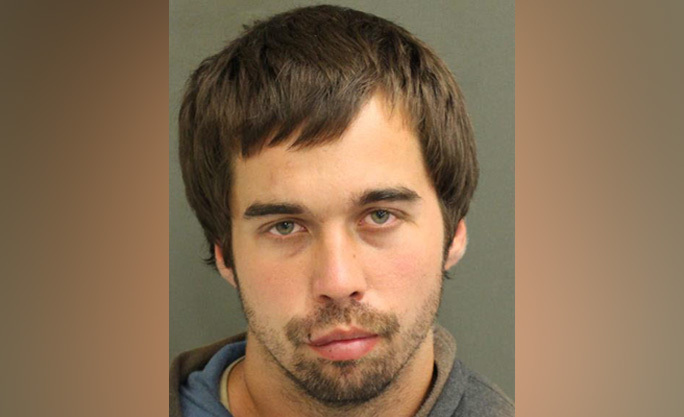
The man who pleaded no contest to attacking a jogger in Orlando is facing a new arrest after he failed to follow the terms of his plea agreement just three weeks after being released from jail.
An arrest warrant filed in Orange County court Friday alleges Tyler Feight failed to appear at his scheduled psychosexual evaluation, which was one of the terms of his probation after being charged in April with attempting to rape a woman while she jogged in College Park.
He was also accused of moving out of his grandparents’ house, the address he had on file with the court as part of his agreement, without notifying his probation officer.
Both violations were reported Wednesday, after the mental health center where Feight was supposed to have his evaluated alerted his probation officer that he was a no-show, according to the warrant.
When officers arrived at his grandparents’ house, his grandmother said Feight told her he reported the address as his residence even though he didn’t live there and “she did not want him around herself and his grandfather,” a violation report noted.
His whereabouts, as of Monday evening, are unknown.
“The subject does not appear to be a good candidate for probation due to him absconding from supervision and providing a false address to the Department of Corrections,” Officer Preston Dames wrote in the violation report. “This Officer respectfully recommends that his probation be revoked, and he be remanded to prison for the amount of time deemed appropriate by the Court.”
College Park residents were outraged after learning Feight was freed Nov. 20 after he pleaded no contest to felony battery in exchange for probation. He also avoided a formal conviction on his record, which Orange-Osceola State Attorney Monique Worrell described as an “oversight” by a prosecutor that is being reviewed.
Amid the outrage, Worrell on Thursday defended Feight’s sentence as appropriate given the Florida Criminal Punishment Code, which scores defendants to determine criminal sentences using a guideline. His battery charge, a third-degree felony, carried a five-year prison sentence, which could be applied given the alleged probation violations.
Withholding the conviction, she added, would not have changed his sentence nor did it impact his status as a felon, as he had been convicted in the past in a previous criminal case.