
Gov. Ron DeSantis said Monday that artificial intelligence holds immense promise to make lives better through advances such as medical research, but also cited many actual and theoretical perils that he said compel Florida government to intervene and regulate.
“It’s very hard to tell what’s real or what’s not real anymore,” he said, outlining a range of restrictions he wants to place on the companies developing AI.
DeSantis also said that President Donald Trump’s executive order last week designed to block states from crafting their own AI regulations wouldn’t get in Florida’s way.
“The president issued an executive order and some people were saying, ‘Well, no, this blocks the states from doing.’ It doesn’t,” DeSantis said during an event livestreamed from the Florida Atlantic University campus in Jupiter. “An executive order can’t block the states. … Clearly we have the right to do this.”
DeSantis was joined by three parents who outlined the horrors of uncontrolled AI — a child’s suicide and another’s attempted suicide — and by the commander of the South Florida Cyber Crimes Task Force, who outlined other threats.
Proposals
The governor isn’t alone in his desire to impose government regulation on AI.
Last week was “Artificial Intelligence Week” in the Florida House of Representatives, during which lawmakers held multiple hearings to consider the impact of the technology and legislation to restrict it. Some of the proposals the governor touted Monday mirror what lawmakers are working on.
Insurance: Proposed legislation would order insurance companies not to rely solely on AI to resolve claims. “We also want to make sure that artificial intelligence cannot be used as the sole determination for adjusting or denying an insurance claim,” DeSantis said Monday.
A House committee last week unanimously voted to advance House Bill 527, sponsored by state Rep. Hillary Cassel, R-Dania Beach, which would require humans to make decisions about denying insurance claims. Insurers could still use AI and algorithms to process claims and make recommendations about approvals and denials.
Utilities: DeSantis also said he wants to make sure Florida utility customers don’t have to pay more for electricity to cover the power needs of enormous data centers, if they locate in the state. That endorsement comes in the aftermath of criticism from consumer advocates that the DeSantis-appointed Public Service Commission has approved rate increases that place an unfair share of electricity system costs on residential consumers.
DeSantis fashioned himself as a champion of residential electricity customers on Monday. “You should not have to pay one dime more in utility costs — water, power, any of this stuff — because of (AI),” DeSantis said. “Making sure that Floridians are protected against that I think is really, really important.”
Other proposals: DeSantis unveiled his list of proposed AI “Bill of Rights” regulations on Dec. 4. They include a proposed requirement that consumers get notified if they’re interacting, including by phone or written correspondence, email, with an AI chatbot.
DeSantis also wants prohibitions on state or local government agencies using Chinese-created AI tools; banning use of chatbots as licensed therapy or mental health counselors; and prohibiting AI use of an individual’s name, image or likeness without their image for commercial purposes.
Can state act?
Florida’s ability to act is unclear.
On Thursday, Trump signed an executive order attempting to stymie state regulation of AI — something critics from both parties along with consumer groups see as a favor for big AI companies.
The president directed federal agencies to identify burdensome state AI regulations and pressure states not to enact them by withholding federal funding or challenging the state laws in court.
DeSantis said he didn’t think it would interfere with the moves he wants to take, and said he believes the state has authority to act unless Congress passes nationwide regulation. A Trump executive order can’t bind the state, DeSantis said.
Parents’ warnings
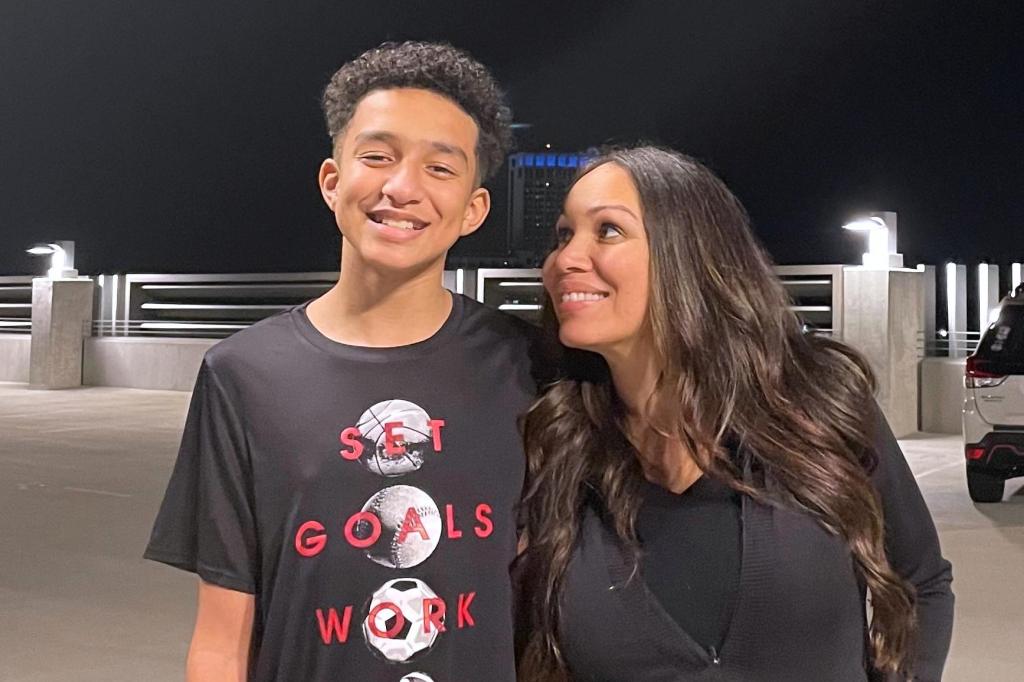
Megan Garcia, of Orlando, described the interactions her son, Sewell Setzer III, had with a chatbot before dying by suicide in February 2024.
She said the chatbot started to engage in sexual roleplay that amounted to grooming. Engaging with the chatbot, which claimed to be a licensed therapist, she said her son was told that she was “was there waiting for him and he needed to find a way to come home with her.”
Garcia said her son explicitly told the bot that he wanted to die by suicide and it did nothing to inform him that it was AI and he needed to talk to a human.
Also appearing Monday with DeSantis was the boy’s father, Sewell Setzer Jr. The family is suing the company in federal court.
Mandi Furniss, a Texas mother of four, said her family had “every guardrail” involving the internet and social media. They took the kids’ phones every night, blocked apps on their phones, and didn’t allow access to social media. “We thought we did everything right.”
Still, she said her oldest child, a boy with autism, suffered serious consequences from his interaction with a chatbot. Furniss said her son is just finishing treatment in a mental health facility after trying to take his life.
Furniss said the bot told her son that his parents were trying to take his phone away because they didn’t love him, that he should call child protective services and the police when they tried to take his phone away, and that killing them would be justification for taking away the app.
“We lost our son. He’s still alive. But I don’t know if he’ll ever be the same,” she said.
Furniss also filed a federal lawsuit against the company behind the chatbot; she said it is currently in arbitration.
‘Campaign of misinformation’
Maj. George Perera, commander of the Miami-Dade County Sheriff’s Office Cyber Crimes Bureau and the South Florida Cyber Crimes Task Force, said artificial intelligence has created other ill effects, especially with so-called deep fake images.
“It allows bad actors to create a campaign of misinformation” — and worse. The technology can allow someone to take clothed photographs of children, remove the clothes, and depict them performing sexual acts.
He said AI can facilitate hacking, using their knowledge of human behavior and interactions “to be able to convince you that this is the right thing to do and to give them money.”
And, Perera said, it is happening fast. “Artificial intelligence is taking the world by storm. There is nothing in the history of mankind that has gotten the traction that artificial intelligence has,” he said.
Rapid change
DeSantis said the problems could get worse if the companies are not restrained.
“They’re spending ungodly amounts of money on capital investment for AI. The stocks have gone up, all this other stuff. They have not gotten the return on that investment, not even close yet. And maybe they will,” DeSantis said. “But to the extent they’re not getting it, they are going to find ways to make money, and if they can get more young people addicted to some of these products, if that helps monetize, like that’s their incentive to do it.”
DeSantis, 47, contrasted today’s technology with the bygone era of his youth.
“We didn’t have smartphones. We didn’t have the internet,” he recalled. “And yet, you know what? We had fun. We lived. We enjoyed childhood. I mean we learned. We were productive. We were outside a lot more than kids are today.”
This report includes information from The Associated Press and the News Service of Florida.
Political writer Anthony Man can be reached at aman@sunsentinel.com and can be found @browardpolitics on Bluesky, Threads, Facebook and Mastodon.