
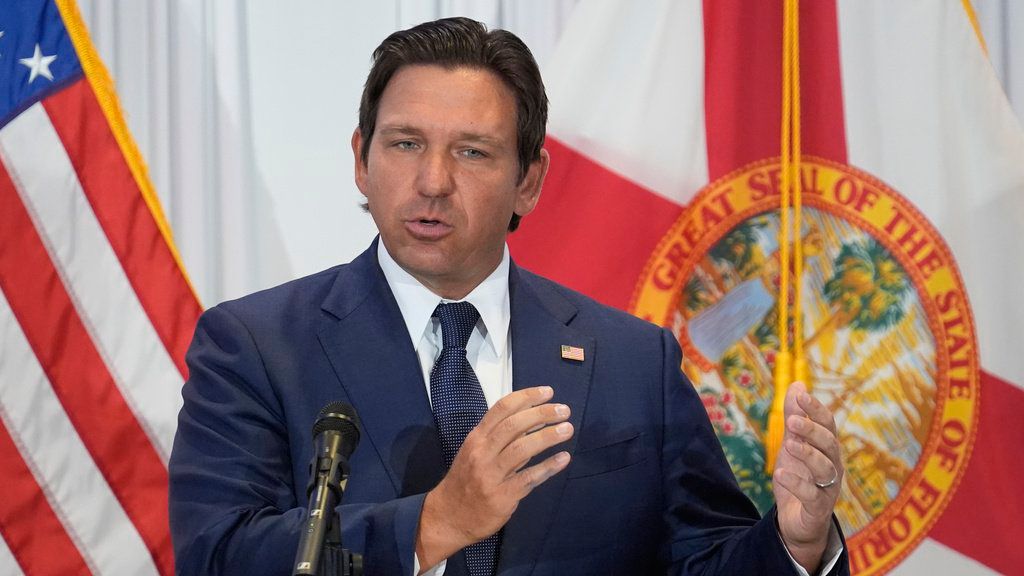
Florida Gov. Ron DeSantis pushes state lawmakers to continue a plan to limit AI uses, and a plan to address the end of Affordable Care Act subsidies begins.

DeSantis forges ahead with state AI push
Florida Gov. Ron DeSantis said he wants the state to move ahead with policies on artificial intelligence during a roundtable discussion in Jupiter on Monday.
It’s the first time the governor has commented on the issue since President Donald Trump signed an executive order designed to limit states’ ability to pass AI regulations.
DeSantis said that regardless, Florida will forge ahead, and he believes any action taken by state lawmakers would survive federal scrutiny.
“We’re not going to give up any rights from the state. Now, the president issued an executive order, and some people were saying, ‘Well, no, this blocks the states from doing it,’” DeSantis said. “If you should read it and see, first of all, an executive order can’t block the states. You can preempt states under Article One powers through congressional legislation on certain issues, but you can’t do it through executive order. But if you read it, they actually say a lot of the stuff we’re talking about are things that they’re encouraging states to do. They say it doesn’t prevent child safety. It doesn’t prevent any of that stuff. So even reading it very broadly, I think the stuff we’re doing is going to be very consistent. But irrespective, clearly we have a right to do this.”
DeSantis outlined a few policy proposals he wants lawmakers to tackle.
Data centers shouldn’t be financed with taxpayer dollars or tax breaks.
State and local governments should be barred from using Chinese AI data.
No use of any person’s name, image, or likeness in AI form without that person’s consent.
Transparency for consumers when they’re interacting with AI technology.
Parental control of what their children can and cannot access with AI.
DeSantis also wants to prohibit AI companies from selling or sharing personal identifying information with third-party entities.
He also said he wants to ensure that AI can’t be used as the sole determinant for adjusting or denying insurance claims.
The outlined plan would also prohibit any entities from using AI chatbots in the role of licensed therapy or mental health counseling.
This will now fall to the Florida Legislature to introduce and pass a plan to make these goals a reality.
It’s not clear if such a plan would be allowed to continue, because Trump’s order compels the U.S. attorney general to challenge all state laws on AI that are inconsistent with his executive order.
That means Attorney General Pam Bondi could end up suing her home state if the White House believes that Florida went too far in AI regulation.
Florida Republicans discuss health care plan
As the health care debate over Obamacare subsidies continues in Congress, it’s expected that Florida will be the state most impacted if the Affordable Care Act subsidies are allowed to expire at the end of the year.
The debate in Washington is a by-product of the recent government shutdown, where lawmakers pledged to debate the issue before the end of the year.
Add to that, polling shows that affordability is among the top issues for voters ahead of the 2026 midterm elections.
According to KFF, a nonpartisan, nonprofit think tank, Florida is home to about 4.7 million people enrolled under the Affordable Care Act.
KFF estimates that enrollees could, on average, see premiums rise by around 75%.
So, for example, a person paying $50 a month now could face a monthly payment of nearly $90.
It’s a new reality that some Floridians are already facing.
“I know I’m not alone,” Winter Garden resident Lynnette Bidwell said. “Many people in Florida and across the country are being priced out of their plans, losing long-term doctors and facing emotional and physical consequences of disrupted care.”
That leaves residents with three possible options — pay the new rates, switch to a cheaper coverage plan or drop health coverage altogether.
Florida already ranks third in the nation for the most uninsured residents, according to Miami University.
Many Republicans in Washington are still opposed to any sort of extension.
State governments have a few options, including Medicaid expansion, or they could offer a state-level subsidy.
Neither of those options appears to be on the table in Florida.
Two of the flagship bills in the upcoming legislative session do address health care — House Bill 695 and House Bill 693.
Florida Speaker of the House Danny Perez has called the two bills Florida’s new frontier in health care.
The plan is more of a long-term fix, seeking to stimulate the private market by lowering drug costs and loosening regulations.
At the same time, they tightened the rules on social safety net programs and tightened the eligibility for things like Medicaid and food stamps