
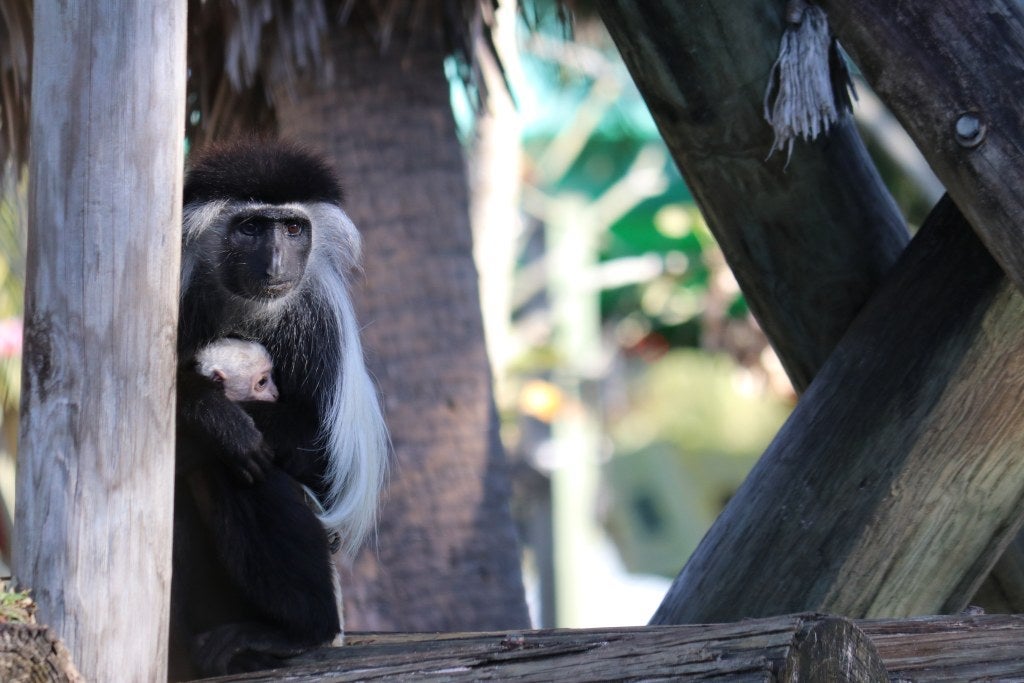
ZooTampa at Lowry Park got a new arrival on Dec. 6. A baby Angolan colobus monkey was born — the first since 2018. The zoo hasn’t announced whether it’s male or female. Six monkeys now live in the troop.
“Both mother and infant are in good health, with the bright-eyed baby nursing and the mother exhibiting appropriate maternal behaviors,”, officials shared in a press release, per WTSP. The infant has been nursing, and the mother acts as she should.
Two adult males live in the troop. Three adult females joined them, and now the baby makes six. People can visit the primates area and see the newborn. Its pure white fur makes it easy to spot.
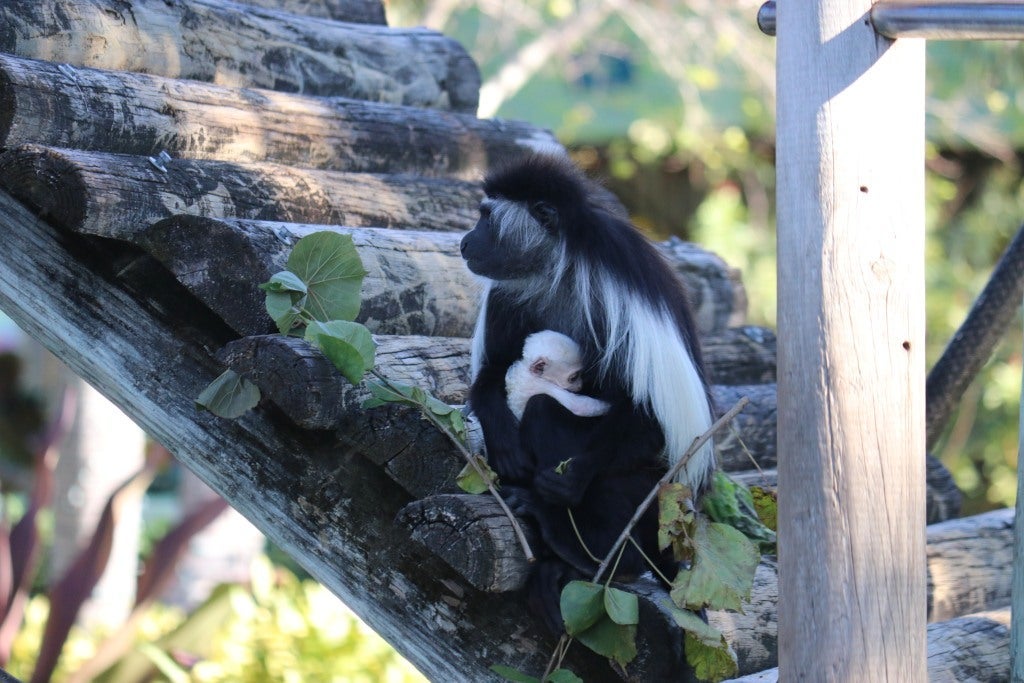 Photo: ZooTampa
Change comes fast for these infants. In coming months, the white coat will darken and patches of black will appear. Adults wear black and white fur. Babies cling to their mothers during that first year, drinking milk and staying close. Other troop members pitch in to help raise the young one.
The Democratic Republic of the Congo and Angola are home to Angolan colobus monkeys. Tanzania and Kenya have groups too. Wild monkeys live around 20 years. Those in zoos can reach 30.
Black and white fur covers these primates. A bushy tail swings behind them, and a beard frames each face. Groups stick to their territory. One male leads, with several females and their babies.
“Colobus” comes from a Greek word meaning “mutilated.” The African Wildlife Foundation explains why. These monkeys lack thumbs — something rare among their kind.
The International Union for Conservation of Nature lists Angolan colobus monkeys as “Vulnerable.” Hunters once killed many for their pelts and skin.
Trees fall and farms spread. Habitat loss threatens the species now. This zoo birth matters. It supports efforts to protect these monkeys.