
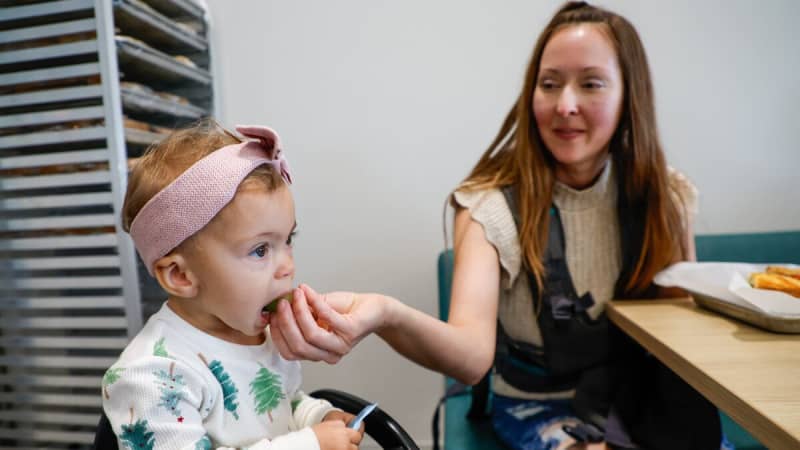
As a bartender at Gigglewaters in Safety Harbor, Savannah Dolan saw firsthand the hesitancy and nervousness of those who approached her for sack lunches. Back in November, the restaurant helped initiate a movement of makeshiftlocal food pantries after the government shutdown this fall led to the halting of the Supplemental Nutrition Assistance Program.
At least 150,000 Tampa Bay residents were left vulnerable to food insecurity as a result, and dozens of area restaurants like Gigglewaters stepped in to fill a need. While many of these efforts have tapered since the government’s reopening on Nov. 12, the crisis is far from over.
On Nov. 14, previously scheduled November SNAP benefits were issued to eligible recipients, the Florida Department of Children and Families said. But it’s unclear if previous beneficiaries are still eligible for what they were formerly allotted. Additional provisions in President Trump’s One Big Beautiful Bill Act pose more potential hurdles to navigating an already murky system.

As a mother, Dolan found the experience of handing out free meals at Gigglewaters a lot more emotional than she expected it to be. It really put into perspective how dire the need for food is, she said.
“What about all the people who are scared to ask for help? It was really eye-opening,” Dolan said.
Gigglewaters owner Rachel Fine Wilson said the situation is incredibly confusing.
“I even have confusion. Is SNAP fully funded and restored? We’re missing a little bit of clarity of exactly what’s happening at this moment. … Are people caught up, or is there still a need that’s there?”
The localgrassroots movement spread by social media and word of mouth fed hundreds, if not thousands, of area residents. Recreation and resource centers, nonprofits, churches, food banks and community-based organizations also mobilized to providemore food.
Tampa Bay’s Metropolitan Ministries reported a 50% increase in demand for groceries and financial assistance during the 43-day shutdown, compared to the previous year. Feeding Tampa Bay,one of the largest local players focused on food insecurity and hunger relief,reported distributing 200,000 more meals per week, on top of their weekly average of 1.9 million meals.
For the past four years, Uziel Ramirez and his family‘sbusiness Xtreme Tacos has been open on Thanksgiving Day to feed those in need. This year was no exception. A few days into SNAP’s hiatus, Ramirez set up a food pantry at his restaurant. Neighbors donated in droves. The Hampton Terrace Community Association, a nonprofit neighborhood group in Tampa, sent Xtreme Tacos money to provide more free meals. They served over 200 meals within 11 days. The pantry shuttered after three weeks, when the benefits were reinstated, Ramirez said.
“Some folks were walking to the restaurant, some were riding their bicycles or taking public transportation. It was amazing that we were able to help but bittersweet because we could see how much some neighbors were struggling,” he said.
Shannon Hannon-Oliviero, media and public relations officer for Feeding Tampa Bay, said in late November that the number of people coming to them for hunger relief is still higher than normal, despite the restoration of SNAP benefits.
Feeding Tampa Bay is primarily a volunteer-based nonprofit and “can only serve as much as the community helps us serve,” Hannon-Oliviero said. In the event of another shutdown and suspension of benefits, “it’s really people standing alongside us to take action, especially when you’re talking about something so unexpected as a government shutdown.”
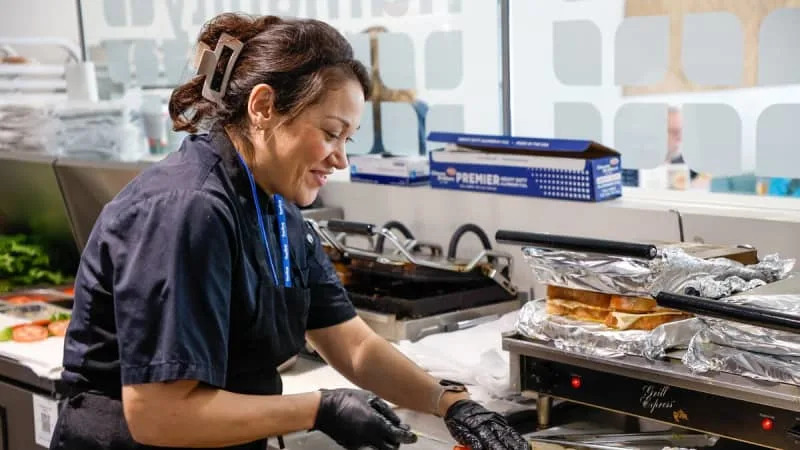
That’s where local restaurants came in. At one point, Gigglewaters was doling out 20 to 30 sack lunches a day,according to Wilson. They stopped the program in late November.
“It’s one of those moments where you feel like a little ripple can create a tidal wave,” Wilson said.
Blind Tiger Coffee Roasters discontinued their free meal program the week of Dec. 8. Owner Roberto Torres, who has sat on the board of Feeding Tampa Bay for the past six years and just signed up for another six years, said they fed 400 to 500 people from the cafe in November.
Torres went to a Feeding Tampa Bay board meeting Nov. 17, the Monday after the government reopened. The nonprofit was hosting a mega pantry food distribution pop-up that day, and by the time Torres left at 6:30 p.m., there were still cars queued for the drive-thru.
“Now, there’s going to be new requirements for the people that qualified before,” Torres said of the reinstated SNAP benefits. “These are the working poor, who are making choices between having to put gas in their car, pay rent or buy groceries.”
If there’s a silver lining, and he’s hesitant to try to point one out, he said, it’s that the shutdown “highlights how food insecurity works and who is the most vulnerable.”
Thousands of people in Tampa Bay were affected by the shutdown, “those with fixed incomes, the elderly, children, the most vulnerable people in our population, that’s what we do know,“ Torres said.
He hopes what Blind Tiger and other restaurants have done becomes infectious. For those looking to help Tampa Bay residents dealing with food insecurity, he suggests getting in touch with Feeding Tampa Bay.
“Short of you going to the grocery store and buying groceries for people, the most immediate way you can help is helping people afford food.”
Feeding Tampa Bay can assist individuals on where to find food assistance, and with donation and volunteer opportunities.Text FTBFYI to 833-530-3663.
Dial 2-1-1 or visit 211.org to connect with local food programs.
Findhelp.org is a database connecting individuals by zip code to emergency food, food pantries, help paying for food and free meals.
Metro Ministries provides assistance with groceries and hot meals and offers opportunities to volunteer, donate, host a drive and even become a corporate partner. 813-209-1000.
Check with your favorite participating neighborhood restaurants to see if food distribution programs are ongoing.