
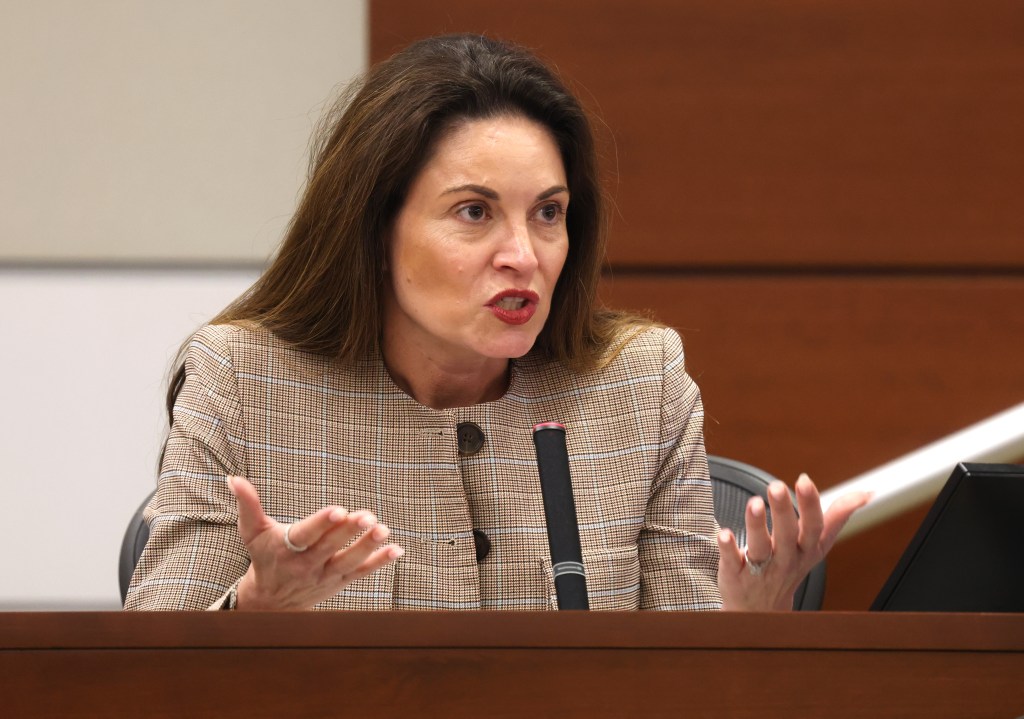
Now that she’s a judge, Lauren Peffer said she realizes more acutely why she should not have cited a scandalous tell-all and a bogus recording as examples of why the Florida judiciary has lost the trust of the people.
Contrite, apologetic and accepting full responsibility for her mistakes, Peffer, a Broward County Court judge, took the stand Tuesday at a hearing before a panel of the Judicial Qualifications Commission, the body that polices judicial misconduct and recommends whether wayward judges should be disciplined, reprimanded or removed from the bench.
Peffer’s infraction came before she was ever sworn into office. In 2024, as she was campaigning, she cited a salacious tell-all about the judiciary in the Ninth Circuit, which covers the Orlando area. The book was written by a disgruntled former employee who made shocking but unsubstantiated allegations about misconduct. The book was self-published, had not been reviewed by any independent news organization and did not result in a single disciplinary action against any of the judges named in it.
In an endorsement interview with the Sun Sentinel, Peffer said she was running for office to restore public confidence in the bench. She cited the book as evidence the judiciary’s reputation was in question. When asked for evidence the book was being taken seriously, Peffer later provided a link to a recording purporting to be a phone call of Florida’s Chief Justice, Carlos Muñiz, discussing the book’s contents with fellow Florida Supreme Court Justice Renatha Francis and Lisa Munyon, chief administrative judge of the Ninth Circuit.
That recording, in which all three judges appeared to validate the book’s criticisms, was an AI-generated deepfake, and Muñiz disavowed it while appearing at Peffer’s hearing via Zoom Tuesday.
“The whole thing is kind of cartoonish and ridiculous,” the Chief Justice said.
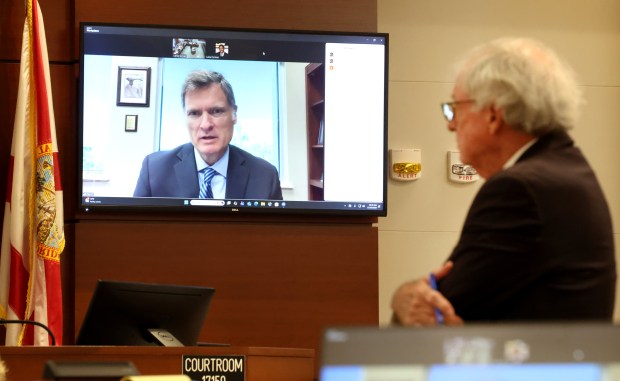 Florida Supreme Court Chief Justice Carlos G. Muñiz testifies via Zoom on Tuesday during Broward County Judge Lauren Peffer’s ethics hearing at the Broward County Courthouse in Fort Lauderdale. (Carline Jean/South Florida Sun Sentinel)
The recording was hosted on the web site of the same company that published the book. The author was the company’s sole registered agent, according to Florida business records.
Peffer stopped citing the book as soon as she became aware its contents were in question and that the recording was a fake. But the Judicial Qualifications Commission filed ethics charges against her anyway, saying she should never have cited the book or the recording in the first place.
Peffer, taking the stand in her defense, agreed. “It was a substantial lapse in judgement,” she said. “It’s mortifying to hear that recording now,” she said, referring to the Sun Sentinel’s endorsement interview where she discussed the book.
“You recognize as a candidate for judge that you have the potential to embarrass justices of the Supreme Court, that people believe that information came from them, right?” asked JQC attorney Hank Coxe.
Peffer said yes and added she would be “disappointed” in a candidate who spread misinformation about her. She also said that was not her intent. “I did not wake up at any point during this campaign and decide to put somebody or their reputation in my crosshairs… That doesn’t change the result.”
The JQC will decide later whether to recommend any disciplinary action, but the ultimate decision will lie with the Florida Supreme Court, which has the discretion to be less or more lenient. In prior cases, judges’ acknowledgment and cooperation with the JQC have been taken into account in the outcomes.
Rafael Olmeda can be reached at rolmeda@sunsentinel.com or 954-356-4457.