
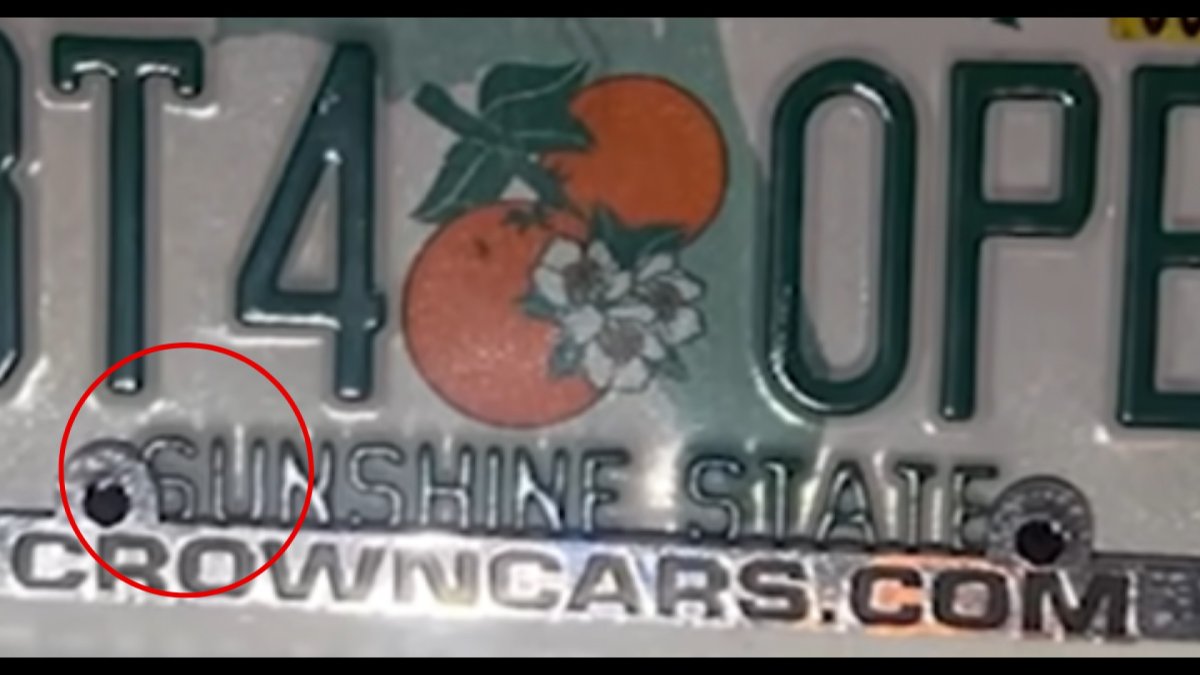
In Florida, drivers can have a license plate frame as long as the letters and numbers and the tag decal are visible. But the updated law has brought some confusion when it comes to enforcement.
One South Florida man spent the night in jail after he was pulled over and arrested by Davie Police for the license plate frame on his rental car.
“Something needs to be done because that’s not right,” Demarquize Dawson said.
Dawson posted a photo of his license plate on Instagram and said he was arrested because the “S” in “Sunshine State” was covered by the frame.
“He said, I’m arresting you because the ‘S’ on your license plate is obscured. The ‘S’ in sunshine,” Dawson said.
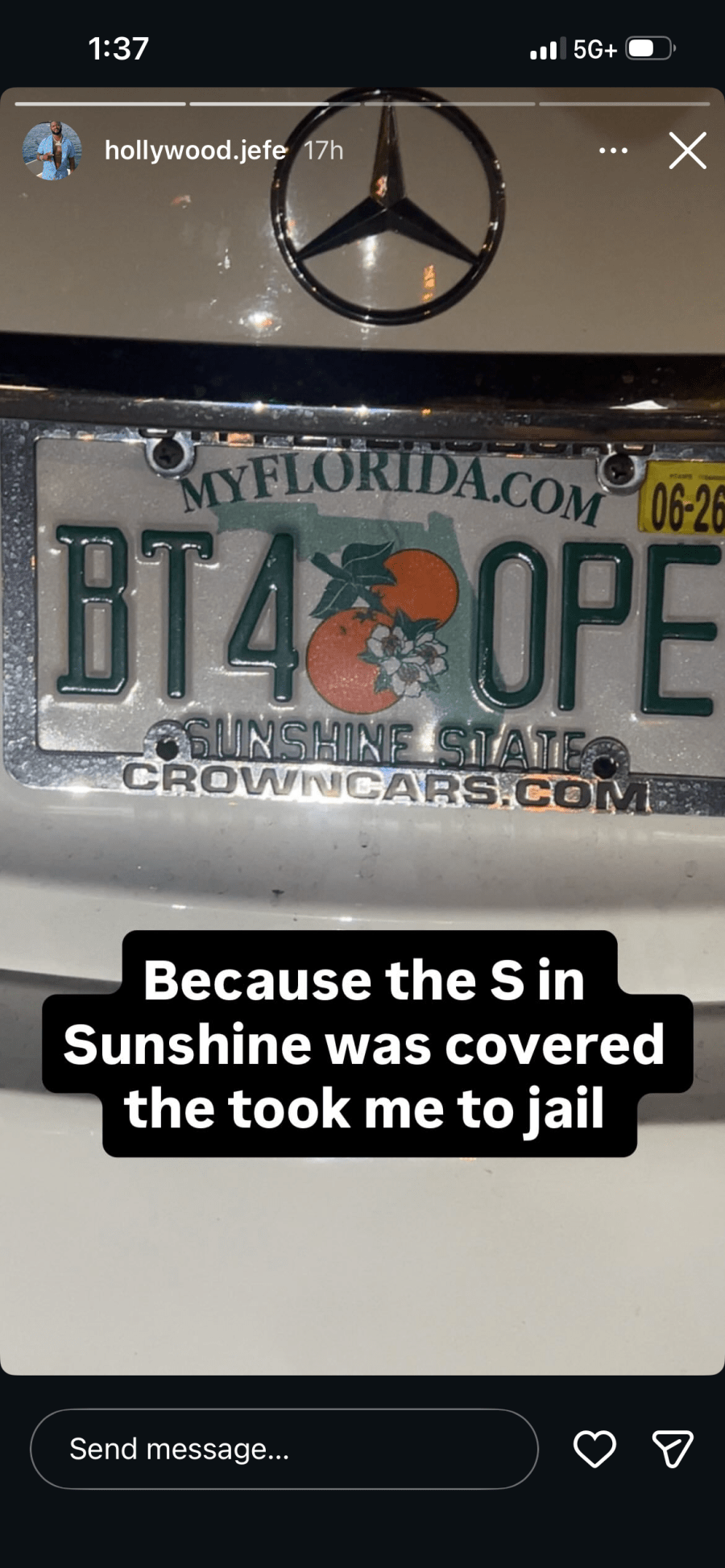
But according to an updated memo Monday by Florida Highway Safety and Motor Vehicles, drivers’ frames can cover the top or bottom of the plate as long as an officer can identify the state
After Dawson’s arrest, Davie Police apologized and issued a statement, “At the initial release of this updated law, the wording was vague, unclear and appeared to be open for misinterpretation. Since the release of a memo of clarification from the Florida Police Chief’s Association was provided to our department, our officers are educated on the application and use of this statute. Unfortunately, it appears this arrest was invalid and we extend our apologies to Mr. Dawson.”
To help clear things up, the Miami-Dade Tax Collector also sent out a flyer for clarification and Davie Police even explained the new guidance before apologizing to Dawson.
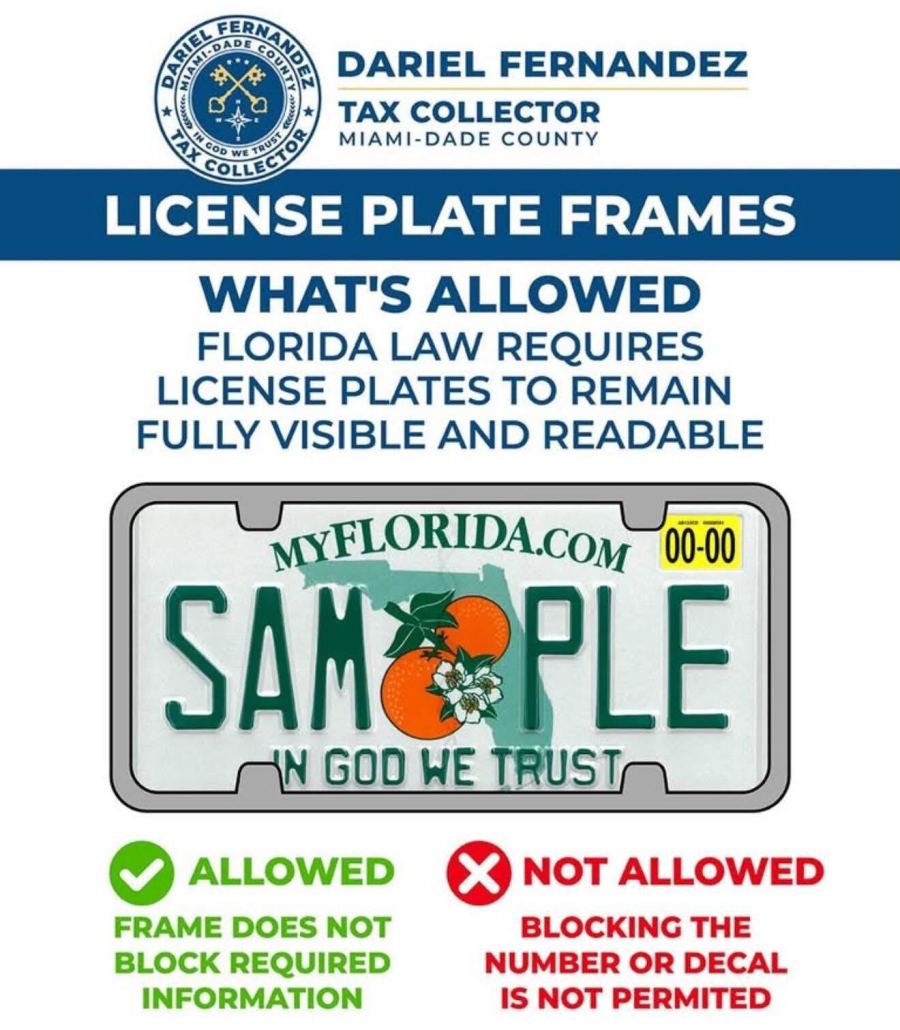
“As long as officers are able to read your numbers and this registration sticker, you can have a frame. If it’s partially covering where you can partially see Florida or just halfway see ‘Sunshine State,’ you’re alright,” said Davie Police spokesperson Officer Julia Ross.
This all began under a state law that took effect on Oct. 1, which states that anything that covers or alters your license plate is against the law.
According to the arrest report, Dawson even went to the hospital after having a panic attack. He was OK and later released from jail on his own recognizance, but he said he never should have been arrested.
“There was a big commotion in court on what’s right and what’s wrong about this new statute,” Dawson said.
The original law was intended to stop tinted covers, which can make tags hard to read and are usually used for toll fraud and hiding stolen cars.
“You don’t need to throw out your plate frame as long as we can still read your license plate and see your registration sticker,” Ross said.
What’s also new about this law is the penalty. It went from a non-criminal traffic infraction to a second-degree misdemeanor, which could mean 60 days in jail and a $500 fine.