
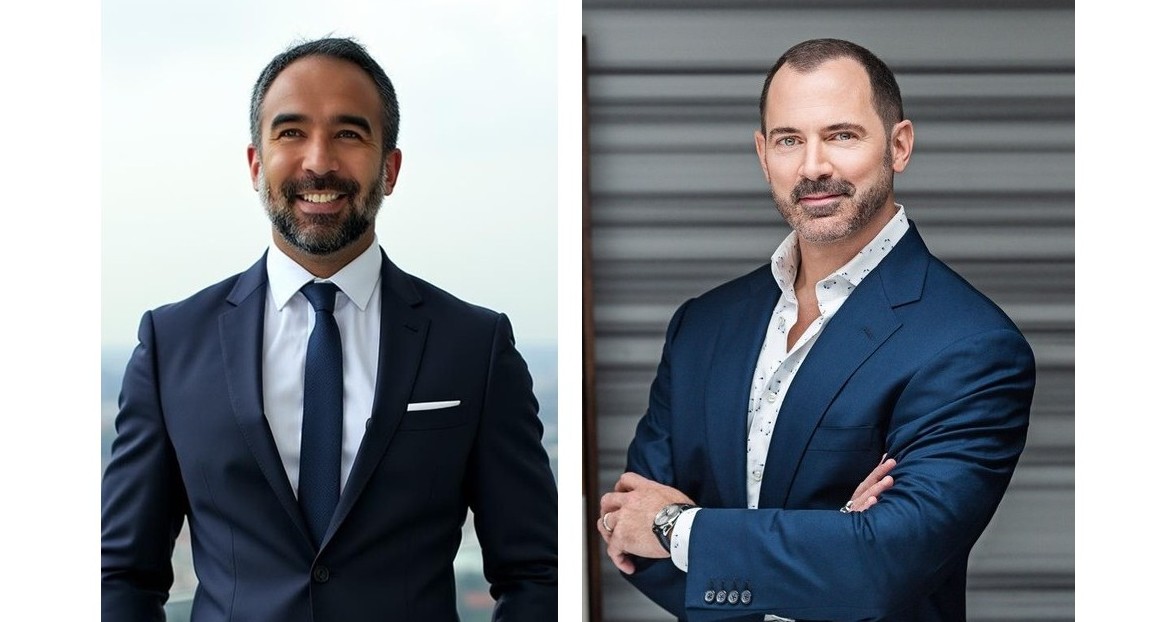
The through-line connecting Joseph Panetta and Jesús Reyes, and their path towards co-founding Trinity Aesthetics, is experience.
Years of watching how beauty, skincare, and consumer products move through the world. Years of understanding what big companies do well and where they fall short. Years of seeing med spa operators struggle not because they lack skill, but because they lack time, systems, and practical support.
Panetta spent much of his career inside the world’s most recognizable consumer brands, guiding marketing at Procter & Gamble, Unilever, J&J, and serving as chief marketing officer at Swatch. That experience later led him to Los Angeles, where he began working with a tiny AI team on advanced product development for major beauty companies.
By then, Reyes had left banking and stepped into operating a cosmetic dermatology practice. He arrived just in time for a period when many practices were struggling to stay afloat, yet he managed to steady and grow it.
That experience gave him a firsthand view of the industry’s biggest missing piece. Providers weren’t trained to sell, he explained to Refresh Miami, and they often felt uneasy doing it. Patients, meanwhile, weren’t armed with enough information to make the most of their appointments. This created a huge gap: businesses competing in one of the most crowded segments of healthcare had no easy way to keep clients engaged.
“So many med spas, so many injectors, and nothing helping them stand out,” Reyes said. Trinity emerged from both founders recognizing the same simple truth: practices needed help reducing friction.
The company’s early technology had been dormant for a while because the cost of keeping AI systems idling on servers added up fast. But once the founders realized how well their approach fit the med spa world, they brought everything back online, updated it, and started showing it to operators. Interest quickly followed. A first pilot in Los Angeles performed better than expected.
“We didn’t realize it would overdeliver by that much,” Panetta said. And all that with a lean team of four executives and around a dozen software engineers.
One of Trinity’s most popular features revolves around booking. Instead of waiting for Monday morning or struggling through clunky online forms, patients can be prompted at the right time with a clear call to action. That alone can change retention. But the deeper value sits in what happens before a patient even walks in. The platform scans each face, analyzes concerns, and sends meaningful data to providers. This lets a practitioner start an appointment already understanding goals, issues, and recommended treatments.
To illustrate just how much this changes the flow, Reyes shared a moment from a recent test. A provider suddenly became available for four hours on a Wednesday afternoon. The front desk spent six hours manually texting 250 people. Trinity’s system took fifteen seconds, selected the right matches, and generated far more revenue than the manual effort. “This is what the future looks like,” he said.
The team describes their technology as a licensed esthetician in your pocket – an AI assistant that checks in, answers questions, warns you before a procedure what you shouldn’t use on your skin, reminds you about SPF, and helps you maintain results. It supports providers instead of replacing them. As Panetta put it, no robot is about to inject someone’s face. The goal is to clear the administrative clutter so humans can focus on skilled work.
Looking ahead, Trinity is already expanding pilots across the US and UK, with interest from Canada, Dubai, and Australia. The company also sees value in partnering with suppliers who are eager for real data – what patients want, which treatments take off in which markets, and how providers compare on efficiency and outcomes.
Long-term, Trinity’s ambition is to define a new normal for cosmetic practices. “We’re creating the new standard for how this industry runs,” Reyes said. In a market where a med spa sits on every block, the business that truly understands its patients – and keeps them coming back – will win.
Pictured above: Trinity Aesthetics co-founders Jesús Reyes, CFO/COO, at left, and Joseph Panetta, CEO.

READ MORE IN REFRESH MIAMI:

I am a Miami-based technology researcher and writer with a passion for sharing stories about the South Florida tech ecosystem. I particularly enjoy learning about GovTech startups, cutting-edge applications of artificial intelligence, and innovators that leverage technology to transform society for the better. Always open for pitches via Twitter @rileywk or www.RileyKaminer.com.
Latest posts by Riley Kaminer (see all)