
Officials say the improvements are designed to reduce flooding risks as the city grows and storms become more intense.
TAMPA, Fla. — Tampa leaders on Tuesday unveiled completed upgrades to one of the city’s oldest and most critical wastewater pumping stations, offering a tour of improvements officials say are designed to reduce flooding risks as the city grows and storms become more intense.
The Bayshore Wastewater Pumping Station, originally built in 1955, has quietly operated beneath South Tampa for nearly 70 years.
Mayor Jane Castor said the facility now runs nonstop, “24 hours a day, seven days a week,” processing about 3 million gallons of wastewater daily, adding that “to say that it is working hard is quite an understatement.”
The $17 million rehabilitation is already fully operational and is part of Tampa’s $2.9 billion Progressive Infrastructure Planning to Ensure Sustainability, or PIPES, program, approved by city council in 2019.
Castor said the plan was created to replace aging water and wastewater pipes, some more than 80 years old.
“As we grow, we continue to develop very successfully in our city,” Castor said. “A successful city is built on a strong foundation — a strong infrastructure. The pipes, the roadways, all of the elements that really make this a great city.”
Castor noted that many of Tampa’s pumping stations date back to the 1950s and were long overdue for upgrades. “So much of it is overdue for upgrading,” she said. “And this particular pump station was one of those.”
For decades, much of the Bayshore station’s electrical equipment sat below ground — a standard engineering practice at the time but one that left the facility especially vulnerable to flooding and storm surge from nearby Hillsborough Bay.
Tampa wastewater director Eric Weiss said the station’s original design reflected the standards of its era.
“It was built in 1955,” Weiss said. “It was standard engineering practice at that time to install all of the electrical equipment below grade in a basement of the pumping station. And as you can see, where we are located next to Hillsborough Bay, we are susceptible to storm surge and hurricane impacts.”
During Tuesday’s tour, city officials highlighted how those vulnerabilities have now been addressed.
The station has been converted to a modern submersible pumping system and expanded from two pumps to four.
Weiss said the additional pumps do not dramatically increase capacity but instead improve reliability.
“It has nominally increased the capacity,” he said, “but it’s more for just resilience and sustainability.”
Electrical systems have been relocated into a new building elevated above ground and protected by reinforced concrete.
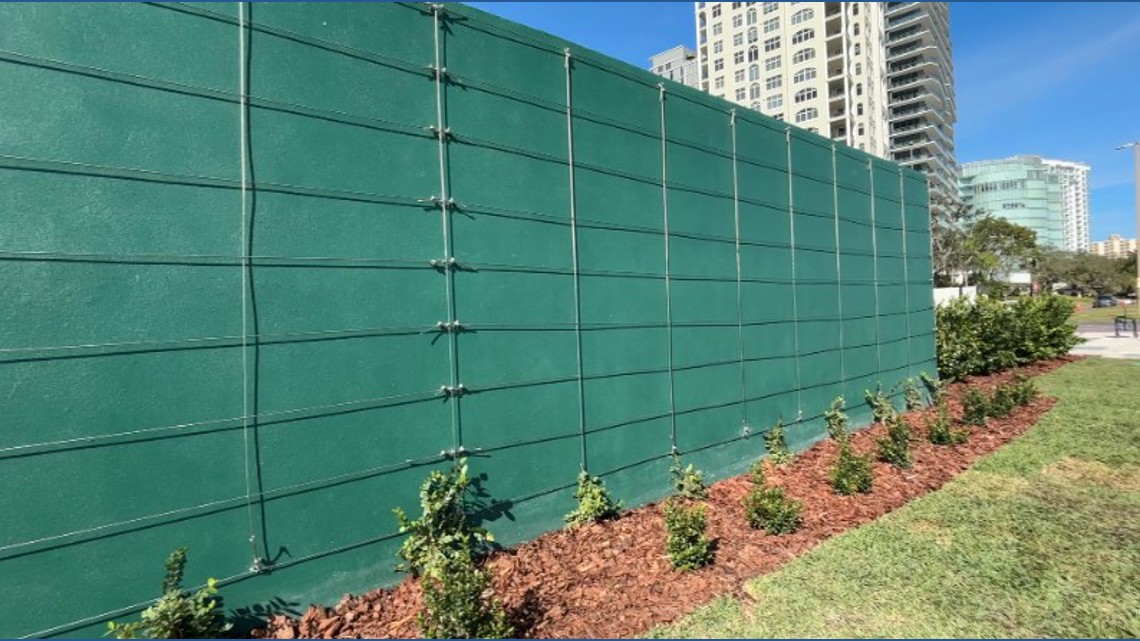
Weiss said city crews took “all of that electrical gear below grade in the basement and put it up in a new building above ground,” adding that the structure is surrounded by “a 10-foot-tall, one-foot-thick concrete reinforcement wall designed to withstand storm surge and hurricane-force winds.”
Backup power was another major focus of the project.
Weiss said the new standby generator includes a large fuel tank capable of keeping the station running “for up to three days without TECO before refueling,” ensuring wastewater service continues even during extended outages.
Mayor Castor said those changes were shaped by lessons learned from hurricanes Helene and Milton.
“After we went through Helene and Milton, we really made a concerted effort to lift a lot of our electrical systems up above any of the hurricane lines,” she said.
City officials say the upgrades are especially important as development increases throughout South Tampa, adding runoff and heightening flood concerns near Bayshore Boulevard.
Some neighbors expressed strong confidence in the improvements.
“My feeling is that they’ve done an excellent job,” said nearby resident Vinod Shah. “My level of confidence is extremely high.”
Shah said the upgrades should help when storms approach and water levels rise.
“When unknown storms are coming, and we get high water from Hillsborough Bay, obviously this new construction will help a lot of people,” he said, adding that it “will also reduce the flooding in many areas.” Shah said he is “100% confident in the skill and talent of all the Tampa municipal and other people.”
Other residents said they remain hopeful — but cautious.
“Bayshore is always flooded,” said June Kittay, noting that it often happens even without heavy rain. “You have to be very careful when you’re driving down the street. It doesn’t even have to be a substantial amount of rain — just a small amount.”
Kittay said she hopes the upgrades will help but wants to see how they perform during the next major storm.
“Hopefully this will alleviate it,” she said. “Well, you never know, but I have faith that we have good contractors in the city that will make sure that it works.”
Still, she added, “The proof is in the pudding. The first time that we have any substantial flooding or rain, we’ll see how it works. I’m hopeful — we’re going to wait and see.”
City officials said the Bayshore station serves a wide swath of South Tampa — from Bay to Bay Boulevard north and then south to Interbay, stretching west toward Dale Mabry Highway and east to Bayshore Boulevard.
They emphasized that the project is already fully online, even if it may be months before it is tested by major storms during the dry season.
Castor said the Bayshore project is one of 34 similar projects underway and noted that since the PIPES program passed, the city has invested approximately $730 million in its wastewater system, not including water infrastructure.