
Former state Sen. Jeff Brandes didn’t mince words when giving his take on the latest efforts to get rid of some or all homestead property taxes.
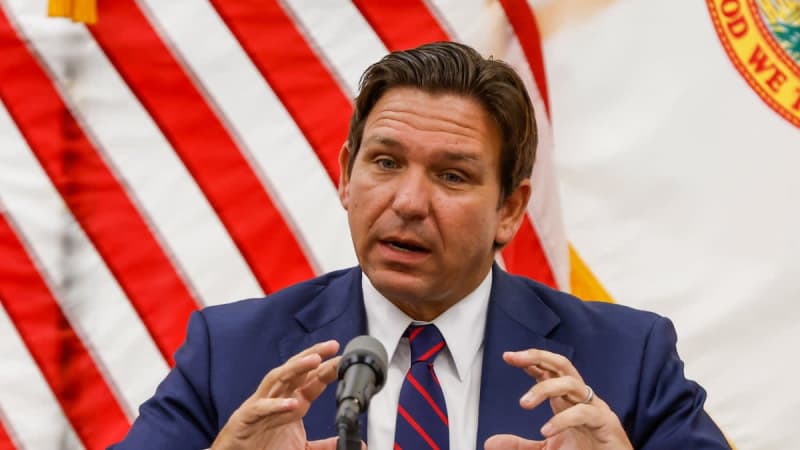
Gov. Ron DeSantis, the champion of the idea, hasn’t put forth a detailed plan. The Florida House has eight proposals. None of them address how cities and counties will deal with the loss of millions of dollars.
“It’s going to be a hot mess,” said Brandes, who went on to call it the “ultimate attack” on local governments’ ability to govern themselves. He said it would create “the largest tax shelter in the country” if approved by voters.
Brandes, who founded the Florida Policy Project to help promote best practices in the state, gave a primer Wednesday on what local business leaders and elected officials could expect on property tax reform at a luncheon hosted by the St. Petersburg Area Chamber of Commerce.
The event, held at SkyBeach Resort, also featured a panel of three Democratic state lawmakers based in St. Petersburg who, along with Brandes, warned against the unintended consequences of any half-baked plan.
Voters would ultimately decide the issue at the ballot box in November. Local governments are already bracing for that possibility and what would happen with a significant loss of revenue.
Last week, St. Petersburg City Council member Mike Harting got his colleagues to approve a “budget stress test” to prepare for any outcome. The council is set to discuss in the new year which programs would need to be “reduced or eliminated” in that event.
“I think it’s prudent at this point for us to at least talk about it,” Harting said.
St. Petersburg was already crunching numbers in July to prepare for its own referendum next year. Next to possibly eliminating property taxes for primary residences, city voters may be asked whether they want a new property tax to accelerate water and stormwater projects.
Of the 107,988 properties in the city, 58% have a homestead exemption on a portion of their property tax bill because they are a primary residence as of July 2024. It exempts a portion of home’s value from property taxes and capped how much its assessed value — and resulting tax bill — can go up each year.
Homestead properties account for 40% of the city’s taxable value.
The city expects to collect a total of $228.9 million in property taxes this fiscal year. That money is used to cover most public safety expenses and all payouts to the city’s three community redevelopment areas, where increases in taxes stay in those same neighborhoods to help entice redevelopment.
The Florida House proposals would prohibit affected governments from reducing funding for law enforcement. They also exempt school taxes.
After doling out $26.5 million to the community redevelopment areas, the city must pay $173.6 million for the St. Petersburg Police Department and $49.5 million for St. Petersburg Fire Rescue. The city is already $20.8 million short of covering all public safety expenses.
In estimates shared with council members Wednesday, the city could lose almost $83 million if homesteaded property taxes were eliminated.
“We are looking at levels of reduction across all city departments just to deal with the economy, the effects of the hurricanes, the slowing of the economy,” said Mayor Ken Welch after the luncheon. “It’s already going to be tough. And then you add this on top of it.”
At the end of the luncheon Thursday, Reps. Lindsay Cross and Michele Rayner and state Sen. Darryl Rouson were asked what they would do to mitigate unforeseen consequences should homestead property taxes go away. Christie Bruner, the chamber’s vice president of leadership and advocacy, said all elected officials in Pinellas County were invited.
Cross cautioned the room to think about the short-term savings on property taxes versus long-term implications. Rayner said education on the matter was crucial. Rouson said he would fight any attempt to shift taxes to businesses.
“That cost is going to go somewhere. It’s not going to just, you know, magically evaporate and you know where everything’s going to be fine. It is going to go somewhere,” Rayner said.
Harting, who attended the luncheon, asked the panelists what the chances are that some kind of property tax reform will happen. All three agreed that something will be done.
“The bottom line is, whatever happens goes on the ballot, and you will have your say in whether or not it becomes law,” Rouson said.