
Michigan’s interim coach Biff Poggi stood up at bowl news conference in Orlando Monday and said his players feel “betrayed.”
He’s right. They should.
But let’s be clear about who betrayed them — because it wasn’t just disgraced former coach Sherrone Moore, and it sure as hell wasn’t just last week. The betrayal at Michigan has been institutional, systemic and years in the making. What those players are feeling now is simply the bill coming due for a university that decided winning mattered more than integrity, transparency or basic accountability.
Michigan didn’t just stumble into this mess.
Michigan engineered this mess.
“It has been a tumultuous time,” said Poggi, who is preparing his scandal-scarred team for a game against Texas in the upcoming Cheez-It Citrus Bowl. “A lot of … first disbelief, then anger, then really, what we’re in right now is the kids, quite frankly, feel very betrayed, and we’re trying to work through that.”
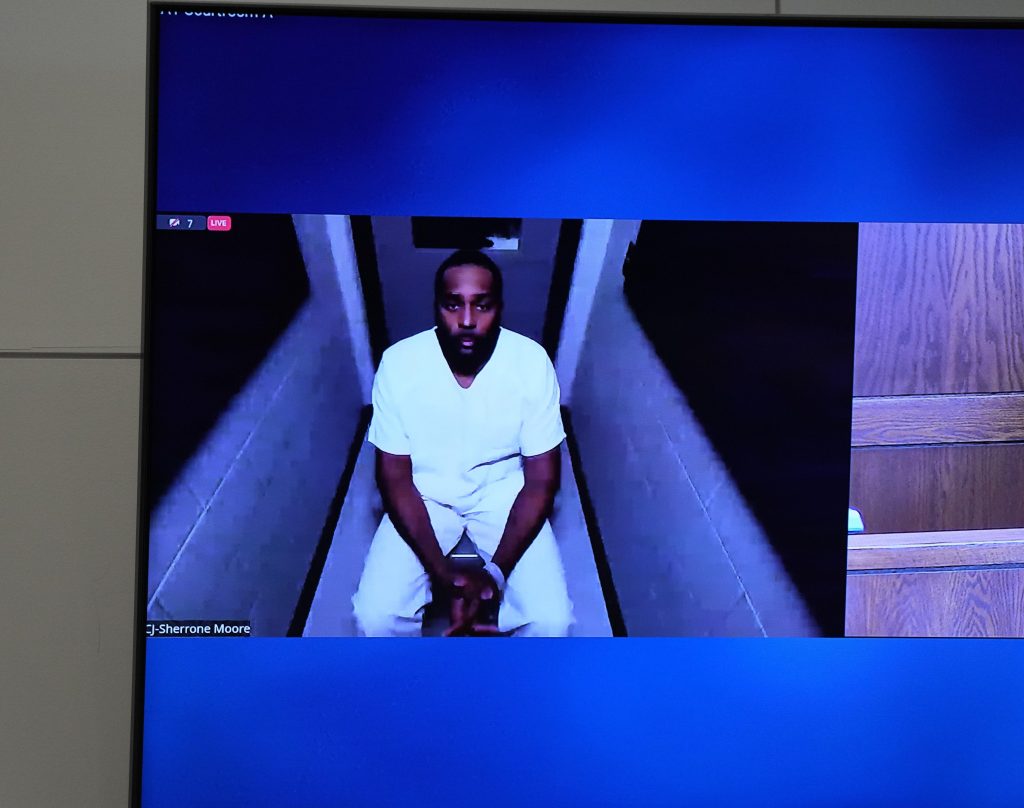
Poggi spoke Monday about listening, about empathy, about putting arms around shoulders after Moore was fired and arrested following allegations of an inappropriate relationship with a staff member that escalated into criminal charges. Poggi’s tone was humane and appropriate. He’s trying to clean up emotional wreckage he didn’t create.
But his most telling word was “betrayed.”
Because if you’re a Michigan player, you weren’t just betrayed by a head coach’s personal implosion. You were betrayed by a university that put that coach in charge in the first place — knowing exactly who he was and what he represented.
Why was Sherrone Moore even the head coach of Michigan football?
That question should be shouted from the roof of the Big House.
Moore wasn’t some unsuspecting outsider. He was a central figure in the Connor Stalions sign-stealing scandal that rocked college football and permanently stained Michigan’s so-called national championship two years ago. He was sanctioned. He was suspended. He literally tried to delete text messages tied to the cheating operation. And Michigan still elevated him to head coach.
Not despite the scandal — after it.
That decision alone tells you everything you need to know about Michigan’s priorities.
Let’s rewind.
Two years ago, Michigan was caught running a sophisticated, illegal sign-stealing operation that went far beyond “everyone does it.” This wasn’t a rogue intern with binoculars. This was an organized system involving travel, filming and data collection that violated NCAA rules and competitive ethics.
And what did Michigan do?
It circled the wagons.
President Santa Ono — now conveniently gone — stood shoulder to shoulder with former head coach Jim Harbaugh, calling him “a man of honor” while the evidence piled up. The administration threatened legal action against its own conference. The goal wasn’t truth. It wasn’t reform. It was survival. Keep the machine running. Get to the playoff. Win the title.
Mission accomplished.
Then Harbaugh bolted to the NFL, leaving Michigan holding the bag — and instead of hitting the reset button, the university doubled down. It promoted Moore, a sanctioned coach tied directly to the scandal, because continuity mattered more than credibility.
And now we’re supposed to act shocked that the same administration that minimized cheating allegations also waved off reports earlier this season of Moore’s alleged inappropriate relationship? Michigan claimed it couldn’t verify whether the affair was real.
Does anybody actually believe that?
Or was Michigan, once again, in the middle of a season and unwilling to look too closely at anything that might derail it?
Funny how clarity usually arrives after the last whistle.
Now Michigan has announced — with a straight face — that it’s launching an investigation into its athletic department. That’s not accountability. That’s damage control.
If the university truly wants answers, it shouldn’t investigate the athletic department. It should investigate itself. Its leadership. Its culture. Its repeated willingness to subordinate ethics to football success.
Because this isn’t just about Sherrone Moore.
This is about a program that racked up NCAA violations, suspensions, probation and fines north of $30 million.
This is about a university that responded to a blatant cheating scandal not with reform, but with rationalization.
Of course, Michigan fans don’t like hearing this. They’ll say everyone cheats. They’ll say it’s a witch hunt. They’ll say the banners still hang.
But here’s the uncomfortable truth: no major program in college football has combined competitive success and moral failure quite like Michigan over the past few years.
Other schools get caught and clean house.
Michigan gets caught and closes ranks.
That’s why the national championship feels tainted. Not because Michigan didn’t have good players — it did. Not because Michigan didn’t win a bunch of games — it did that, too. But because the institution made a conscious decision that how it won didn’t matter.
That’s why Poggi says the players feel betrayed. Because they were told to trust the program. To believe in “The Michigan Way.” To represent something bigger than themselves.
And it turns out that something bigger than themselves was a lie.
They were sold stability and handed chaos. Sold integrity and handed hypocrisy.
Michigan’s reputation as one of the nation’s most respected academic institutions didn’t deserve this. Its players didn’t deserve this. And college football fans didn’t deserve yet another lesson in how power tries to protect itself.
The cause of Michigan’s problems isn’t complicated. It isn’t bad luck. It isn’t one rogue coach or one bad decision.
It’s a philosophy.
And, quite simply, that philosophy is: “Win at all costs.”
When that’s the standard, scandals aren’t surprises — they’re inevitabilities.
Email me at mbianchi@orlandosentinel.com. Hit me up on social media @BianchiWrites and listen to my new radio show “Game On” every weekday from 3 to 6 p.m. on FM 96.9, AM 740 and 969TheGame.com/listen