
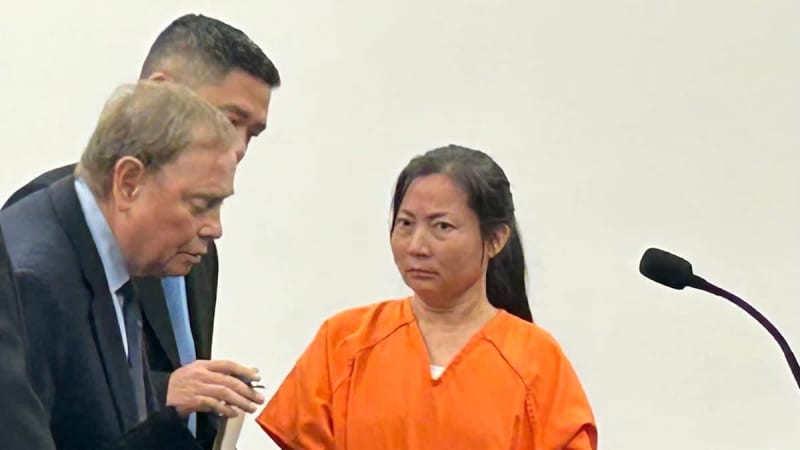
Agreements had been signed, paperwork had been filed, and Tingbo Zhang sat before a judge looking at once pleased, frustrated and annoyed.
In a Tampa courtroom last week, she was poised to walk away after four years in the Falkenburg Road Jail. A Chinese immigrant who fled political persecution in her native country, she was a low-level player in a chain of illicit Asian massage parlors thatstate prosecutors say were fronts for prostitution.
Her lawyer said she was more likely a victim of human trafficking than a criminal perpetrator. Of six defendants in the case, Zhang was the only one unable to make bail. All she wanted was to leave jail.
Yet a week after a judge imposed a time-served sentence, Zhang remains incarcerated — and likely on a path that will send her back to China.
Despite months of negotiations to allow her to remain in the U.S., federal authorities wouldn’t budge when it came to her immigration status, said her attorney, Douglas Prior. Immigration and Customs Enforcement maintains a hold preventing her release before she is likely deported.
”It makes me sick,” Prior said. “It’s, to me, totally, totally unfair.”

Zhang’s plight was detailed in a July story in the Tampa Bay Times, which told of her struggles to communicate and attain legal representation amid a byzantine judicial system.
Before her arrest, she held a legitimate massage therapy license in Florida, state records show. She owned a home near Orlando, which she sold to help pay legal costs.
Zhang, 53, was arrested in 2021 during a regionwide investigation led by the Hillsborough County Sheriff’s Office. Dubbed “Operation Shared Hope,” the probe focused on a chain of 12 massage parlors linked to a Lutz couple, James and Nan Smith.
The Smiths, according to the sheriff’s office, staffed the businesses with women who were recruited from around the U.S. to commit sex acts for money. The women sometimes slept in the massage parlors, working for tips, while the couple raked in hundreds of dollars a day, according to investigators.
Zhang, according to court records, worked at Dream Massage, which operated in a small storefront on Park Street North in St. Petersburg. Evidence investigators seized there included a ledger, a condom-filled medicine bottle and more than $15,000 cash.
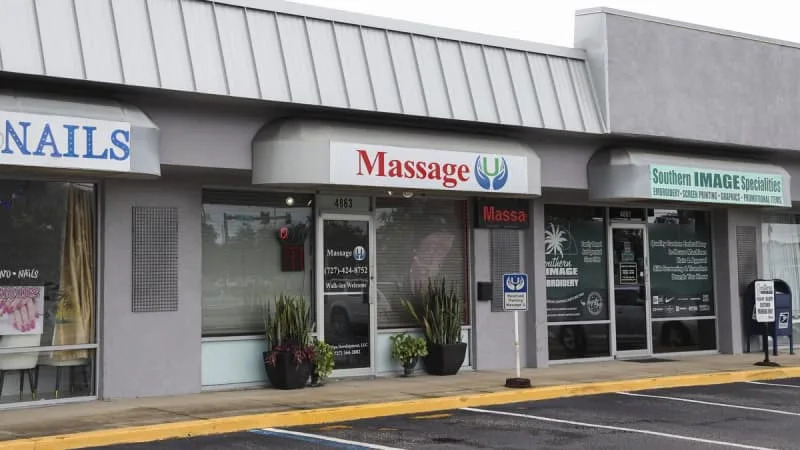
The Office of Statewide Prosecution, which handles complex cases that transcend judicial circuits, brought the case in Hillsborough circuit court. Their evidence included text messages between James Smith and Zhang inwhich they discussed sex acts she was to perform.
Zhang was charged, along with the Smiths and several others, with racketeering and money laundering. The latter charge against her was based on deposits she made into a bank account controlled by Smith.
She was first represented in court by Alex Yu, a Tampa attorney whose specialties include immigration law and who also speaks Mandarin Chinese, the language Zhang knows.
He helped get her bail reduced, but it was still too high for her to pay. While her co-defendants were released while awaiting trial, Zhang lingered in jail.
In a 2022 hearing, she again asked for a reduced bond to secure her release. She said she feared returning to China and had applied for asylum after she arrived in the U.S. in 2015.
She was asked why she did not want to return to China. She responded through a court translator. Her voice rose with emotion.
“I applied for political asylum here because I forced to abortion,” the translator said.
She remained unable to pay for a bail bond. Yu later withdrew from representing her, leading to Prior’s appointment.
That was more than a year ago. Since then, Prior said negotiations centered on a deal that would allow Zhang to go free with a temporary visa allowing her to stay in the U.S. and an understanding that she would become a witness against her co-defendants.
It was an outcome Zhang preferred. And in June, she gave six hours of out-of-court testimony to prosecutors. At the same time, Prior said, prosecutors and law enforcement voiced an openness to allowing her release with a temporary visa.
The only problem, Prior said, is that immigration authorities refused to go along.
“The problem was ICE,” Prior said. “They had to get their approval. Now we run into the current climate regarding people who are immigrants without the proper paperwork.”
Resistance to her remaining in the U.S. led to an alternative option: a plea deal that would end her criminal case but likely lead to her deportation.
So it was that Zhang sat beside a translator last week as Judge Elizabeth Rice slowly ran through a series of standard questions to ensure she understood what it meant to plead guilty.
But for her brief smile, Zhang appeared annoyed and unhappy, sitting slouched and occasionally gazing down.
“Are you pleading guilty to this charge voluntarily?” the judge asked.
“I want to leave the jail,” Zhang replied. “Yes.”
Asked if she understood that her guilty plea could result in her being deported, she looked around the courtroom.
“Do you understand that?” the judge repeated.
“Yes,” Zhang said.
She pleaded guilty to two money laundering charges. Prosecutors dropped a racketeering charge.
Her sentence based on state guidelines came out to about 3½ years in prison. She has already been jailed for four years.
Litigation continues in the cases against the Smiths and the other defendants. No trial date for them has been set.
If not for the immigration hold, credit for the time Zhang has already served would allow her to go free.
Prior said he is unsure what will happen once immigration authorities take her into custody. He fears she could end up in a detention facility like Alligator Alcatraz before she is sent back to China.
He consulted with an immigration attorney about what to do, but came up empty.
“It’s not like she’s some huge target or something,” Prior said. “She’s a person who was making a living as a masseuse and got involved in the wrong organization and got taken advantage of, and it’s led to this.”