

A legal battle now headed to a Tallahassee courtroom could directly affect how Citrus County grows and how much control local leaders have over that growth through at least 2027.
The dispute centers on Senate Bill 180, a law passed this spring after the 2024 hurricanes. While most of the bill focuses on storm recovery, one provision has become controversial: it prevents cities and counties from adopting “more restrictive or burdensome” changes to their comprehensive plans or land-development rules.
The restriction applies retroactively to Aug. 1, 2024, and runs through Oct. 1, 2027. Because Citrus County was included in a federal disaster declaration, the law applies here, just as it does in every Florida county.

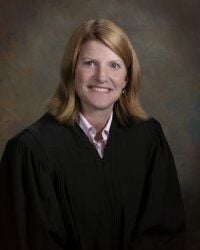
Leon County Circuit Judge Angela Dempsey
On Friday, Leon County Circuit Judge Angela Dempsey is scheduled to hear arguments as state officials try to dismiss multiple lawsuits challenging the law.
Why Citrus County is pushing back
Citrus County commissioners have already raised concerns, voting 5-0 in September to ask state leaders for clarification of what they called vague language in SB 180.
They also supported a proposal to limit the law only to properties directly damaged by hurricanes, instead of applying it countywide.
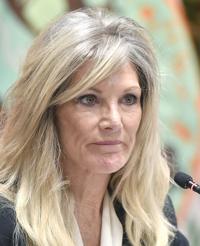
Bays
“I think the more support that we have across the 67 counties, the better we’ll have some ‘glitch’ legislation to fix it,” Commission Chairwoman Rebecca Bays said in September.

Barek
Commissioner Janet Barek agreed, saying “we need to get out there and get ahead of it.”
Local officials worry the law could stall years of planning work, including Citrus County’s comprehensive plan update — a costly, long-term blueprint for managing growth.

Grow
State Rep. J.J. Grow has said he plans to work in Tallahassee to clarify the law and remove provisions that could negatively affect Citrus County.
Builders enter the fight
The Florida Home Builders Association has stepped into the case to defend SB 180, arguing that blocking the law would slow construction and drive up costs.
“Plaintiffs don’t like SB 180’s bar on local construction moratoriums and more burdensome land use regulations,” the builders’ filing said.
“If these provisions of SB 180 are enjoined, however, construction timelines would suffer. Projects already underway or planned for a storm-damaged area could suddenly be halted because of a local freeze or a new land use regulation that has the practical effect of a freeze on development.”
How residents could be affected
At stake for Citrus County residents is how quickly new homes and businesses are built and whether local leaders can tighten growth rules in response to community concerns.
Supporters say SB 180 speeds hurricane recovery by cutting red tape. Critics argue it goes far beyond storm damage and forces counties to allow development they might otherwise regulate.
The lawsuits claim the law violates local home-rule authority and the state Constitution. One filing states that “some of the local governments have also had to pause moving forward with planning and zoning regulations that have been years in development even if those regulations are unrelated to emergencies or rebuilding after emergencies.”
Enter the comp plan update
County Commissioner Diana Finegan said this week that she doesn’t believe the development of this lawsuit is having a current impact on Citrus County. But SB 180 definitely is, she added.
County commissioners in September voted 3-2 to spend $560,285 and contract with Inspire Placemaking Collective, a private consulting firm, to lead an update of the county’s comprehensive plan to be used as a roadmap for future growth to encompass the next 25-30 years.
“That bill is one of the reasons why I voted against contracting with Inspire Placemaking Collective for a cost of over a half-million dollars,” Finegan said. “Although I am impressed with the way Inspire is connecting with the community, SB 180 prohibits the county from making changes to the comprehensive plan that are “more restrictive or burdensome” than what currently exists.
“Members of our community have spoken about how the comp plan should be updated, but frankly, with SB 180, changes have to be less restrictive to growth, not more restrictive,” Finegan said. “I’m very interested to learn how Inspire recommends the update in a way that reflects the desires of our collective community while adhering to the current Senate bill.”