
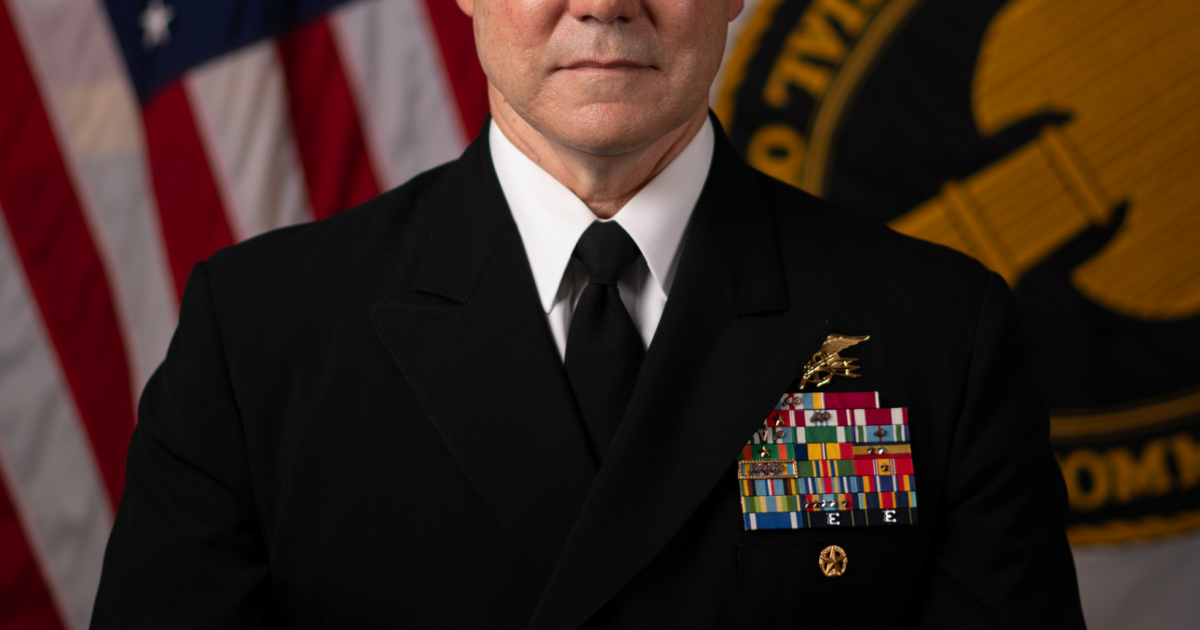
Tampa’s Special Operations Command and its new chief, Navy Adm. Frank “Mitch” Bradley, has become an increasingly visible figure in the Trump administration’s strikes on Venezuelan vessels over the last few months.
Since September, President Trump has authorized 26 strikes on Venezuelan boats he says were trafficking narcotics heading to the United States. The bombings are a part of Operation Southern Spear, launched in January, and carried out through unmanned, robotic boats and planes to stop illicit drug movement, according to the Pentagon. To date, at least 99 people the Pentagon calls “narco-terrorists” have been killed.
Though the operation is led by another Florida-based command, U.S. Southern Command in Doral, Special Operations forces are playing a key role.
About a month before he took the helm of Special Operations Command, Bradley was still serving as commander of Joint Special Operations Command, which is a smaller command component under the larger SOCOM structure. It executes sensitive special missions around the world.
Special Operations Command, at MacDill Air Force Base in South Tampa, is home to about 3,500 special forces personnel, who all come from different branches of the U.S. military. There are 70,000 U.S. special forces members worldwide. They carry out strikes on the order of the president but also have discretion for some operational decisions during their missions.
In that role, he gave the go-ahead to strike one Venezuelan boat twice, the second hit targeting survivors who were clinging to the vessel.
The decision has been heralded by Congressional Republicans as righteous and appropriate. Democrats and other defense experts have criticized it, arguing they may be violations of international law because the strike killed shipwrecked survivors who posed no immediate threat. Trump officials have countered that the survivors were narco-terrorists actively trying to continue their drug mission and that eliminating them was necessary.
Bradley has reportedly been open to releasing the video of the attack, but he does not have the authority to do so. Defense Sec. Pete Hegseth has said the Pentagon will not release it to the public.
Before Bradley was sworn in as SOCOM commander on Oct. 3, he led various components of the special forces command since 2020. He is a Navy SEAL officer, with 37 years in the service and experience in ordering military strikes in war zones around the world. He graduated from the U.S. Naval Academy in Maryland and is from Texas.
Special Operations Command spokeswoman Col. Allie Weiskopf did not answer questions about the command’s role in the boat strikes and Bradley’s approach.
At his confirmation hearing in front of the Senate Armed Services committee in July, Bradley said he has been involved in counter-terrorism operations since 9/11. And he said he supports increasing the Special Operations Command budget as the force is asked to do more, increasingly complex military operations, eschewing a “do more with less” mentality. Instead, he said, they are doing “less with less” and focusing on only the highest priority missions.
A month into his new role as SOCOM chief, Bradley spoke about the evolving mission of the force and changing nature of warfare to students at the Naval Postgraduate School in California.
“What makes us effective is the way we combine our values, our precision, and the academic partners who help us understand the environment we are operating in,” he said, according to an article about his comments on the school’s website. “Bringing our values to the battlefield and applying them with precision is what sets us apart.”
The force will continue to be an instrumental role in what Hegseth said earlier this month is just the beginning of its campaign against Venezuela.
This week, Trump announced a U.S. military blockade of oil tankers to and from Venezuela, designating the country’s regime as a foreign terrorist organization.
“Venezuela is completely surrounded by the largest Armada ever assembled in the History of South America,” he wrote on his social media platform on Dec. 16. “It will only get bigger and the shock to them will be like nothing they have ever seen before.”