
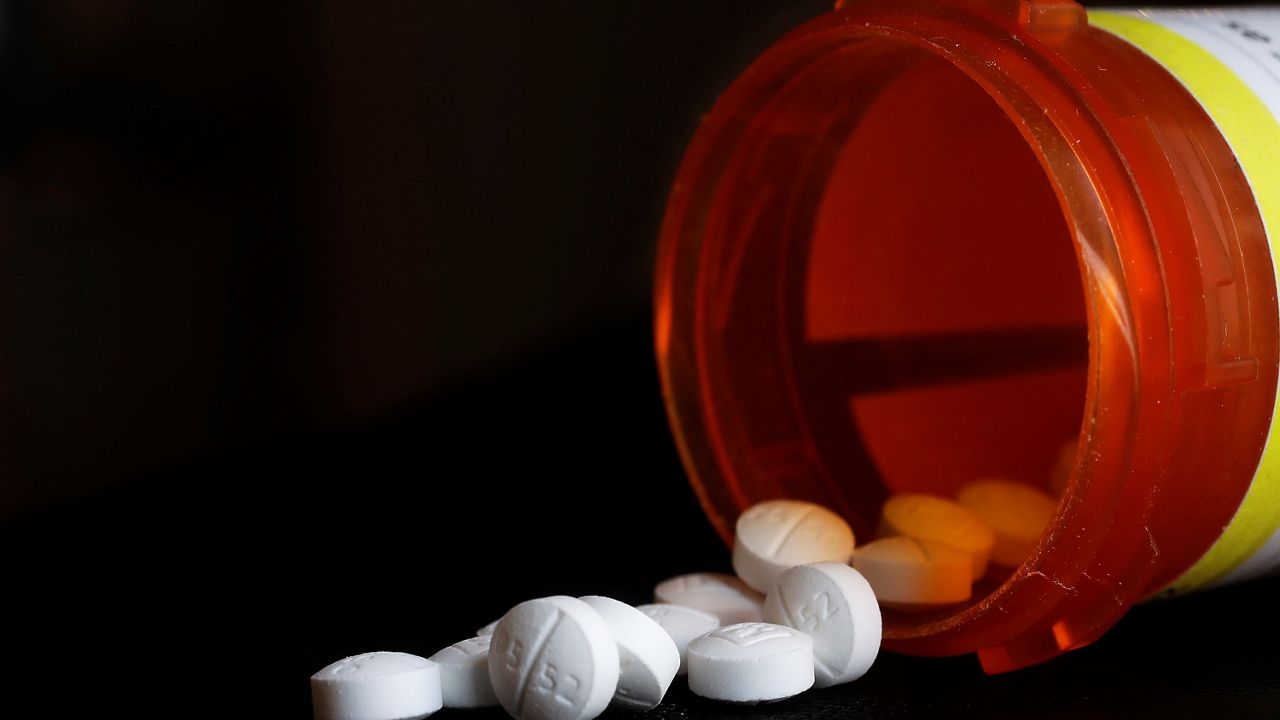
Nine prescription drug companies have reached a pricing agreement with President Donald Trump, and a new proposed bill could make changes to how much power HOAs have in their communities.

Trump announces 9 drug companies sign agreement to lower prices
Nine drug manufacturers have made an agreement with the White House to help lower drug costs for millions of Americans. President Donald Trump made the announcement from the White House on Friday, bringing the total to 14 of the 17 largest leading drug manufacturers in the world participating in his drug pricing initiative.
“Whatever the drug sales were over the world, in the world, whatever the lowest number is, if it’s Germany, if it’s in the UK, anywhere, we will match that price,” Trump said.
This comes after the president “Trump RX” will be launched next year. That will be a new platform that gives Americans the opportunity to find the lowest cost of certain medications.
A major overhaul to Florida’s community association laws could soon change how disputes between homeowners and HOAs are resolved.
House Bill 657 is being described as one of the largest rewrites of HOA and condo law in years. Experts say the proposal could significantly impact how homeowners challenge associations — and how quickly cases are decided.
Under the current system, many HOA and condo disputes must first go through pre-suit mediation, a process where a neutral third party helps both sides attempt to resolve conflicts before a lawsuit is filed.
Attorney Erin Glover Frey says the new bill would eliminate that step entirely.
“What this new bill does it eliminate all of that,” Glover-Frey said. “It eliminates all the mediation process and creates a special dedicated Community Associations Court.”
Glover-Frey said the proposed court would be a statewide system focused only on HOA and condo issues, rather than routing cases through already-burdened local courts.
“Homeowners would have the ability to get to the decision maker a lot faster,” Glover-Frey said. “The mediator doesn’t make decisions — they just facilitate an agreement.”
Currently, many HOA-related cases can take months or even years to resolve. Supporters of the bill argue that centralizing disputes into one specialized court could lead to faster and more consistent rulings.
However, HB 657 goes beyond dispute resolution. It would also introduce a new process for terminating an HOA altogether, something that raises serious concerns for some community association managers.
“HOAs have lots of moving parts. There are sub-associations that are part of master associations. So I think more thought needs to go into that,” said Joseph Rains, a community association manager who, along with Marisa Rains, oversees HOA operations.
They say many homeowners choose to live in HOA communities for access to shared amenities, such as pools, playgrounds, and other common spaces. Without an HOA, they question who would be responsible for maintaining and funding those amenities.
“You want exclusive use of these amenities and to protect your property values,” Rains said.
The bill would also require HOAs to standardize and publicly update their governing documents every year — a requirement that association managers say could be costly and difficult to manage.
“It would be a huge, cumbersome task each year, and it’s not reasonable,” Marisa Rains said. “Do those governing documents need to be updated? Yes. However, legal costs are involved with that, membership votes are required. So, thinking about doing that annually would be very stressful.”
The bill’s sponsor, State Rep. Juan Porras, said HB 657 would create a “transparent, fair, and efficient” system to protect homeowners. On social media last week, Porras referred to HOAs as “a failed experiment,” adding, “It’s time we hold them accountable.”
HB 657 is still moving through the Florida Legislature. If it passes, experts say homeowners could see some of the most significant changes to their rights and dispute options in decades.