
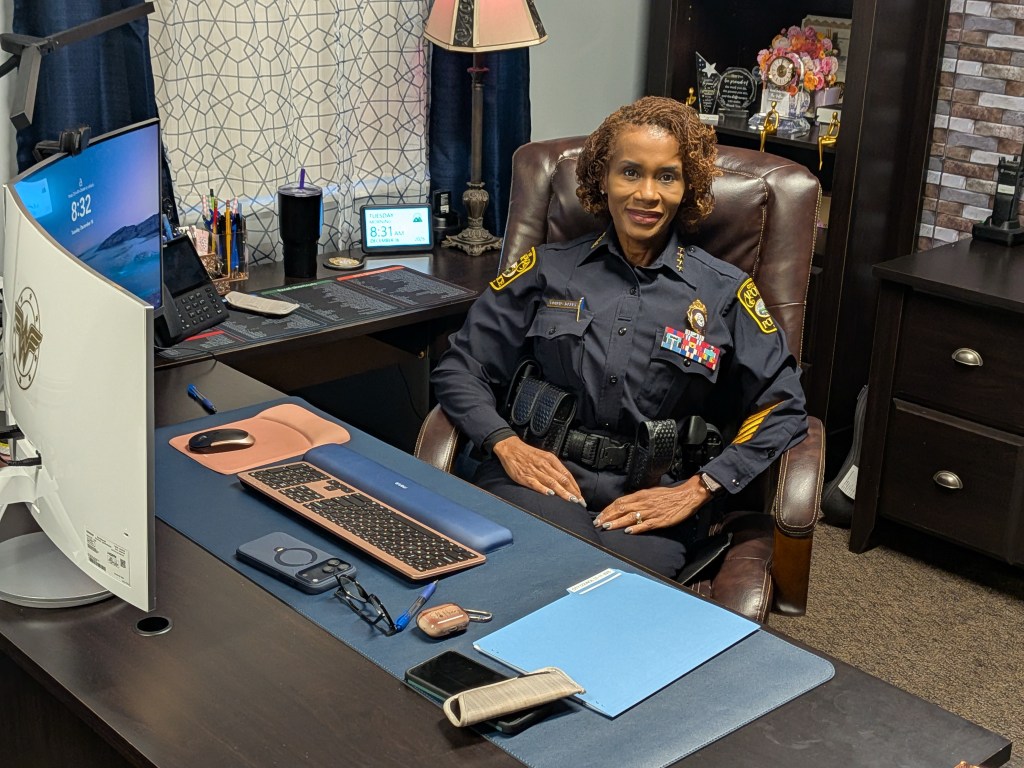
When Orlando Police Lt. Lovetta Quinn-Henry arrived at Pulse nightclub in the early hours of June 12, 2016, she saw the carnage unleashed by gunman Omar Mateen.
Almost 10 years on, something else she witnessed that night also remains etched in her mind: The highly-trained professionals on scene providing critical care to people amid chaos from the mass shooting that killed 49 and wounded 58.
“I saw them performing like they’re trained to do and that you hope that you never have to put in full force with an active shooter,” Quinn-Henry said. “And so for me it made me know that the work that we do is unique — not everybody is meant to serve in this position and in this profession.”
But law enforcement was the career choice for Quinn-Henry, who on Oct. 30 was sworn in as the 16th chief of police for Apopka — the first woman to serve in the post. She succeeds Michael McKinley who retired after 10 years in the department’s top job.
She brings 25 years of experience obtained rising through the ranks of the Orlando Police Department. She started in 2000 as a patrol officer and after several promotions in 2022 became a deputy chief.
“There’s no other profession to go into,” Quinn-Henry said about law enforcement. “I know that it sounds cliche that people say it was a calling, but it’s something that I always knew.”
In May the Lockhart native became Apopka’s deputy chief after city commissioners agreed in March to hire her with the stipulation in her employment agreement she would succeed McKinley. Her starting salary of $178,000 annually then has risen to $202,116 now.
Almost two months into leading the agency, she said her time as deputy chief, which is the No. 2 spot, helped her gain a better understanding of the department and the talents of its staff.
One of the first changes she made was promoting Lt. Daniel Garcia to deputy chief. Such a dramatic rise in rank is unusual but she said his background — including time in the military and Coast Guard — made her confident he was the right choice for No. 2.
Quinn-Henry said as the new chief it’s very important to her to connect with the community.
“More than anything my goal is to ensure that our community understands that they’re safe and that our goal is to always be those protectors, those guardians of our community,” she said.
She sees her move to a smaller agency — from Orlando with approximately 1,000 sworn officers covering about 110 square miles to Apopka with 147 policing 36 square miles — as an opportunity to forge relationships with her entire staff.
“I want to know how we can support them as individuals because this job takes a toll on all of us and I always say if we’re not sociopaths, psychopaths, we’re human beings that have been blessed to do a job and with that we have to be cognizant of the toll it takes on us,” she said. “I’m big on getting them care that they need to ensure that they are productive and that they too can have a very long-lasting career like I’ve been blessed to have in this profession.”
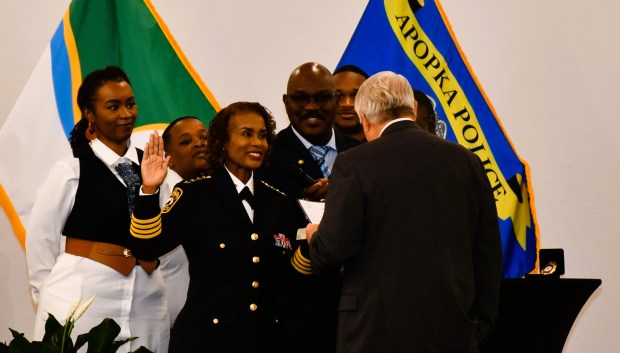 Deputy Chief Lovetta Quinn-Henry is surrounded by family as she is sworn in by Mayor Bryan Nelson on Thursday, Oct. 30, 2025 as the new chief of police for the Apopka Police Department at the Apopka Community Center. She is the first woman to hold the position. She came from the Orlando Police Department where she spent 25 years and rose to the position of deputy chief. (Courtesy Apopka Police Department)
Her experience at OPD spanned multiple divisions including Uniform Patrol, Criminal Investigations and Special Operations. She was commander of the Critical Incident Stress Management Team which provides support for officers who endure high-profile incidents such as Pulse and citywide protests — like after the 2020 killing of George Floyd, a Black man, by a white Minneapolis police officer later convicted of his murder.
An alumna of Apopka High School, Quinn-Henry received a bachelor’s degree in criminal justice from Columbia College, a master’s degree in public administration from Troy University and a doctorate in criminal justice from Liberty University.
Quinn-Henry said she was at home getting ready for work when the Pulse shooting was happening. She turned on her police radio and heard things that made her wonder.
“I noticed the way that the dispatch was going was different and so I was like, ‘What is going on, why are we dispatching this this way?’” the chief said. “And so of course I did what I always did — I called for clarification, what’s happening, and then they said it.
“And at that time, talking to the dispatcher over the phone, I could then hear the suspect having conversation and dialogue with our dispatcher. And so I threw on my shoes and took off and got to the scene.”
Quinn-Henry recalls that 302 people — from dispatch, law enforcement and support agencies — made up the response to the mass shooting. As commander of the Critical Incident Stress Management Team she worked to ensure they got the help they needed in the wake of the tragedy.
Her team brought people together in rooms so they could hear perspectives from others involved, she said. She cited as examples how dispatchers receive calls but don’t always know how things end or hear the standpoint of officers or detectives, and vice-versa. This can help bring closure to some, but it’s not a fix for everyone.
“As a result of responding to the incident we had several law enforcement individuals also have to retire out because that PTSD is very real,” she said. “It’s certainly something that I would hope that I never experience again and that none of the men and women that I work with have to go through that.
“But what we know is that’s always a possibility. We know that the job that we do certainly brings us in front of things that the average citizen, resident, American doesn’t actually have to see.”
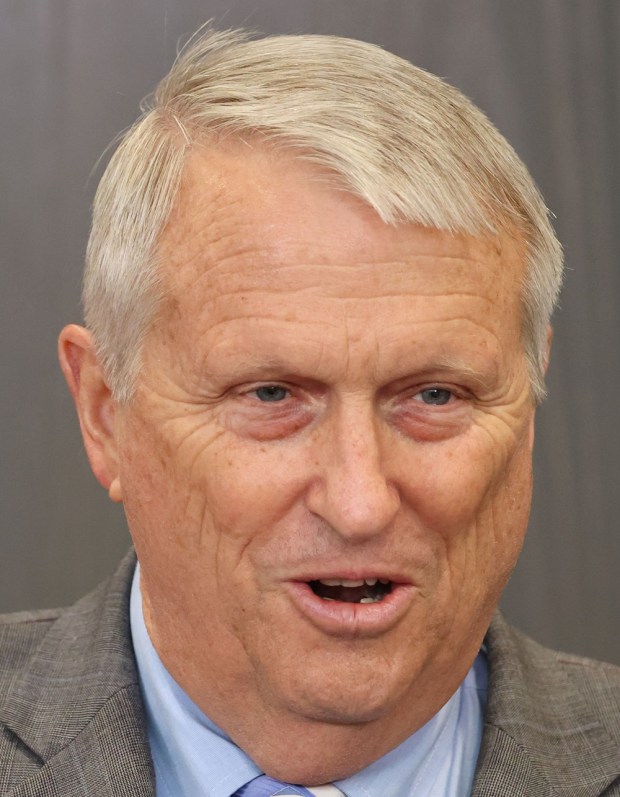 Apopka Mayor Bryan Nelson (Ricardo Ramirez Buxeda/Orlando Sentinel)
Mayor Bryan Nelson said when the city was looking for its next police chief Quinn-Henry had qualities which made her stand out among numerous applicants.
“One, she was deputy chief of a large organization with a very distinguished career in Orlando,” Nelson said. “And then, (Orlando Mayor) Buddy Dyer calls you and says ‘Hey, mayor, she’d be a great hire’.”
Dyer, who was at Quinn-Henry’s Oct. 30 swearing-in ceremony, described her as a consummate professional.
“If the timing had been right she probably would have become the chief of the Orlando Police Department,” he said. “They are getting somebody with experience, somebody they can count on and somebody who will do a great job.”
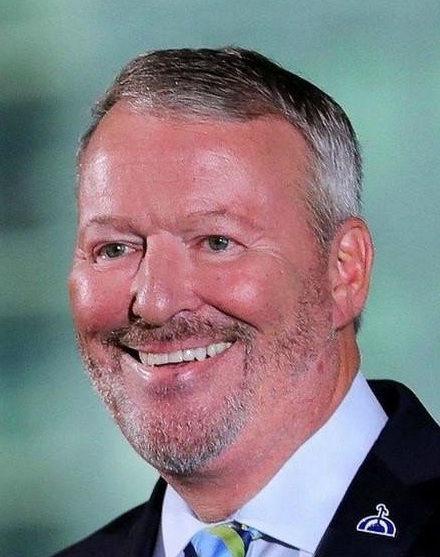 Orlando Mayor Buddy Dyer (Orlando Sentinel archive)
Dyer said one indelible mark she leaves at OPD is her creation of the highly successful community response team launched in 2021.
“It was a different approach to interacting people who have mental or behavioral health issues,” Dyer said. “It was having a mental health professional responding to some incidents rather than somebody with a badge and a gun.”
Quinn-Henry and her husband — a barber — have three adult children: two daughters and a son. But “nobody followed mom” into law enforcement and she’s OK with that. Her parents are retired — her mother was a social worker and her father had a military career.
When not working the chief spends some of her free time streaming shows about government or law enforcement — but not necessarily because she likes them.
“I’d say a good portion of our community watches these crime shows or series and then they’re talking to me about it because they know that’s my profession,” she said. “I find myself watching it so I can have intelligent conversations with people at the gym.”