
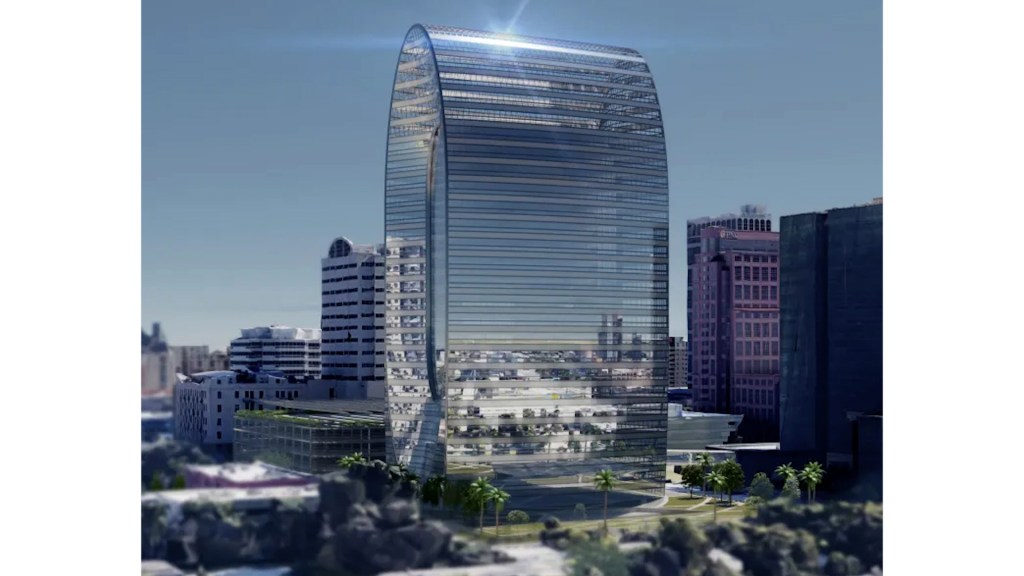
The Fort Lauderdale City Commission has chosen to replace City Hall using a public-private partnership (P3) rather than solicit bids for a clearly defined proposal with a guaranteed maximum price.
That is their prerogative. We elected them to make these decisions. We have seen successful P3s like the Prospect Lake water treatment plant and abject failures like the One Stop Shop cultural center. Having made the decision to go P3, they have chosen a partner.
 Marilyn Mammano is former president of the Council of Fort Lauderdale Civic Associations and chaired the Fort Lauderdale Infrastructure Task Force from 2017 to 2025. (courtesy, Marilyn Mammano)
Four development teams were vying for the job, and I emphasize this is just a job to them. Despite the impressive displays of models and videos and flowery rhetoric, what the city should really want is the best team that builds and manages municipal projects for a living, and — I would have added — at the lowest cost.
The city wisely hired experts to advise them on the qualifications of the teams and a project manager to review submissions for accurateness and reasonableness. City consultants concluded that all four teams have the financial wherewithal and experience to deliver the proposals they submitted.
All included an office building, a separate commission chamber and a plaza, and some included additional parking spaces. The consultants picked the proposals apart and provided the commission with apples-to-apples comparisons. The total cost ranged from $216.8 million to $344.3 million. However, they were all quite alike and included efficient, flexible and safe office buildings and impressive public spaces.
Guess what? The sexiest (and most expensive) contestant won. Once the consultants advised the commission that all the teams were equal in their ability to be the private partner (I respectfully disagreed), commissioners went with the team they were most familiar with, FTL City Hall Partners.
Again, that’s their prerogative. FTL’s proposed building was, as the team described it, a boat standing on its stern symbolizing Fort Lauderdale. Some commissioners, notably the mayor, were wowed.
The “I” word (iconic) was used. Remember the iconic police station with its cantilevered glass box?
The good news: The commission picked a partner, not a design. At least, let’s hope not, because the design will be a major driver of cost. Now the real work begins. The commission should set a budget and a realistic yearly adequacy payment.
The city has been place-holding $10 million a year in recent budgets. That’s $10 million less for everything else. Nowhere in the analysis did I see a projected 30-year cost of the total project with the escalation factor. That number will be shocking, but it includes a 30-year warranty on operations and maintenance (O&M), like the water treatment plant.
We need to separate the cost of the building from O&M. By the way, O&M is where these firms make their money. They essentially get paid back for the building, plus a profit for their small equity stake, expertise and risk transfer.
It amazes me that some commissioners think residents are TikTok-swiping on the city website to keep informed about this consequential project. After extensive outreach by the Infrastructure Task Force through “Reimagining City Hall,” residents went back to their busy lives and haven’t focused on this project since then.
It would have been nice to allow for at least one public review of all partnership proposals prior to the commission vote. Now, that must change. Reengaging the community is a must. FTL City Hall Partners promised a robust public input process. Let’s see it.
Marilyn Mammano worked more than 25 years as a planner in New York City, as planning director for Staten Island, director of zoning and urban design and as a former member of the city Planning Commission, followed by 25 years devoted to environmental causes and community advocacy in Fort Lauderdale. She’s a former president of the Council of Fort Lauderdale Civic Associations and was chair of the Fort Lauderdale Infrastructure Task Force from 2017 to 2025.