Adrian Cross hadn’t decorated for Christmas in a decade. It wasn’t worth the effort, she thought, since her kids grew up and moved out.
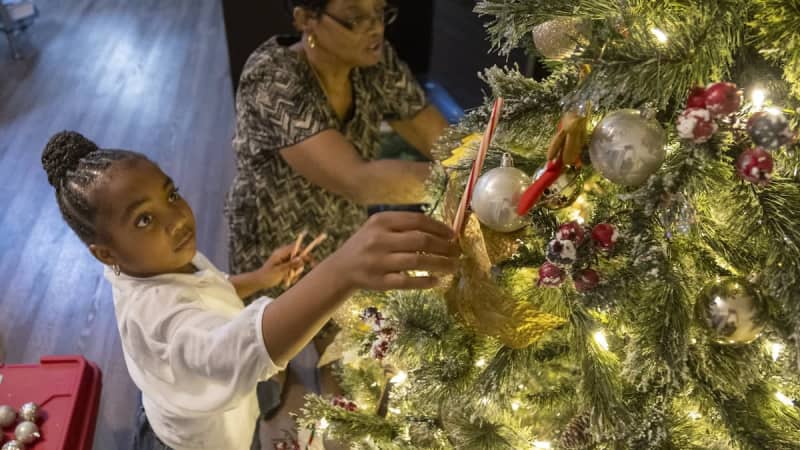
So when her neighbor invited her to come trim the tree with her grandchildren, Cross walked over right after work.
“We’ve been trying to put this together here,” Ro Weathers, 59, told Cross while threading hooks into scarlet balls. “Glad you could come be with us.”
The grandkids had met Cross, 56, in February, soon after she moved into New Life Village. At the unique housing community in Tampa, children who have lost their parents or have been in foster care move in with adoptive families. And seniors living on their own move in nearby, to help.
O’Darrian, 13, raising money for his basketball team, had asked Cross to wash her car. His younger sister A’Queen, 8, had talked to her at the pool.
They introduced her to their Nana, and soon Cross became “Auntie.”
That evening, she had promised the kids they would make cookies. And she had news — something she couldn’t wait to share.
“Hey now, don’t clump them all together there,” Weathers told her granddaughter, who was bunching bows near the bottom of the tree. “We still got lots of space to fill.”
Ornaments were strewn across the townhome living room. White lights and glittery garland wrapped around the tall tree. The children had hung a few silver balls on the lower branches.
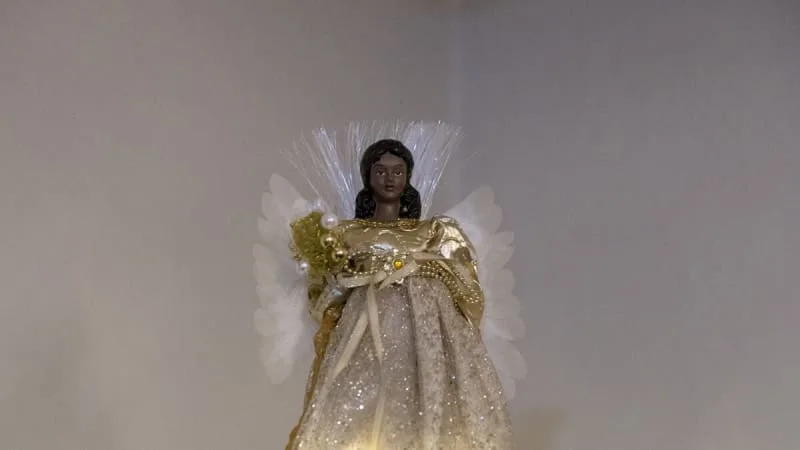
At the top, wearing a gold-trimmed gown, perched an angel.
“That’s mommy right there,” A’Queen told Cross, pointing.
All of the children at New Life Village have suffered trauma. Some were neglected or abused; others were orphaned by drugs. Many had filtered through group homes for years.
In 2012, a nun named Sister Claire LeBoeuf founded the village in Hillsborough County, which has more than 1,900 kids in foster care — the most in Florida.
She wanted to help them find adoptive families — and to make life easier for those new parents. She envisioned an affordable place where people taking in grandkids, family members or foster kids would become neighbors. Alongside them, she would offer low-rent housing to single seniors — and bring them together with families who need tutors, babysitters, or just another adult to lean on.
“Raising traumatized kids is hard,” said Mariah Hayden, New Life Village’s executive director. “We’re an intergenerational, intentional community that’s here to offer support — the only concept like this in Florida.”
The 52 townhomes were revived from a bankrupt development and house 170 residents — 113 of them children. The gated property includes a playground, pool, dog park, basketball court and learning center.
Seniors volunteer at least four hours a month, playing cards, teaching kids to cook and garden. Counselors support families on-site.
Parents who have adopted kids can rent a four-bedroom townhome for $1,185 a month. Seniors lease two-bedroom apartments for $1,282. Donors, grants and government funds help keep costs low.
Residents are referred to the village by social workers, case managers, judges and child welfare advocates. Others learn about it through churches and friends.
Families can participate in art, equine and music therapy, yoga, movie nights — and, for the seniors, trips to the theater.
The director said, “They’re donating their retirement to these kids.”
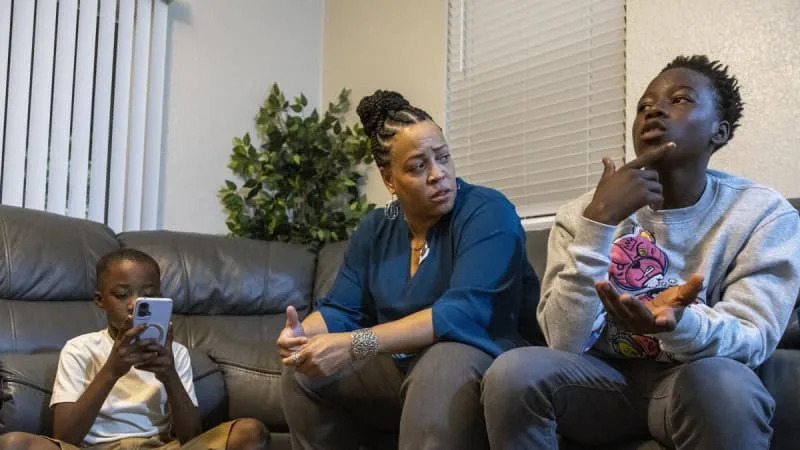
A half-hour after Cross came over, the youngest grandson, A’Kyng, 8, tore into a box of candy canes. His grandmother, busy with a garland, didn’t see. But Cross did.
“Hey, hey! Those are for the tree,” she told the boy. “Let’s work on the tree first.”
The boy laughed and opened the candy cane anyway. “Did Nana say you could have that?” Cross asked.
She tries not to parent Weathers’ grandkids, to defer to their grandmother. She asks permission to take them to Dollar General, to her church.
Cross’s own mother had to leave her at the hospital as a newborn. A stranger adopted her. “I know the importance of having a supportive adult in your life,” she said.
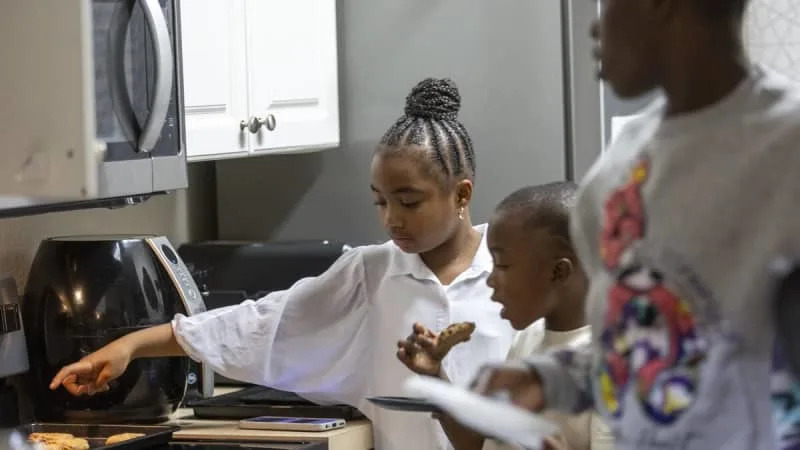
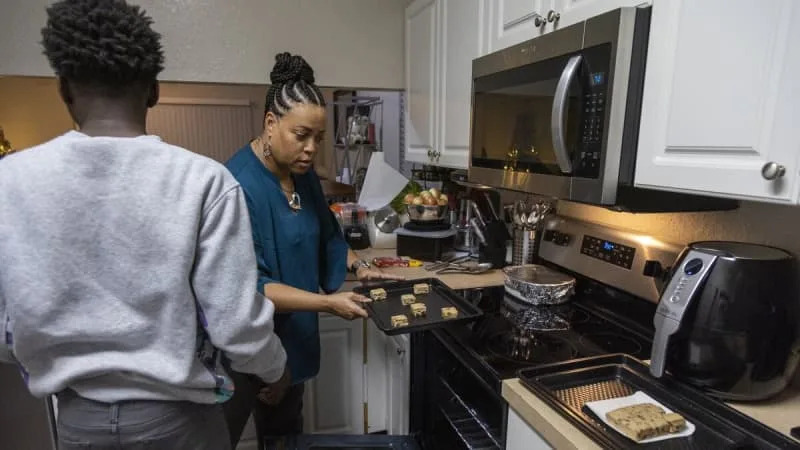
The kids filtered into the kitchen, where Cross helped them make chocolate chip cookies. Her adult son and daughter live hours away; she doesn’t have grandkids. Spending time with Weathers’ grandchildren, she said, helps her feel more purposeful.
“You know I play football,” A’Kyng told Cross as he plopped dough onto a pan. “I made 23 touchdowns.”
“Wow, that’s a lot!” Cross said. “I gotta come see a game.”
A’Kyng barely knew his mom. She died just after he turned one, while his sister was two. His two older brothers were six and nine.
“Their mama was the youngest of my four,” Weathers said. “My baby girl. My Ashley.”
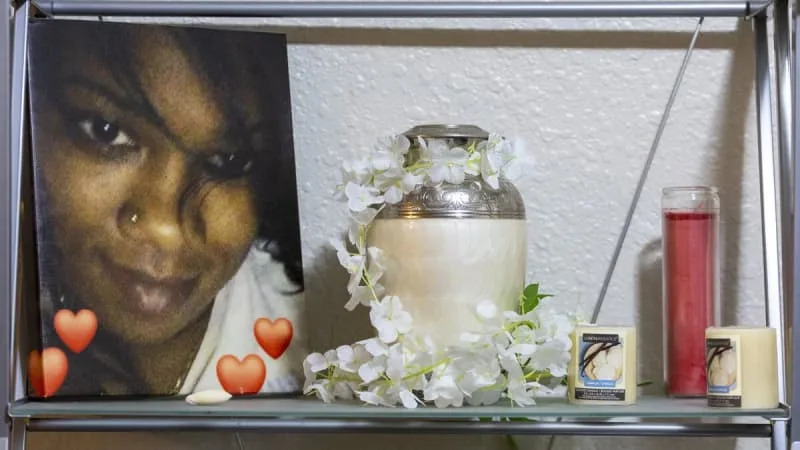
Ashley was 29 when she died. Weathers doesn’t talk about how. She took in the grandkids right away and, two years ago, they moved into New Life Village. Her daughter’s portrait smiles from a shelf in the living room, beside the urn that contains her ashes.
“I guess God wasn’t done with me yet,” said Weathers, who is disabled because of lupus. “These kids are the reason I keep going.”
Raising them has been hard, she said. Having Cross close by these last few months, she said, “makes everything easier.”
Cross taught Weathers’ two youngest grandkids to swim. She drives the teenagers to the barber. Calls whenever she’s heading to the store: Need anything?
“They’re all such open-hearted, respectful children. I knew they had a good role model,” Cross said. “They, like all of us, just want to be heard and loved.”
The tree twinkled in the corner. The kitchen smelled like cookies. Cross thanked everyone for including her in their family.
Next Christmas, though, she told them, she might have to get a tree of her own. For the first time in a decade, she might have someone at home to share it.
“I’ve applied to become a foster mom,” she said. “I’m about halfway through the process. I don’t know how old a kid I want yet…”
She draped her arm around A’Queen’s shoulders. “Maybe a girl about your age.”