
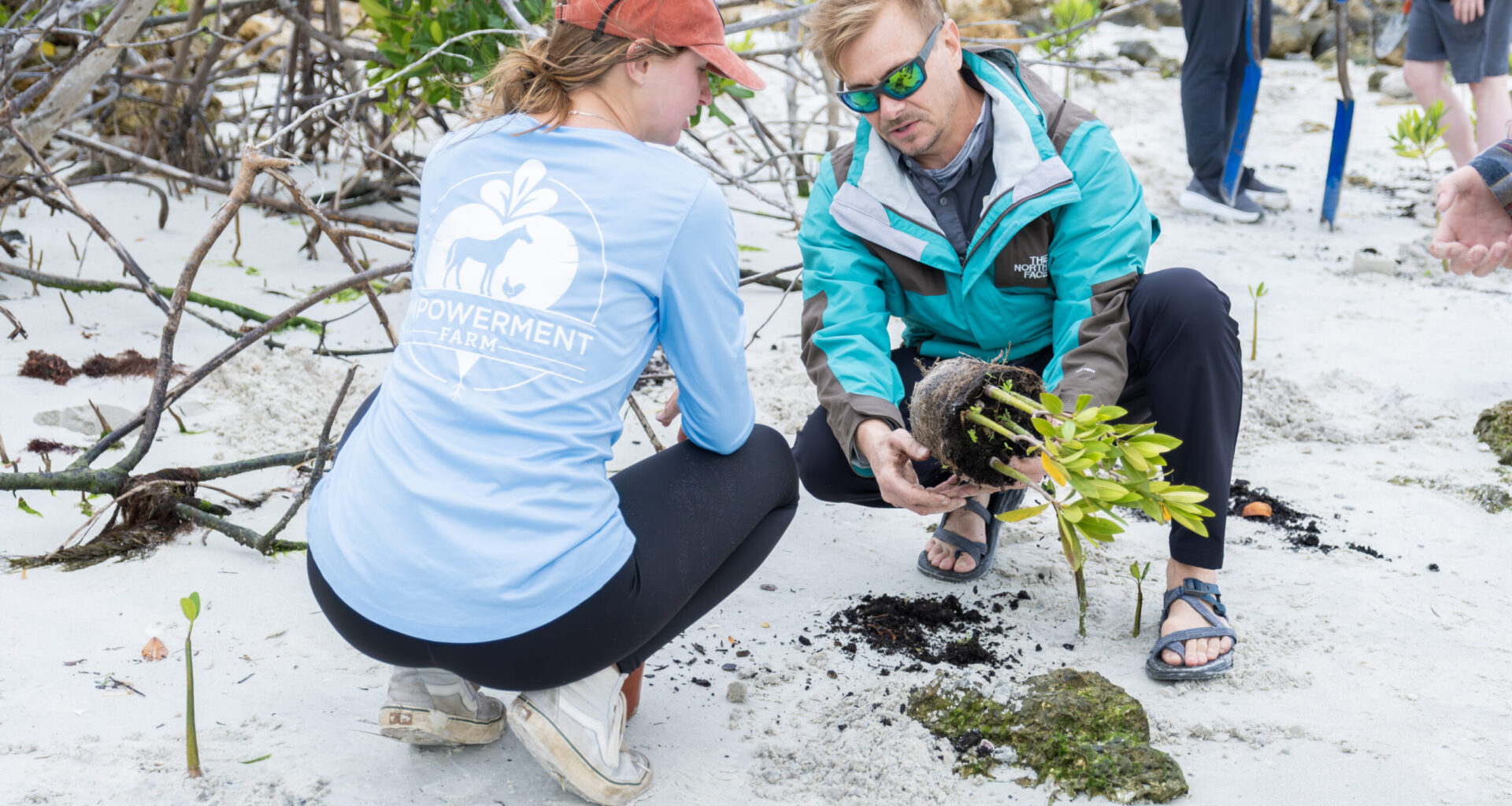
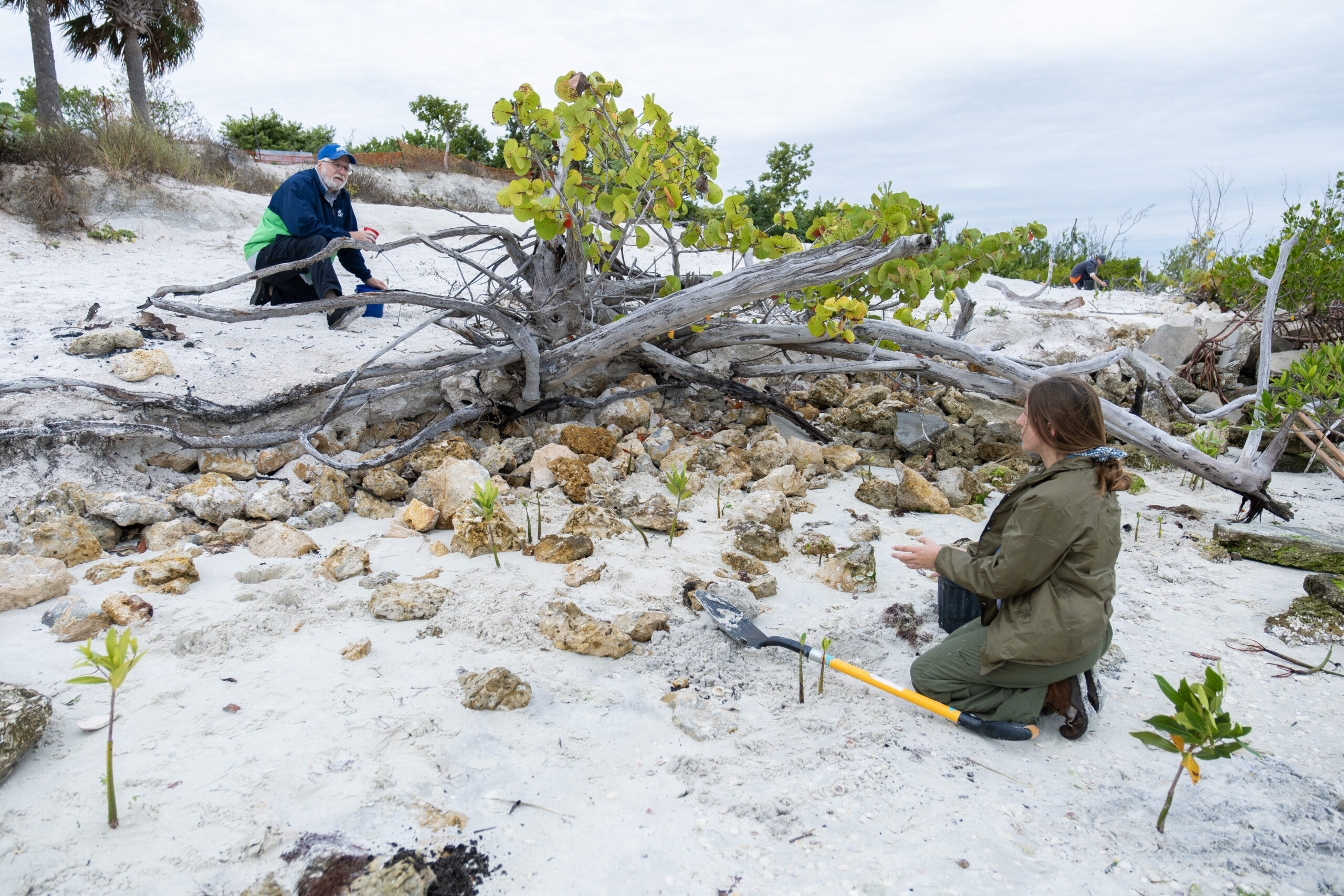
FGCU and Island Coast High School worked together to help replant mangroves across Bowditch Point’s shoreline. -DAVID WISHTISCHIN / FLORIDA WEEKLY
Like performing a juggling act with bowling balls and pins, maintaining miles of healthy beaches on and off barrier islands is an imperfect art. Officials have to balance both the imperatives of nature and the economic demands of beach commerce, and they have to do it with flexibility, knowledge, planning, money and two simple acknowledgements. One: Luck is an inevitable partner in what happens. If it’s big enough, the next storm could erase much of their work.
And two: It’s going to cost us, but it’s likely to cost us a lot less over time if it’s done the right way from the start.
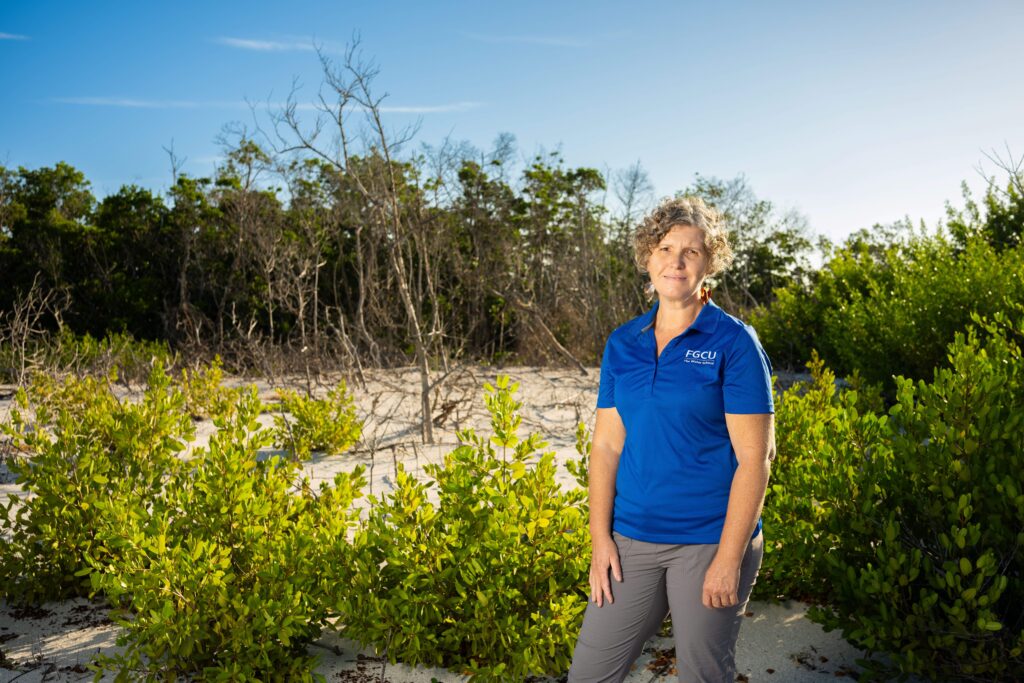
Jeannine Richards, an assistant professor in The Water School at FGCU, works with local governments to plant native coastal vegetation across berms and dunes. -PHOTO CREDIT: JAMES GRECO / FGCU
The right way is creating berms and dunes of proper height and placement, anchored by intensive plantings of native flora, say marine ecologists at Florida Gulf Coast University and local government officials. They’re shouldering the not-quite Herculean task of renourishing beaches resilient enough to survive all but the biggest storms without loss of life and overwhelming property damage.
“If you put a pile of sand on the beach, it doesn’t stay very long if you don’t also plant on it,” explains Jeannine Richards, Ph.D., an assistant professor in The Water School at Florida Gulf Coast University and a plant ecologist working on beach dune restoration.
Now we know. Before we learned, however, that’s what happened following Hurricane Ian.
Countless taxpayers from the nation and the Sunshine State who may have spent little or no time on the southwest coast nevertheless spent millions of dollars helping Floridians pick themselves up, not the least of it restoring beachfront.
“The post-Ian recovery efforts have been largely funded by the state of Florida and FEMA,” says Holly Milbrandt, Sanibel’s director of Natural Resources. The island city alone received $27 million from the state, and money flooded in from federal and state sources to rebuild and renourish beaches up and down the coast.
But significant amounts of that money were blown or washed away.
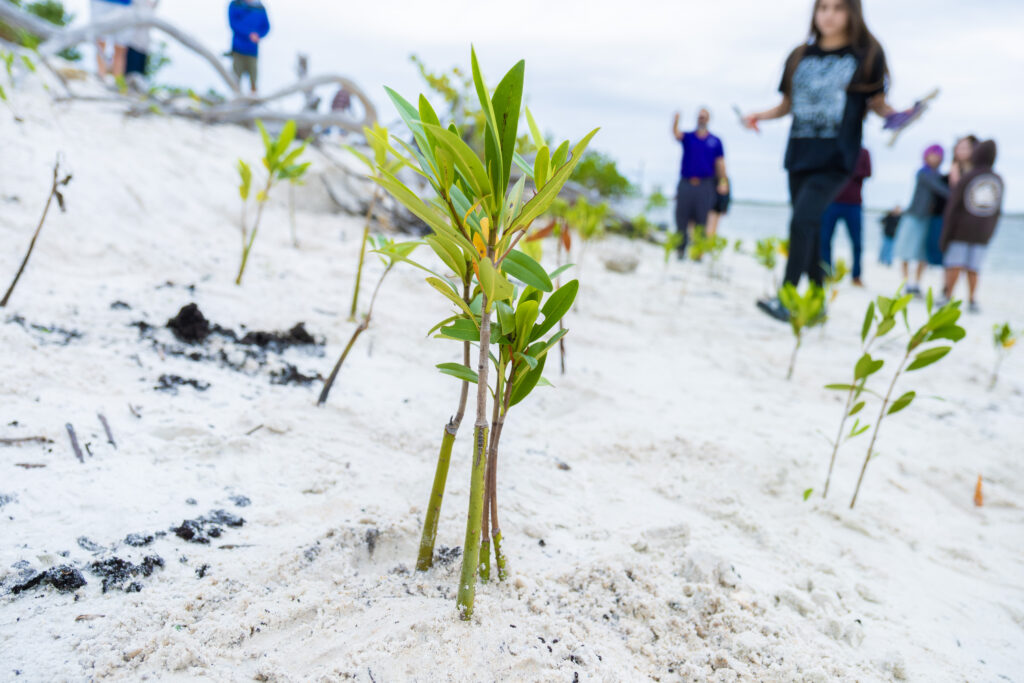
A single mangrove can release hundreds of propagules, helping entire shorelines regenerate. -DAVID WISHTISCHIN / FLORIDA WEEKLY
At first, communities paid just to pile sand in long berms down the coastlines of Lee and Collier County, hoping it would be enough.
It wasn’t. What happened next was dramatic, and it suggests that officials and many others required a steep learning curve to catch up.
Our education began with the shell-shocked notion that if the sea knocked us down and took the sand away in round one, we should get up and get into round two quickly. We should find more sand, dredge it from offshore or mine it and haul it from central Florida, and put it back, so people can get on with their tourist-based economy and their comfortable, stable lives.
But it wasn’t and isn’t that easy and won’t be, says Richards.
The complex planting challenge
She’s been thinking about what beach restoration done right looks like for three years, she said — and so has everybody else.
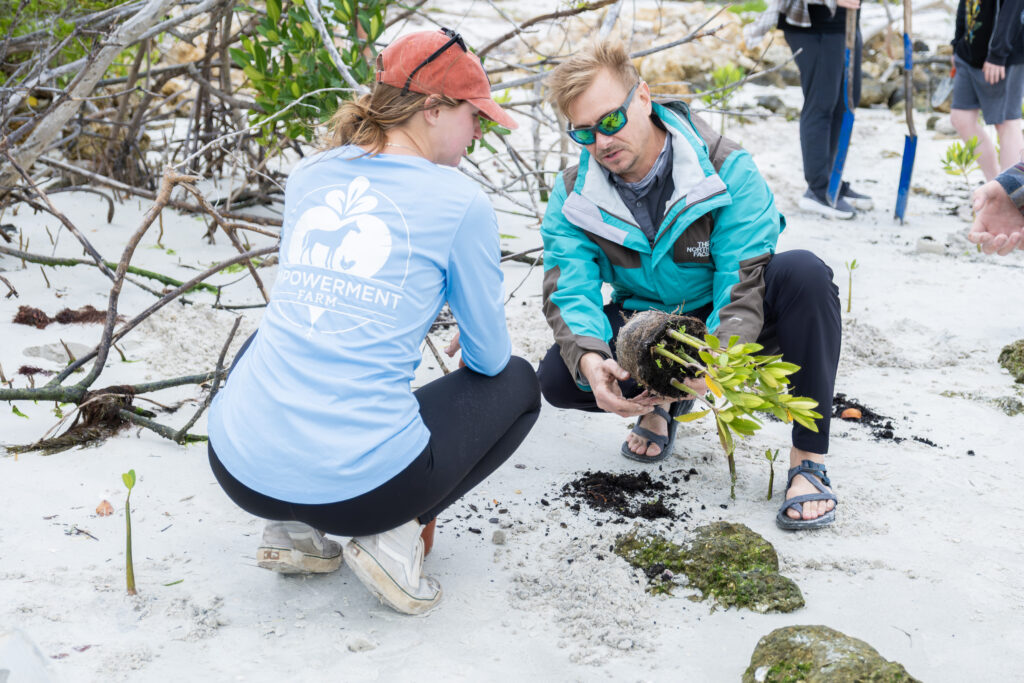
Mangrove roots create nurseries for fish, crabs and many more marine species. -DAVID WISHTISCHIN / FLORIDA WEEKLY
“When Ian hit, nobody had any plans for a restoration response to a disaster of that scale.
Nobody had thought about whether we even need to replant the beach after a major hurricane event.”
So, they piled sand.
“Communities just didn’t have the knowledge, and it wasn’t a top priority — dealing with the human problems first is understandable. But when we had the berm installed, we essentially lost millions and millions of dollars because there were no plants on it. So through wind and wave action it was quickly eroded.”
Plants like railroad vine, sea oats, sea grapes, and mangrove forests that put roots and resilience into coastlines naturally — they were merely second thoughts.
But everybody began to learn, costly as that education proved to be.
“And now,” said Richards, “Collier County established a new berm and planted it starting about a year ago, in the beginning of December. Their entire coastline is replanted. The plantings look good.”
The region was fortunate this time around — no hurricanes hit in 2025. As a result of that luck, “the plants are steadily growing, surviving, and they should get solidly established by next July or August when we get into peak hurricane season.”
Meanwhile, on Sanibel and in Lee County, plantings are also taking place on berms and dunes, with some efforts scheduled to start in January, Milbrandt says.
It’s been three years and three months since Hurricane Ian’s disastrous 5.5-foot storm surge covered Sanibel, along with Fort Myers Beach and Captiva, and the island has gone from nearly knocked out to significantly improved.
Remarkably, on a calm day about a week before Christmas, workers completed the last of a number of Ian-spawned renourishment efforts on the island.
“We’re finishing up with the last big push on the north island, just south of Blind Pass between there and Bowman’s Beach. We were able to coordinate that with the Captiva Erosion Prevention District (the CEPD) and the contractor that had been doing the regeneration project for Captiva,” Milbrandt said.
Sharing the work — and the displeasure of critics
That coordination was a neighborly choreography of contract bending between the city and the county in the form of Captiva’s Brighton Heard.
Heard, the CEPD’s general manager, directs the Captiva renourishment project that’s raising sand dunes on the island two feet above their traditional heights, at a cost of $30 million. He helped Sanibel by developing a new memorandum of understanding with the city. That allowed them to “piggyback on our contracts and permits, and get emergency sand at the same rate we pay.”
The sand is coming from so-called borrow sites about six miles offshore, about 5,000 cubic yards at a time. “Captiva got a million cubic yards of sand, and Sanibel about 300,000 cubic yards,” Heard said.
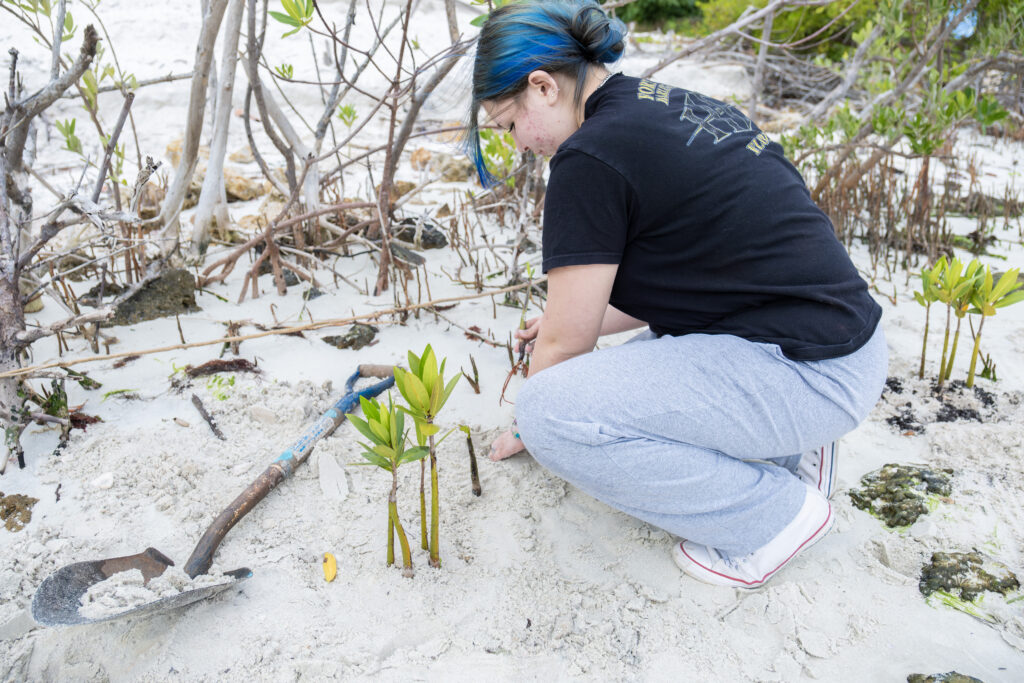
With each plant, the shoreline becomes more resilient to rising tides and future storms. -DAVID WISHTISCHIN / FLORIDA WEEKLY
“It protects our shoreline, and being entirely candid, provides beaches for everyone to enjoy. We could have a seawall — but who wants to hang out on an island blocked by a seawall from the beach?”
To make the beaches even more attractive, Lee County government threw in $6.5 million for the coming year, of which Sanibel received $2 million. But that money, an annual dispensation funded by bed taxes, isn’t for beach renourishment, it’s for upkeep of public spaces — such essential tourist attractors as paved parking lots and restrooms, officials said.
Heard, meanwhile, spoke bluntly about his experience so far.
“I have struggled for seven months” to establish beaches that can withstand bigger storms, he said, “also doing renourishment projects and managing those efforts. It’s been a real trial-by-fire.”
Originally from Louisiana, Heard has seen and experienced a lot, but he may not have been prepared for the contentious nature some of the work engenders.
In mid-December, a frustrated county commissioner stormed in and berated him “for never doing anything,” he said, not naming the commissioner. He praised the board as a whole for their renourishment decisions.
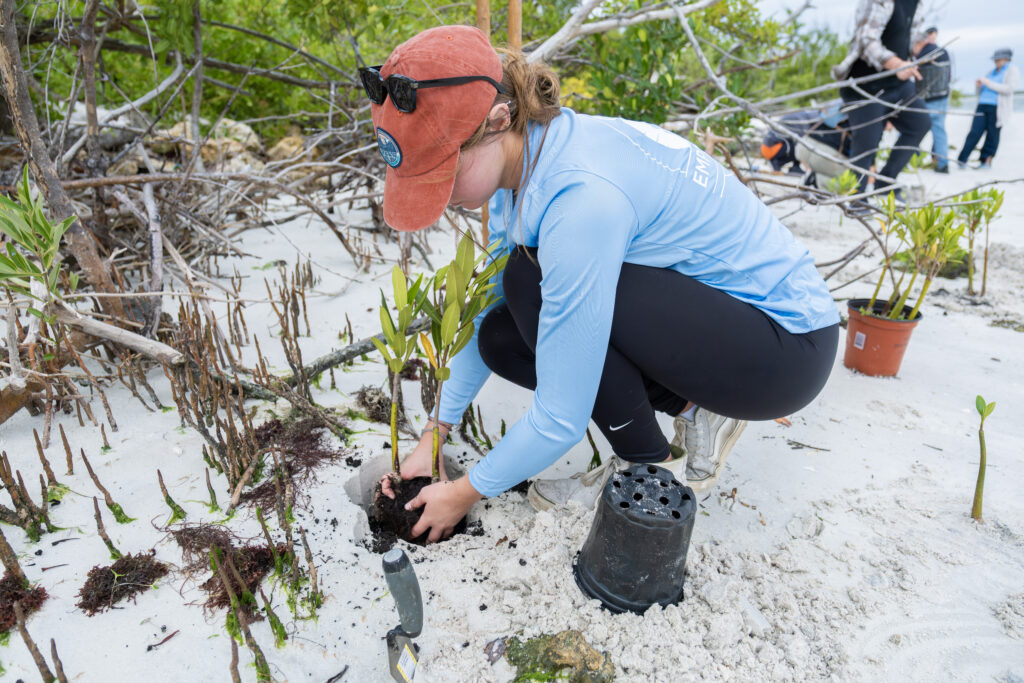
FGCU Student Nina Lipka planting a mangrove at Bowditch Point. -DAVID WISHTISCHIN / FLORIDA WEEKLY
And that may be the least of it.
In the course of doing resilience the right way on Captiva, the CEPD — with board approval — is raising dunes from 10 to 12 feet along much of the island, and from 8 to 10 feet on the north end.
“We let everyone know that the dunes would be bigger than ever, and I am happy the board did choose to provide a more substantial level of protection than has ever been provided in the past,” he said.
“That provides a much more robust level of storm protection and overwash protection, which is when waves crash over the top of dunes and push the sand inland.”
Higher dunes are a result of unhappy higher education of a sort. The reason why the CEPD was created, explained Heard, “was because the shoreline was taken all the way back to the road, and that could be the fate of the island again, in another big storm.”
But some people don’t care, apparently. There’s a petition with about 20 names of Captiva residents protesting the new, higher dunes, and earlier this month the Mucky Duck restaurant filed a $10.5 million lawsuit to stop the process near them.
The challenge: stabilize the ephemeral
Joe Cavanaugh, the Calusa Waterkeeper whose non-profit organization seeks to protect the water from the people and sometimes the people from water they’ve polluted in the 60-mile river basin stretching from Lake Okeechobee to Charlotte Harbor near Sanibel, points out that barrier islands and other coastal environments “are ephemeral by nature.
“They’re not meant to be stable environments. But Florida is sometimes all about, ‘Let’s fill in the sandbox and create a permanent structure.’”
A beach renourishment expert who worked with the National Oceanic and Atmospheric Association (NOAA) on beach renourishment before becoming Calusa Waterkeeper, Cavanaugh says there is a way, one good way, to protect the interests of people on the beaches.
That’s thinking 50 years ahead.
“I worked with NOAA for almost five years in their Coastal Storm Risk Management program, on the beach renourishment issue, and there was all this federal money tagged for Gulf coast Florida. The money was in the billions. Just for the Collier County beach nourishments for the future, alone, they had planned $4.5 billion (with a b) for the next 50 years.”
But in 2024, he said, “those projects all went on indefinite hold, as the Army Corps called it.”
Federal officials then moved the money away.
Renourishing the beach with nature-based solutions, Cavanaugh says, echoing the observations of others too, is more complicated than just sand. But it will take money, from somewhere.
“Where are we going to plant seagrasses and mangroves, what are the slopes on each beach, what time of year do we work so we don’t impact sea turtles and shore-bird nesting?”
As for the Mucky Duck lawsuit against the CEPD, Cavanaugh said, “if you’re going to have a good living shoreline, the beach has to have a certain slope for nesting and shorebirds, but you need dunes on the backside to protect from erosion, dunes with railroad vines and sea grapes and the like, and the slope changes. Different species of sea turtles’ nest in different areas, you have to take than into account.”
That, he concludes, “is the price of living in paradise.”
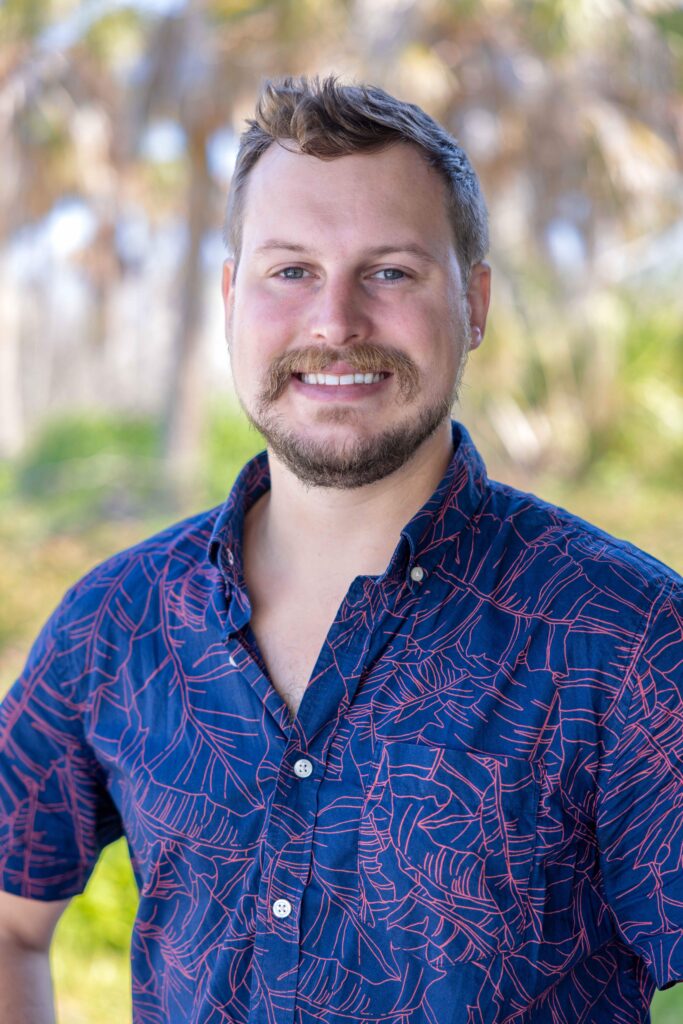
Matt DePaolis, environmental policy director at the Sanibel-Captiva Conservation Foundation. -COURTESY PHOTO
For Matt DePaolis, environmental policy director at the Sanibel-Captiva Conservation Foundation (the SCCF), the price is also navigating complications, the complications of a complex and dynamic environment in flux, and a human environment that insists on stability.
“No individual beach renourishment program is cut and dried. You can’t say ‘this is all good, or this is all bad,’” he said.
“There are different disparate needs, and the history of it, Captiva versus Sanibel, for example, shows very different tacks in how they renourish their beaches, and with different levels of success.
“There are some clear issues, though: If you’re trying to renourish during turtle nesting season, now you have to move turtle nests, which is expensive. And that’s something Captiva has to contend with.
“But if your beach is the lifeblood of your economy, you might have to do something else. Here’s what we (think): You can refurbish your beach effectively. But the question is, how expensive will that be? If every year you’re putting sand back in the same spot…” then it will be a lot more expensive, he said.
“I’m an advocate for planted dune systems. We’re also talking about using mangrove fringes, oyster reefs for storm surge — all built solutions based on nature. Nature has solutions for all the problems we’re facing; we just have to use and apply them. Nature knows how to build barrier islands, how to clean water, and how to stand up to a hurricane.”
He offers a comparison between two kinds of solutions.
“If you build a seawall, it’s a problem for someone into the future, a building problem that will surface in a future state. But if you plant mangroves, they can bring other mangroves into the system, and it will perpetuate over time.”
Not a problem for a future state.