
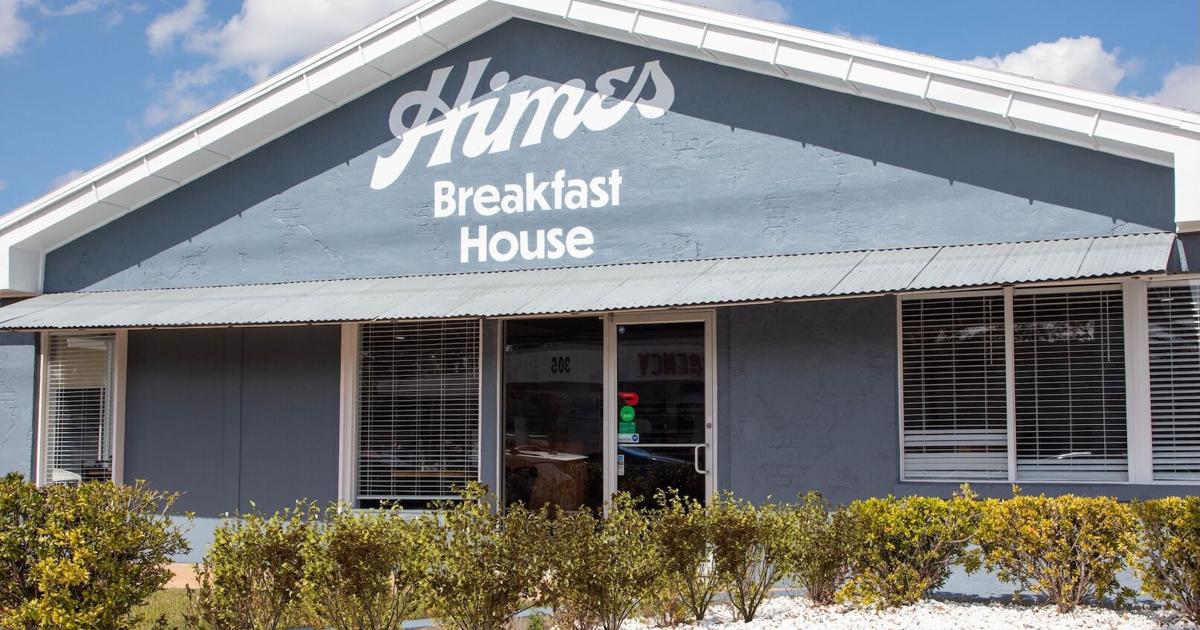
Himes Breakfast House, a staple of southern-inspired food in Tampa, Florida, is looking to expand beyond the Bay area. To do so, its owners John and Jess Christen launched a franchise system to find dedicated operators.
In 2020, John and Jess Christen were at a crossroads professionally.
The owners of Shell Seafood Restaurants had grown their business to six locations after taking it over in 2015 from John Christen’s family, but were looking for a new direction in the industry. Serendipitously, the owners of a locally-owned breakfast spot in Tampa, Florida, were interested in selling, creating a prime opportunity.

John and Jess Christen, the owners of Himes Breakfast House
“During that time, everybody was focused on quality of life,” Jess Christen said. “People were starting to look at what they were doing, and working in restaurants takes a lot of hours. We realized we wanted to stay in the business, but looked to do something different.”
The Christens acquired the breakfast restaurant when it was called Potbellies. New to the morning food service segment, John Christen said the initial months were a learning experience.
“We didn’t know anything about breakfast, but we thought, let’s go for it,” John Christen said. “We operated it as Potbellies for about four or five months, and knew we were going to make every mistake under the sun. We also didn’t know what our concept was going to be, but over the months, we solidified it, shut it down for two weeks, and reopened it as Himes Breakfast House.”
Since the rebrand in 2021, John Christen said the concept has fared well, with customers appreciating the southern-inspired menu. Having found a good footing, and opening two more locations, John Christen said now was the time to grow via franchising, which had been a long-standing idea.
In addition to its ability to scale a brand, John Christen said franchising is a way to pay forward the experience he had in restaurants. His parents founded Shells Seafood Restaurants and at one point had 50 locations in five states. Over the years, the unit count scaled back down to one unit, which is when he took over.
It was then that he met Jess Christen, and the two managed to rebuild the brand to six locations. With the knowledge of how ups and downs can happen in the restaurant space, he said he wanted to help potential business owners.
“I had a unique opportunity when I was taking over a legacy brand that had systems in place,” John Christen said. “I had a lot of people my parents worked with over the years to bounce ideas off of and ask questions. Having that opportunity so young in my life was great, and I’d like to give that to others.”
Any deals with potential franchisees are going to be on the small side, too, as the owners aren’t looking to expand massively.
“We’re small, so we’re going to be looking at one-to-three-unit deals with entrepreneurs who are good people willing to put in the work, and who maybe need a little bit of guidance like I had,” John Christen said. “We’re really focused on Florida right now, and want to grow in a geo-concentric kind of way. We’re thinking regionally.”
Himes Breakfast House has a menu with chef-inspired southern comfort foods
“We need someone who’s experienced and has the motivation,” Jess Christen said. “The type who wants to be in the restaurant, learn peoples’ names and is involved in the four walls. The rest can be taught. There’s a science to what we do, but it’s not rocket science.”
While the franchise system just launched, John Christen said there’s already been some conversations about potential deals. In 2026, he said they’d like to have one or two deals signed, but any agreements will depend on who’s holding the pen.
“This is a people business and that’s what we plan to build,” John Christen said. “We don’t necessarily want to build a high-growth system.”
The initial investment to open a unit is between $336,100 and $806,500, with an average square footage ranging from 2,500 to 3,000. John Christen said since its founding, the brand has utilized second-generation spaces, and he expects a similar path for new developers.
“Depending on the circumstances, we would do a new build,” John Christen said. “But generally speaking, we will look toward existing structures. A hood that’s five years old will still work very nicely.”