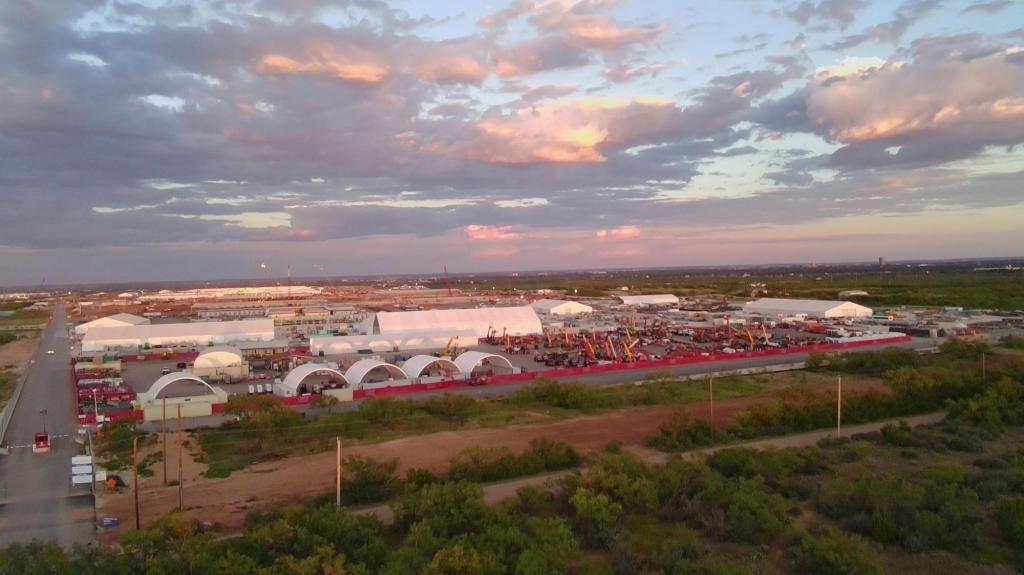
This month, Palm Beach County zoning officials recommended the approval of a massive artificial intelligence data center that would be built a few miles west of Wellington. Known as “Project Tango,” the sprawling complex of server buildings and giant warehouses would cover 202 acres — equivalent to roughly 150 football fields in size.
Nearby residents have expressed worries about pollution, water pumping and the threat of utility rate hikes. One resident expressed concerns about sound from the center all day and all night, while another resident told commissioners, “You’re jeopardizing our water. You’re jeopardizing traffic. You’re jeopardizing our quality of life.”
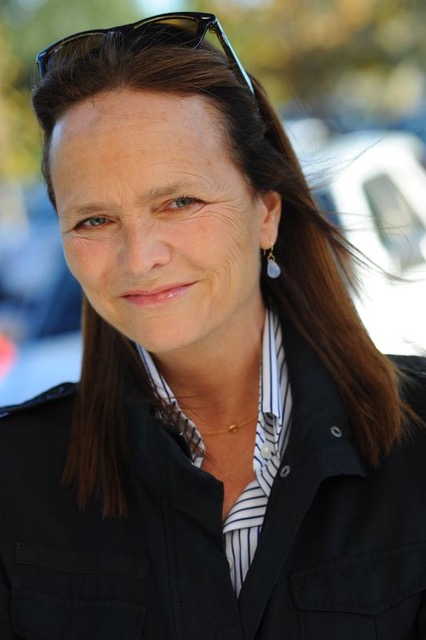 Katie Carpenter is a West Palm Beach-based filmmaker. (courtesy, Invading Sea)
AI data centers generate intense heat, requiring massive cooling systems to run constantly, generating noise and requiring millions of gallons of water per day. The amount of electricity needed to operate their servers can lead to higher electric rates and require upgrades to the power grid to accommodate them, or even new power plants being built.
The U.S. has more data centers than any other country, according to datacenters.com — nearly 4,000. Tech companies such as Amazon, Google and Microsoft use the centers to provide the massive computing power required for artificial intelligence.
Florida alone already has 120 data centers. It’s the fourth largest data center hub in the U.S. after Texas, California and New York. The Palm Beach County project is among dozens underway or planned for the state next year, including huge “hyperscale” projects in Tampa, Orlando and Miami-Dade.
There is opposition growing in Florida, but an environmental campaign to lobby legislators can’t keep up with the speed of hyperscale data center construction. The massive “Colossus” data center was built by Elon Musk’s xAI team in a record-breaking 122 days. Think about how long it takes to get a bill through Congress.
It’s easy to get discouraged when watching residents speaking out at public hearings. They inevitably point out the negative impacts of data centers, including how quickly they can blanket our landscape, suck in our much-needed water, rattle our nerves day and night with the noise.
They say please don’t, then the permit is somehow granted, and they do it anyway.
Some say demand is growing for AI, but whose demand? Who is crying out for more AI? Maybe Nvidia shareholders, maybe tech start-up bros. No one on my street.
None of my neighbors believe they need AI more than they need water and power. Palm Beach County has a population of over 1.5 million. Would you trade the water and power for 1.5 million people in exchange for a few hundred short-term construction jobs and then a dozen permanent jobs after it’s built?
Thanks to the growing volume of voices opposing these projects locally, Palm Beach County commissioners delayed another vote on the “Project Tango” data center until April to provide time for more impact studies. It’s not too late to get back to the wheel of this ship and set it on a more humane course.
Katie Carpenter is a West Palm Beach-based filmmaker with Everwild Media (everwildmedia.com), producing documentaries about conservation, climate change and solutions. This opinion piece was distributed by The Invading Sea (theinvadingsea.com), which publishes news and commentary on climate change and other environmental issues affecting Florida.