
Out of over 200 cigar factories that once ruled Tampa, only 25 are still standing.
The descendant of J.C. Newman Cigar Co., the last operating cigar factory in the country, is on a mission to preserve the history of each remaining building.
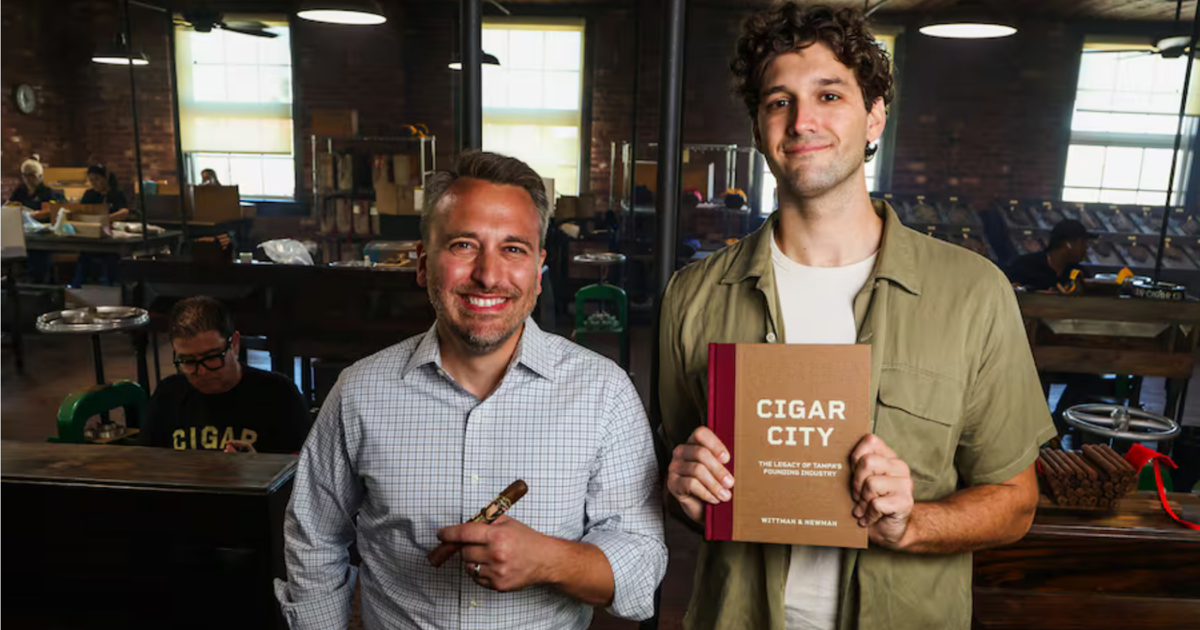
To coincide with the 140th anniversary of Ybor City, Drew Newman teamed up with St. Petersburg-based documentary photographer Zack Wittman to collect the images and stories of these factories in a new art photography book called “Cigar City: The Legacy of Tampa’s Founding Industry.”
Wittman spent six months shooting over 12,000 images inside and out of the factories. He was granted access to spaces that many people never get to see, including the abandoned Samuel I. Davis factory that has sat untouched for years.
Newman first got the idea for the book two years ago while reading about former factories in the Tampa Bay Times. Fires, urban renewal and construction projects — including the addition of the interstate — wiped out most of the factories in Ybor City, Palmetto Beach and West Tampa. His great-grandfather, Julius Caesar Newman, founded J.C. Newman Cigar Co. in 1895.
“It was October of 2023 when the Times created a list of the 25 cigar factories still standing in Tampa, identifying them by address with their current uses and their history,” Newman said during a book launch event at J.C. Newman. “It was this piece of journalism by Paul Guzzo that highlighted for us a great opportunity here to tell the story of these buildings that built the city of Tampa.”
Newman called Wittman in December 2023 to be the eye behind this quest. Wittman is an award-winning photojournalist whose work has been featured in publications around the world, including the New York Times, the Washington Post, Time and Rolling Stone.
Wittman, during the book launch, described the factories as “the monuments to this industry that built the city. And our stories are told through these objects.”
He took exterior portraits of each factory at the same time each day to highlight the similarities and differences among each facade. Detail shots show the unique personality of each building, including shadowy staircases and trap doors.
The 189 photos that made it in the book also feature people interacting with the structures, from neighbors and factory caretakers to master cigar rollers.
“The factories are in different stages of flux,” Wittman said. “Some are offices, some are apartment buildings, some are completely abandoned, but the community is the throughline that connects all of them.”
The book is available for purchase on the J.C. Newman Cigar Co. website and in person at the gift shop. Soon, it will be in local bookstores. But Newman wants to be clear that it’s not a J.C. Newman Cigar Co. book.
“We didn’t want to see the Newman name on the back,” Newman said. “This is about Tampa and the industry and the legacy of the 200 cigar factories that were here a century ago, and 25 of those 200 that are still standing.”
Wittman and Newman were inspired by the Burgert Brothers Photographic Collection of over 20,000 images of Tampa life and landmarks from the mid-1800s through the mid-1900s. The photos are available to the public through the Hillsborough County Public Library Cooperative.
“It’s just a tremendous resource that we use and a lot of people use because they captured Tampa the way it was 60, 70, 80 years ago,” Newman said. “And for us as cigar makers that are attached to the tradition of cigar making, we want to make cigars today the same way that was shown in the photos.”
Newman hopes this book, and the rest of Wittman’s photos that didn’t make it in, can be a continuation of the Burgert Brothers’ mission.
“People 25, 50, 100 years now can look back at the Wittman photos and say, ‘Wow, this is what Tampa cigar factories were like.’”