
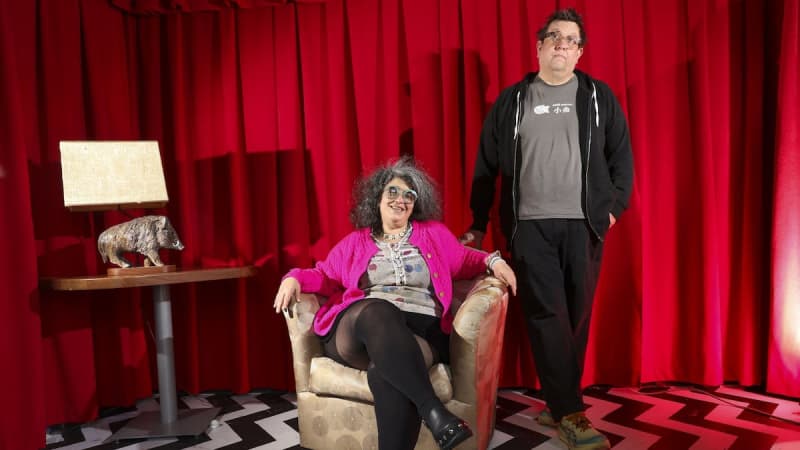
On a recent morning at Sun-Ray Cinema, co-owner Tim Massett had already racked up thousands of steps before lunch. He hit 23,000 on a recent 12-hour workday.
He’d searched the 40,000-square-foot building for a filmmaker’s misplaced hard drive, diagnosed a projector that was acting up and, between his perpetual back-and-forth, fielded messages from fans urging him to book an obscure movie they’d just heard about.
Whether running an indie arthouse or a multiplex, movie theater operators always have too much to do. Tim has, improbably, become the owner of a cinema that is somehow both.
“This may be the largest independently owned and operated theater in the country,” said Sun-Ray co-owner and Tim’s wife, Shana David-Massett. “I know people who own single screens and two-screen theaters, but things like this? I don’t know of anything.”
They opened Sun-Ray a little over a year ago in the building attached to University Mall, one of Tampa’s most beleaguered retail properties. The last of a string of cinema chains that had operated the 14-auditorium space agreed to let them have it, leaving behind years of deferred maintenance and an anything-goes atmosphere that made regulars flee.
Tim remembers broken cue detectors that left the lights on during movies, armrests shredded from hastily applied COVID chemicals and a general rowdiness that suggested no one was watching the room.
“But,” Tim said, “you could also see the bones.”
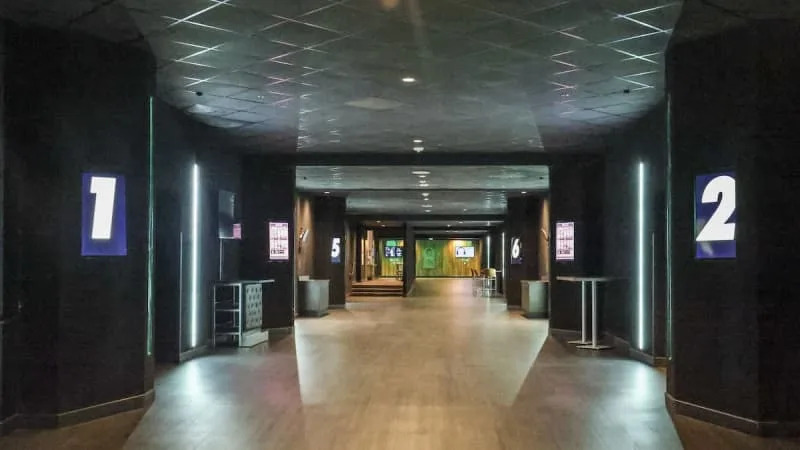
The Massetts have built a career on seeing the bones. They ran the original, beloved Sun-Ray Cinema in Jacksonville for over a decade, turning what had been a struggling single screen in a historic theater into a two-screen destination where per-screen grosses regularly rivaled big chains. Their programming was omnivorous, artsy alongside mainstream.
When the Jacksonville building was sold out from under them for redevelopment, they went looking for a space big enough to try the supersized version of their dream. They started calling theater chains, asking if they had any struggling locations they might give up their lease on. They basically got laughed off of phone calls with the CEOs of some of America’s biggest theater companies until Look Cinemas, a smaller chain, finally said yes.
The climate at University Mall likely helped. With many of the stores shuttered and the property undergoing its own, painfully slow redevelopment, the landlord may have been more willing to lease a 40,000-square-foot multiplex to a company comprised of one married couple with a $1 million small business loan. (Their success in Jacksonville, Tim said, is the main reason they were able to get an SBA loan to fund Sun-Ray Tampa.)
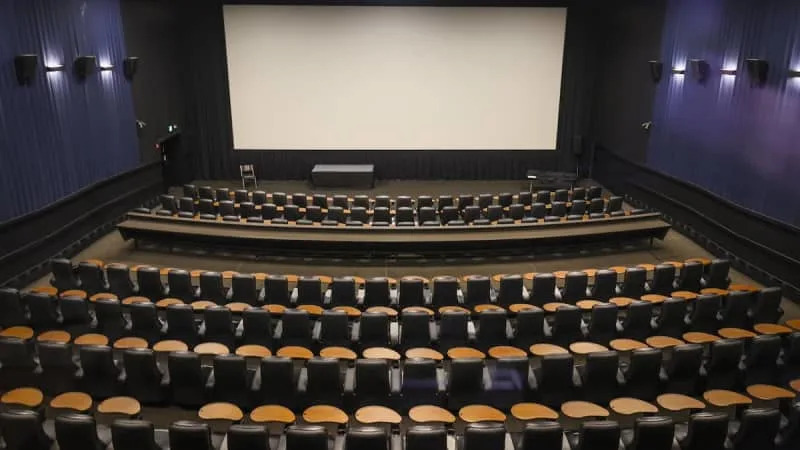
There have been some issues, like the giant pile of construction rubble obscuring the theater and the way some visitors have struggled to find the entrance. But the Massetts are operating on an “if you build it, they will come”philosophy. They’ve gone on a renovation spree — new seating, floors, sound equipment and screens.
They have eight of the building’s 14 screens running. The four downstairs auditoriums, closed for years, had been cannibalized for parts; Shana describes going into them as “urban spelunking.” The rooms they have restored are steadily filling again, thanks to an approach that mixes mainstream titles with repertory deep cuts and niche events that bigger chains rarely attempt.
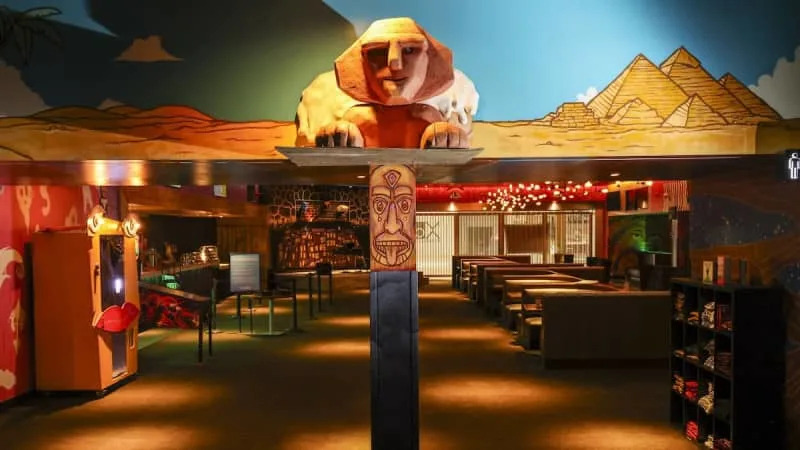
At Sun-Ray, a given week might mean “Wicked For Good” and “Five Nights at Freddy’s 2” sharing space with a 35mm showing of “Speed Racer” or an obscure folk-horror film from 1982, “Eyes of Fire,” which drew 60 people recently — far more than Tim expected. So did a 24-hour “Twin Peaks” marathon and a series of Kubrick films. A New Year’s Day screening of 1957’s “The Seventh Seal,” Tim said, is selling tickets briskly.
Actor and artist Crispin Glover, best known as George McFly in “Back to the Future,” came to Sun-Ray recently to host three nights of screenings and Q&As. A night of B-movies with “America’s foremost drive-in film expert” and Shudder horror host Joe Bob Briggs was packed in April. He’ll be back in February for an event titled How Rednecks Saved Hollywood.
“Seeing something on 35mm is more of an experience than just feeling like the theater is clicking on Netflix,” said Katie Vickery, a Temple Terrace resident who visited to watch “Bugonia” on film rather than digital. “It’s nice having a second theater for film nerds in town aside from Tampa Theater. I love Tampa Theater, but we needed another option.”
On a recent morning, Shana was in the theater’s full-size restaurant kitchen over a boiling pot of potatoes. She was working out the menu for Gorge of the Rings, an 11.5 hour screening of all three “Lord of The Rings” extended versions accompanied by a multi-course feast. (Hobbits eat at least six meals a day, per the books.)
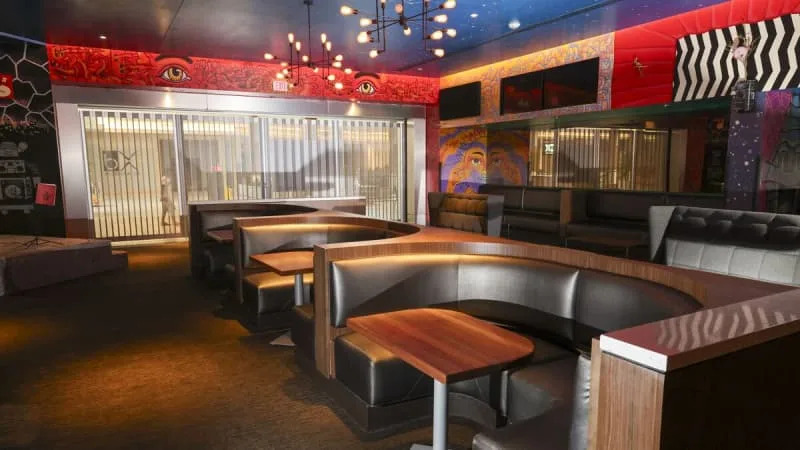
For the business to work, both owners stressed that they’ll need steady audiences for the mainstream movies running alongside their more niche programming.
Shana, on a tour of the space, talked about small details they’re working to nail. She pointed out front rows she refuses to sell, even if a screening is full, because the viewing angle is too close. She spoke about their willingness to enforce rules against phones and talking that some theaters won’t. And while Sun-Ray has a full kitchen that does upgraded theater food, you’ll never see a server in an auditorium.
“If you have a server walking in to drop a check, you think, ‘oh, the check, the movie is almost over,” she said of “dine-in” theaters. “Now you’re not in the story anymore.”
When they opened, monthly revenue hovered around $35,000 to $40,000. “It was terrifying,” Tim said. “But it’s moving in the right direction.” Recent months have quadrupled those early numbers, he said, and the theater is “almost breaking even,” with the possibility of reaching $200,000 months as attendance grows.
But that’s business, and Tim seems most excited to talk about what he’s building for serious film fans. Their programming philosophy is wide open and, in Tim’s words, they want Sun-Ray to be “a place for everyone.”
“Most of the time when you’re watching experimental work, you’re watching it in, like, a tiny room in a really uncomfortable viewing experience,” he said. “Even if you’re at New York institutions like Anthology or Film at Lincoln Center, you’re in a very small space. I’m just really excited to be able to finally show experimental film in a very comfortable setting with a really great projector.”
He once dreamed of a theater able to present all films in all formats. To that end, Sun-Ray just installed a refurbished 70mm projector. It will be only the third 70mm projector operating in Florida, with the others in Fort Lauderdale and Coral Gables, and one of only a couple dozen in the U.S. They’ll christen it with “Kill Bill: The Whole Bloody Affair.” “And,” Tim said, “we’ve already been told we can open Christopher Nolan’s ‘The Odyssey’ in 70mm this summer.”
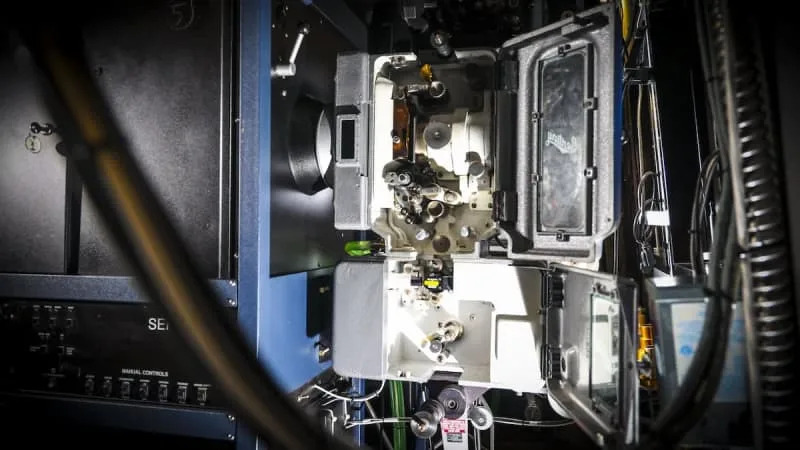
Shana sees value in putting unfamiliar work in front of mainstream crowds: “We want to show the trailers for short, experimental works… before the trailer for the next Marvel movie, so that you go, ‘Hey, I might like that.’ I think people are adventurous if they have the opportunity.”
Shana describes cinemas as one of the last places where people collectively agree to set distractions aside. “When people are sitting in the dark at a movie, they don’t talk about what’s on their minds,” she said. “They just go on a journey with the characters… There are all kinds of ways to be among people, and it doesn’t matter what their opinions are. You’re just in there and you go, ‘Wasn’t that a great time?’”