
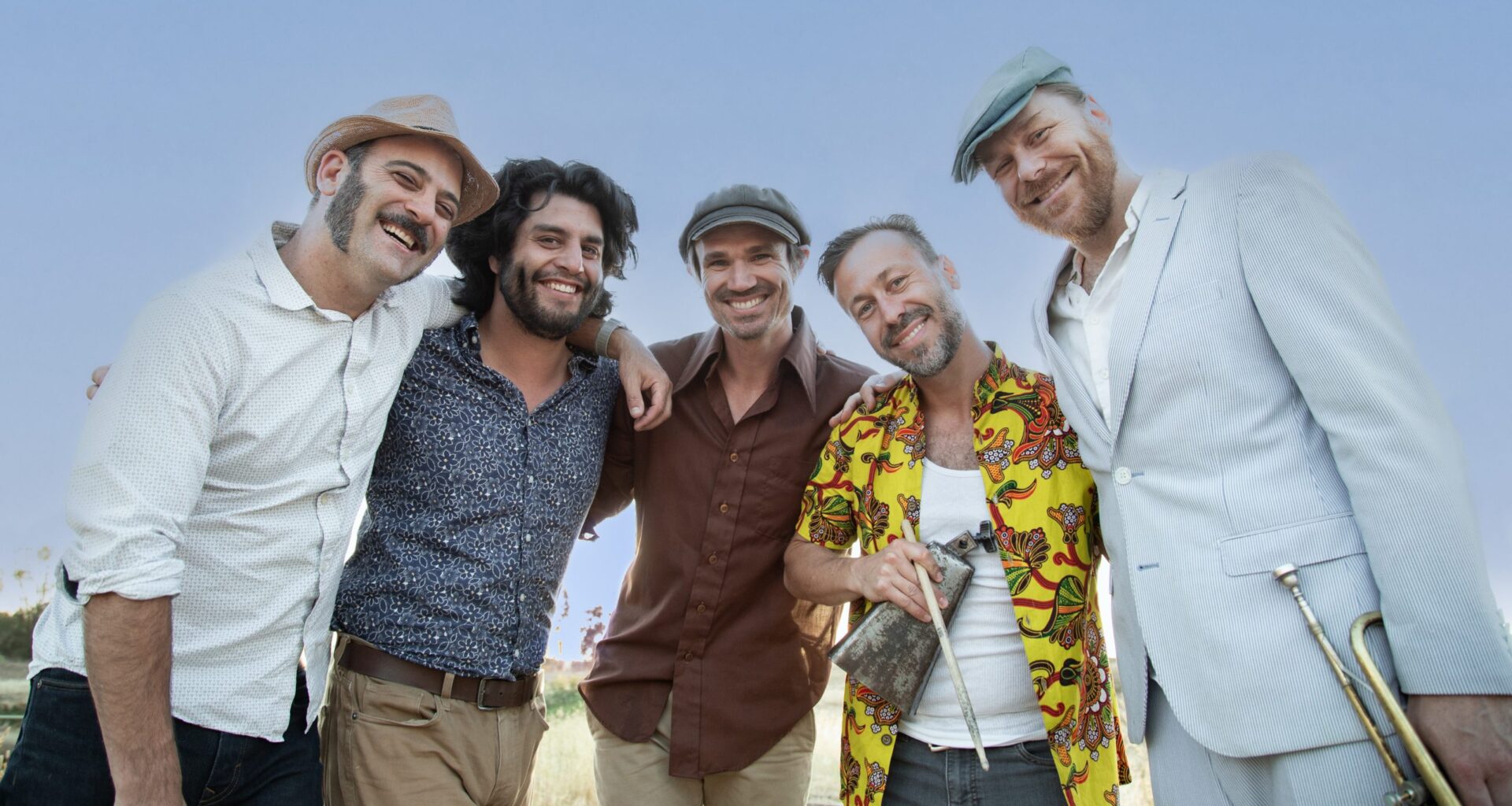
 The California Honeydrops Credit: Deborah Wilson
With musical styles rooted in New Orleans jazz clubs, Motown records, and Mississippi juke joints, The California Honeydrops are a bit of a paradox. The San Francisco Bay Area white boys seem to have stumbled their way to success, despite their resistance to music industry standards.
Led by Polish-born frontman, Lech Wierzynski, The Honeydrops maintain their individuality not just through their refusal of a record label, but a tradition of setlist-free live performances. The audience might get some hits, it might get some covers, and members might be asked for requests, but one thing is for sure, fans always get a unique experience.
I had the opportunity to chat with Wierzynski before The California Honeydrops’ upcoming show at St. Petersburg’s Jannus Live on Jan. 8. Throughout our interview, the Pole with the soul discussed his early influences, his songwriting process, the band’s connection to its audience, and the importance of local music scenes in helping young bands flourish.
I want to start with a kind of long-winded question about your influences. So, when I first discovered your music, I was immediately hooked by the swing of it, almost involuntarily. And part of that was the nostalgia factor. I think the foundations of our musical tastes are often presented to us in childhood, just the sounds around our homes before we find our own. Sometimes that’s a natural evolution and sometimes it’s a hard rebellious turn.
What were the first sounds you remember hearing as a child? And can you recall an adolescent moment where you fell in love with a new sound for the first time?
Ooh, that’s a good question. I don’t know what the first sounds I ever heard were, but I remember just always liking music, you know? I remember always being drawn to it and always singing whatever songs were playing. I was trying to record songs off the radio, I think as early as like, 6 years old, you know? I was trying to record, because I knew my brother knew how to do it, so then I was trying to do it. I would record on the tape over some song that he recorded off the radio. It was the 80s when I was first doing that still, you know? But, I remember Michael Jackson. I remember trying to catch, like, “Man in the Mirror” or something on the little radio. But, there was so much music around and I liked a lot of it. My dad liked old time jazz, old New Orleans jazz, you know? Jelly Roll Morton and Louis Armstrong, Sidney Bechet, that type of thing.
But there was a huge variety of music, and my mom was more into like, British invasion kind of rock ‘n’ roll from the 60s. That was more my mom’s vibe. But I just heard it all. I liked it all. I didn’t care at that point. And we had, like, Polish rock ‘n’ roll too. I remember there was this Polish tape of rock ‘n’ roll that we heard a lot. And then my dad had this tape that one of my brothers recorded for him, still back in Poland, one of my oldest brothers. And he and my dad had that one tape and we listened to that a lot, you know? And that had a huge mix of music on it that had some country, that had some Louis Armstrong, that had like Tom Jones on it, that had some Nat King Cole. It just had this huge mix of music. But yeah, all that was old music, but my brother and I, we liked the new music on the radio, you know?
What about the teenage years? Do you remember finding something new that just struck a chord?
Yeah, yeah, yeah. That was your other question. Sorry, I just kind of got lost in the sands of time, my friend. Um, me and my brother, when we first heard stuff that was new, the stuff that caught our attention was hip hop and rap. That was like the first thing that hit us as kids, and then I split off from there when I heard, like, alternative rock.
You know, I heard The Red Hot Chili Peppers, and I heard Weezer, and I heard Green Day, and those were like the first things that caught my attention that my brother didn’t like. So, those were my first tastes that I liked individually, you know what I mean?
Yeah, absolutely. And you can hear, you know, everything from New Orleans Brass to Delta Blues, Motown, even some African rhythms throughout the Honeydrops songs.
Oh, yeah. Definitely.
But what’s a musical influence that fans might be surprised to learn genuinely shaped you?
Probably, actually, that.
Kind of all those bands from the early 90s, you know? That was a big thing for me for a second, like, Weezer, Pearl Jam, Chili Peppers, Green Day. I was pretty into that stuff for like a good two years. Those were like my jams. And I don’t think anybody would expect that.
But, given the age that I am, between that and like, the early West Coast, G-Funk sound, you know? The stuff that Dr. Dre was making, between those were our favorite. That was our favorite music as kids, but all that stuff actually started all sounding the same to me very fast.
Especially once the 90s moved on and actually did start sounding the same. Because at first all the bands were sort of different and then everybody was just trying to do it and everything started sounding the same. And then I quickly got into older music. I got really into jazz and really into, like, Led Zeppelin, and Grateful Dead. And then jazz, like all the jazz I could digest. By the time I was in middle school, like 8th grade, I didn’t listen to nothing but jazz, and some blues, and some old rock ‘n’ roll, you know? Like your Hendrixes, and your Zeppelins, and your Grateful Deads and stuff. Psychedelic stuff.
Have there been any influences, maybe some of those, that you loved but couldn’t quite integrate, or had trouble working into the Honeydrops sound?
Definitely. Yeah. Oh, so much, man, because I love so much music, right? But yeah, like the Led Zeppelin never really made it in. We’ve covered a couple of Grateful Dead songs.
Covers from the Cave by The California Honeydrops
Yeah, I have seen that on Covers from the Cave and things like that.
Yeah, so we’ve done a couple of those. I’m actually thinking, I want to do a Jimi Hendrix. I want to do a kind of, like a soul version of a Jimi Hendrix tune. I was just working on it last night actually. So, I’m always seeing how much I can pull in. You know what I mean?
For sure. And when you write, how do you decide whether an idea wants to be kind of a loose jam-forward tune or something a little more structured and lyrical?
Ooh that’s—I guess there’s all kinds of different ways to write a song, right? So, sometimes what’s calling me is like, a melody with words, and I just start following that. I wake up with a lot of songs in my mind, just kind of ready from my dreams. So, sometimes I’ll just kind of have a song from a dream, like right at the edge, and I’ll just kind of write that down, and then decide what the groove’s going to be later. But, sometimes I’ll dream up more grooves and things, like rhythms will come. And that’s usually where I’m like, okay, we’re going to have to figure this out together. How this rhythm all fits together, and what each person wants to play on it, and then maybe once we figure that out, then I’ll write some words over it, I write a melody over it. So, there’s a lot of different ways to do that, right?
You know, sometimes I think if it starts with a rhythm, if it starts with like, a really groove idea, I gotta bring it to the band and see if my groove idea works. Like, hey, bass player, try to play something like this. Ask the drummer to play something like this. Ask the keys, the guitar to play something like this, and then see if it starts doing something that we’re like, oh yeah, that feels cool. And if it doesn’t, then I’m like, well, let’s play something different then. See if we can make this into something, you know?
Yeah, that was actually going to be my next question. I know you’ve talked about songs arriving in dreams or flashes, but once that initial spark hits, what does the hard part look like? Where do those songs tend to get stuck, and how do you get past that barrier?
Oh, wow. You know, sometimes they don’t get stuck. That’s the great thing about writing first thing in the morning out of your dreams. It’ll just kind of pour out sometimes until it’s done. And you don’t have to like, work on it that hard. You just kind of play it over and over again. Sometimes though, you don’t remember it well enough. You just kind of remember a little bit, like a piece of a melody, and just like a feeling. And then you kind of have to sit with it and see where it goes and try different things out, you know? And then, of course, you gotta bring it to the band and see if you can make it sound good, if people like to play it.
So, it can get stuck there too, because you can be like, man, this is cool. And then you bring it to the band and it’s like, yeah, this isn’t really working, right? So, there’s a lot of different choke points for a song, between having it in your mind, and then putting it into reality, and then putting it into reality on wax, right? Like, recording it. There’s many, many, places things can go wrong. Or right.
Yeah, you’ve mentioned the band can sometimes tire of a song mid-recording and start jamming something new. Have any of those accidental detours ever become core Honeydrops songs?
Well, yeah. You know, the song “Lead Me Home” was like that. That was in a recording session. We were just using that as, like, a palate cleanser between takes. And that song, you know, a lot of people listen to that tune on Spotify. We haven’t incorporated much into playing it live, but people do listen to that song quite a bit.
Redwood Highway by The California Honeydrops
And your latest album, Redwood Highway, I’ve been listening to it lately, and it reads to me like a solo cross-country road trip.
[Laughs]
The tracks take a few stops in different regional roots sounds, but there’s also this through line of a feeling of both awe and loneliness. Is there anything in particular that led the band to those themes?
Um, I don’t think so. I mean, those were songs, that was kind of a collection of, kind of more like, solo material almost. That kind of just came together naturally. I just kept on writing these different songs and they weren’t fitting on the records, you know? They weren’t fitting on the other records, and so finally, when I had enough of them, I put them all on one record [Laughs]. You know, I think some of those songs, “Redwood Highway” in particular, was written–there’s a song about losing something.
It’s a song about loss. And I think that’s the song that kind of ties all the other songs together in a way, and it’s the first song. It’s about loss, you know? As you get older, you lose more and more people in your life, and it just changes the way you see life a little bit. Because so many of the people that you’ve grown up with, or that have had such a big impact on your life, are no longer in this realm.
And it just makes you feel a little weird. Like, you got one foot in one world, one in the other, so to speak, and then there’s a loneliness that comes with that, right? A loneliness, a feeling of longing, you know?
Absolutely. Speaking of those feelings, as you continue to make new music, what emotional space is the band working from right now? Is there a sound or a feeling that keeps popping up as you write or record?
You know, lately, the last tour was a shift more into, like, the old school. Just like, good-times Honeydrops shows.
Just like, let it rip. Instigate the crowd a little bit, tell them some crazy shit, make them laugh, make them feel good. So, I feel like we’re actually moving back. I felt very strongly on this in the last three months of us kind of like, moving strongly back in the direction of just grooving and entertaining people, you know?
And I think that’s partly because I kind of got all that out on that CD, and we played a lot of those songs for a while, for the last 3 years, you know? And taking it into that space a little bit more often, and now I feel like it bounced back, into kind of just letting it rip again. So, I’m foreseeing the next record being a little bit, probably more like a soul record. But, with probably more ballads than we used to do.
And, speaking of that audience energy, you know, your set lists tend to be improvised, and I’ve heard you mention that doing so keeps it fun and engaging for you. But is there any outside pressure to deliver a more like produced theatrical show?
There’s always pressure, yeah. Outside pressure, not so much. But yeah, that’s something I’ve resisted. I’ve resisted that with all of my heart and soul. You know, like the produced theatrical show is just not–everybody does that.
Like, that’s what you see mostly with big touring acts. And that’s just not how my mom raised me. Or my dad, you know what I mean? They didn’t. They always told me to do something different, you know?
Why do you want to do what everybody else is doing? I was like, you know, you’re right, I don’t think I do. So yeah, there is pressure sometimes. Interestingly enough, there’s pressure from yourself to do it. Because, sometimes when a show doesn’t go well, which is more likely to happen when you don’t have a set list, because you can just be lost in the wilderness up there of your own brain, and all of a sudden you can’t remember any songs that you even want to play, and then we all start feeling that collectively, and then we just kind of lay a big fat egg. So, you know, sometimes it doesn’t work out.
But, then when that happens, you’re like, well, maybe we should kind of standardize this to make this more consistent, you know? Because, the performer in you wants to succeed, and you don’t want to have that feeling of having a not-great show. So, sometimes the pressure comes from within to kind of say, oh, we need to play good, but then, another voice calls from within saying, hey, man, just keep this loose. Keep it fun. It’s not about execution, it’s about connection, you know?
Right. And speaking of that connection, the energy of your shows seems really reciprocal, like an exchange with the audience. What’s something fans may not realize that you’re paying attention to or picking up on from the stage?
I mean, yeah, I’m looking at them. I’m looking at them the whole time. I’m looking at the whole room. I’m looking at the front, to the back, from side to side. I’m looking at how people are interacting. Not just whether they’re looking at us, I’m looking at like whether they’re looking at each other, you know? I’m looking at whether they’re moving their bodies. I’m looking at whether they feel comfortable together, or whether they look like they’re crammed in like sardines and don’t want to smell the person next to them, you know? So, sometimes to my deficit, or for better or for worse, I’m watching them like a hawk sometimes, and trying to figure out if I really see them uncomfortable. I’m gonna try to make them comfortable, you know?
Or, if I see them like, looking at us like we’re gods, you know? I’ll try to break that spell a little bit. I’ll be like, okay, enough of that. Like, let’s all have a good time together. You know what I mean? So, I don’t like it to turn into a theatrical show. And I want people to have a good time together, kind of get the whole room kind of moving. That’s good, that’s often what I’m going for.
And sometimes, that’s not the night for that. And sometimes you’re like, hey, this isn’t going to happen tonight. This whole room isn’t going to just start bouncing together like a big dance party, wall to wall. Maybe that’s just not the crowd tonight, and then you take them on a different trip, and that’s okay too. But if I can take them on that trip, I will, you know?
So, you live with these songs for years on the road. Has performing them night after night for different audiences, who might have different takeaways, changed what any of them mean to you now versus when you first recorded them?
You know, I try to just let them have a life of their own. But yeah, they’ve definitely changed. And the words, you know, some of the songs are so old that I don’t really feel like I even wrote them. It’s like, okay, well, that song is there and we play it. But, I feel like I don’t know the guy who wrote them anymore.
That’s something fun about playing a song from a dream, where you don’t really feel like you wrote it anyway. You kind of feel like you’re just playing a cover of a song you heard. It feels a little less like, this is my song and this is what it means. So yeah, it’s really nice. The songs take on a life of their own, and that’s kind of the sign of a good song. If a song gets old quickly, and it kind of only means one thing, then I don’t think it has as much longevity. So, I look forward to doing those songs that continue to have meaning, and different meaning, you know?
And when you or the band are feeling off, you know, tired, road worn, homesick, what’s something that reliably brings you back to the joy of playing, whether it’s a certain groove or a band ritual or some sort of audience reaction?
I mean, playing like, some new shit that we haven’t played in a long time. Because that will definitely snap us back into what we’ve been missing. And calling like, a really random set can sometimes really put us back on our toes, you know? And seeing a crowd that’s really dancing and moving, man. That really energizes you when you don’t have a whole lot of energy, right?
But you never know, man. Sometimes you just see some kids at a show, you know, like you don’t see a lot of kids in the business. You know, except for in the summertime, when it’s festivals and outdoor things. But, sometimes you just see some kids in the front row jumping up and down and they’re like, asking you to play “Honey and Butter”, you know, the songs that the kids like. It’s just, man, it’s sweet, you know?
So, there’s a lot of different things that can kind of spark you back to life, man. Running into some old friends in a town when you’re, like you said, you’re road worn, you’re tired, and then, you got a friend in town, and you get to meet up with them before the show, and maybe they bring you some food, or you get some home cooked food. All of a sudden, it makes it all all right, you know? So, you never know. But there’s a lot of ways to bring yourself back. Or a good after party, where you can go play some music with some friends back in another city. You know, that’ll definitely, no matter how tired you are, man, that’ll always kick you back up.
I love it. And the band’s origin story of busking in Bay Area subway stations is pretty well known by fans at this point. But for years after that, you played gigs every Wednesday at a Berkeley pizzeria called Cheeseboard Pizza Collective.
Yeah, yeah, that’s right.
And they even helped raise money for your first record?
Yes, this is all correct. Yeah, first studio record.
What importance do you put on our local music scenes in cultivating talent and growing a community that allows new artists to thrive?
Oh man, I mean, we have a couple guys right now playing with us from the local scene. Young guys that just graduated high school, that have been touring with us for the last few years. Miles Blackwell and Oliver Tuttle, they both went to OSA, which is Oakland School for the Arts. So, you know, because we like to jam and just kind of play music for fun, we meet a lot of people around, and during COVID was especially a good time for that because we were home.
So, that’s always been a big part of it. And actually, the guy who spearheaded that idea for our fundraiser at the Cheeseboard, he um, he recently, recently passed away.
So we just, we’ve just had a memorial for him earlier this year. So, that’s a big part of our—that that actually made me reflect on those Cheeseboard days quite a lot. Because, you know, you really can’t make it in this business without a label like we don’t have, and all that. And without, like, media, interest and support in you, it’s really tough to make it. But, if you have people that want to help you, then you got a fighting chance, and that’s what Steve gave us way back in the day. He came up to us and was like, hey, uh, why are you guys still playing this every Wednesday gig? He was like, you guys should be out on the road, you know, doing your thing, getting out there. People need to see this. And this was all kind of foreign to us, you know? We hadn’t even thought of that. We were like, well, we’re making a little bit of money here on the local scene. And he really wanted us to spread our wings, and we were like, well, we’re trying. We were trying to make a studio record first, but we didn’t have enough money yet to rent a studio, blah, blah, blah. He was like, well, we could help do that, you know? So, they approached us about doing this because they were kind of tired of seeing us at the Cheeseboard.
Oh, that’s great.
So, you know, Steve will always be remembered by us for that. He was an amazing person, period. That was just one of the amazing things that he did for a small part of the community, which was us and our music people. So yeah, that was a huge part of that kind of giving, of another person having faith in us, before we had faith in ourselves.
Right on, man. Well, that’s about all I have for you, but I really appreciate you taking the time.
Yeah, absolutely. Let me know if you think of anything else. That was a very well-prepared interview with a lot, a lot of good questions, man. You know, you don’t get those very often, so I really appreciate it.
Thanks, man.
As the son of two journalists who did a lot of interviews, I will tell them that their craft is alive and well.
Oh, man. I’m so glad to hear that. And I’m stoked for the show.
Yeah, man. It’s gonna be really fun. I love playing that spot, but hopefully it’s not–were you there last year where it was cold as shit?
I was.
Yeah, hopefully it’ll be a little bit more Floridian.
Subscribe to Creative Loafing newsletters.
Follow us: Google News | NewsBreak | Reddit | Instagram | Facebook | BlueSky
This article appears in Dec. 25 – 31, 2025.
Related