
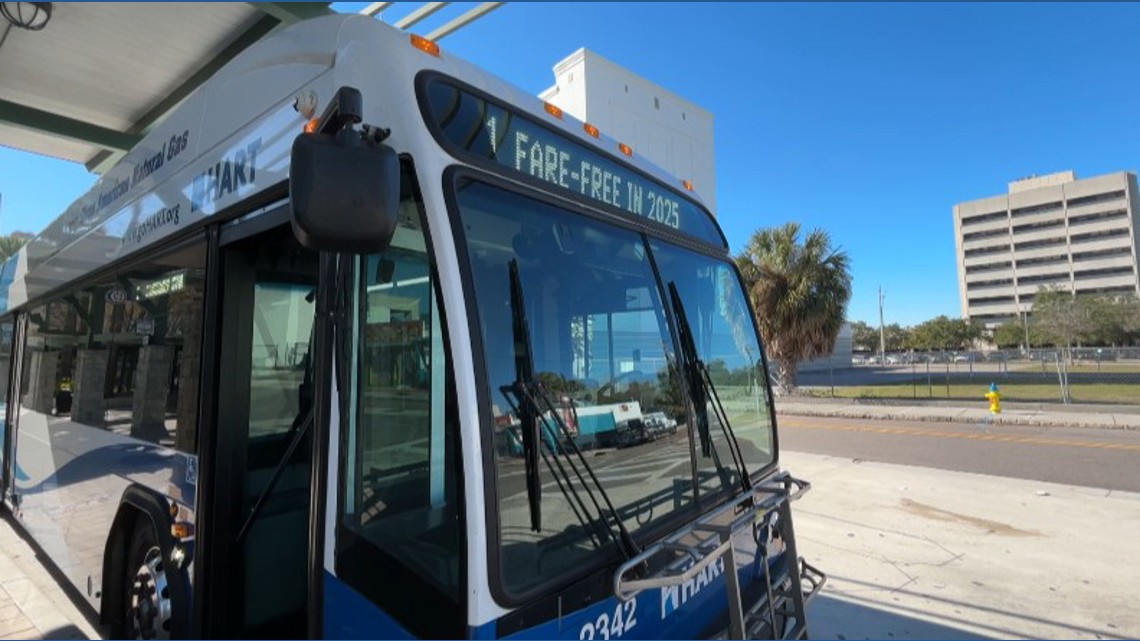
The pilot, funded with more than $1.5 million in city parking revenue, eliminated fares on Route 1 for a year.
TAMPA, Fla. — After a year of riding fare-free, passengers on HART’s busiest bus route will soon have to start paying again.
Beginning Monday, Jan. 5, riders on Route 1 — which runs from downtown Tampa to the University of South Florida — will once again be charged a fare.
The move ends a city-funded pilot program that dramatically boosted ridership and service reliability along one of Tampa’s busiest corridors.
The pilot, funded with more than $1.5 million in city parking revenue, eliminated fares on Route 1 for a year. HART says the impact was significant: ridership jumped more than 45%, with more than 1.4 million trips logged during the program, making Route 1 one of the most heavily used bus routes in the region.
For many riders, the route is not a convenience — it’s a necessity.
“When you’re in this situation, every penny counts,” said Route 1 rider Eddie Perez. “That money I could’ve used for something else. We also need to eat, and there is hygiene supplies in all of that.”
Perez said Route 1 connects riders to essential services all along the corridor.
“The Social Security office is right near this building. There’s a lot of housing and a lot of homeless help that we use this,” Perez said. “There’s a laundromat. There’s government office buildings. Everything that I need to get out of this situation is right here, in one route.”
City leaders narrowly approved the pilot last year, arguing free fares could help families struggling with Tampa’s rising cost of living.
“Eighty dollars can help with your light bill,” said Tampa City Commissioner Lynn Hurtak. “Eighty dollars for a lot of families is a lot of money.”
Riders echoed that sentiment, saying even a few dollars a day adds up.
“Because I get on the bus and go to work on the other side of town,” said Patrick Jordan, a Route 1 rider. “It saves me — it can save four dollars a day. Five days a week, it can help out a lot.”
Jordan said the return of fares will be difficult for many.
“It’s going to be hard because everybody ain’t got no money,” he said. “But it does help people get from one side of town to the other side of town. A lot of people need it.”
While the program boosted ridership, some riders and drivers raised concerns about an increase in unhoused individuals riding the route for extended periods, sometimes leading to behavioral issues. Riders say that the challenge would need to be addressed if free fares were ever reinstated.
“They just go ride the bus and fester and stuff,” said rider Julie Reiss. “So, there’s always going to be good and bad wherever you go. You can only control what you do.”
At the same time, Reiss said the program helped many riders move forward.
“It gives you the opportunity to advance and better yourself,” she said. “If they focused on the positive part of keeping it going, the opportunity for people to better themselves, I think it would really help.”
Despite the return of fares, HART says most riders plan to stick with the route. A recent agency survey found more than 80% of Route 1 riders expect to continue using the service.
To help reduce costs, HART is encouraging riders to use its Flamingo Fares program, which caps how much frequent riders pay, ensuring they do not spend more than the lowest possible fare.
HART also says several service improvements implemented during the pilot will remain in place, including buses every 15 minutes on weekdays, more frequent evening service, and 20-minute service on weekends.