
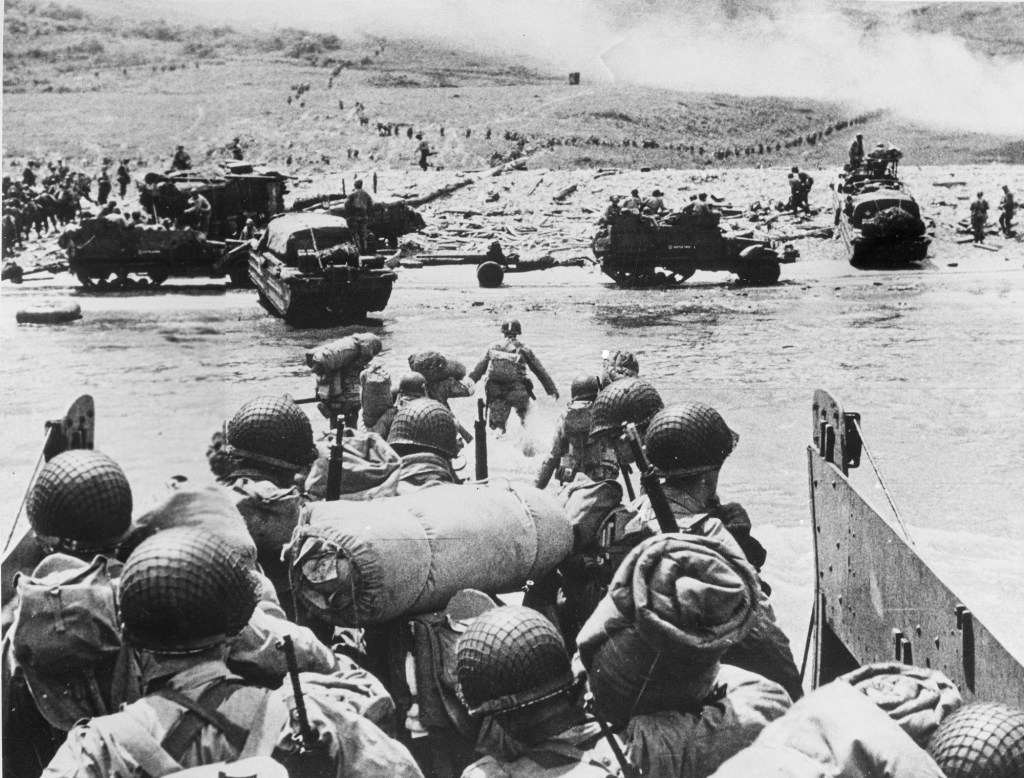
I have lived for 76 years and I know one thing for sure: War is hell and it is wrong.
I grew up during the Cold War, robbed of a carefree youth by duck-and-cover air raid drills in school and lessons in the fourth grade on how to stock a fallout shelter. I watched the Cold War expand into a nuclear arms race held precariously in check by a “strategy” referred to as “mutually assured destruction,” aptly abbreviated as MAD. As a child, I tried to make sense of a senseless world, one which I never took for granted would survive.
One Sunday evening, I dragged my rocking chair in front of the television and settled down a bit early to watch Lassie. I caught the end of a show called Twentieth Century, narrated by Walter Cronkite, the familiar, trusted anchor of the CBS Evening News which my family watched every night.
Sitting by myself, I saw stark footage in black and white of a man who had survived a bomb attack. He was wandering through the ashes of a city which had been blown apart. The voice of Cronkite said, “This is what World War III will be like.” I was stunned. For days, Cronkite’s words pounded in my head. I was too horrified to repeat what I had seen and heard.
I carried the agony for several days until I could no longer bear it. I sobbed so hard my whole body shook. “What is wrong?” my mother asked. I could barely form a thought. Finally, I blurted “World War III is coming and we’re all going to die and Walter Cronkite said so.” My mother had no words to comfort me.
In my high school years, I heard President Lyndon Johnson talk about a Great Society of equals and an end to poverty. I dared to believe it could happen only to watch it go up in flames on the nightly news while my generation was sacrificed to the anti-Communist crusade known as the Vietnam War. The “enemy” won. Fifty years later Ho Chi Minh City, formerly known as Saigon, is filled with American tourists, many of them Vietnam veterans.
In my early 20s, I lived in London. The Irish Republican Army was planting bombs in English pubs, the latest iteration of a centuries-old war with Great Britain. The illusion that the bombings happened somewhere else was shattered along with the broken glass I had to walk around from a pub bombing in my neighborhood.
In my late 20s, I was a correspondent for ABC News, covering wars in Central America. I saw a dead woman in an apron lying in a pool of blood, I heard the agony of mothers wailing over the bodies of their dead sons. I watched 10-year-olds put on uniforms and take up rifles to fight wars started by generals.
In the last year of his life, my father, a World War II veteran, had to move to a nursing home because dementia had robbed him of his ability to live independently. When I called him to ask if he was adjusting to his new surroundings, the clarity of his answer stunned me: “When I was still a boy, they taught me to kill people. I adjusted to that, so I think I can adjust to this.”
He did not know the term for it, but what he adjusted to is now called moral injury. It’s why 20 U.S. war veterans commit suicide every day. This is the wound which can never heal.
My father idolized Dwight D. Eisenhower, the war hero elected to the presidency when I was a child. The five-star general, who led the Allies to victory in Europe, had this to say about war: “Every gun that is made, every warship launched, every rocket fired signifies, in the final sense, a theft from those who hunger and are not fed, those who are cold and are not clothed.”
We have all been robbed of the dignity and security of living in a nation where no child goes to bed hungry, where quality health care is a human right, and where well-educated voters are not taken in by power-mad autocrats.
Instead, our government has spent $8 trillion on wars since 9/11, money which should have been spent on securing our future through providing a first-class education for every child in America, making sure every American who wants to own a home can afford one, making quality health care available from cradle to grave, and seriously addressing global warming, which threatens every American’s health, security, and quality of life.
U.S. Civil War Union General William Tecumseh Sherman is said to have originated the statement, “War is hell.” The full quote is: “I am tired and sick of war. Its glory is all moonshine. It is only those who have neither fired a shot nor heard the shrieks and groans of the wounded who cry aloud for blood, for vengeance, for desolation. War is hell.”
Kathy Hersh lives in DeLand.