
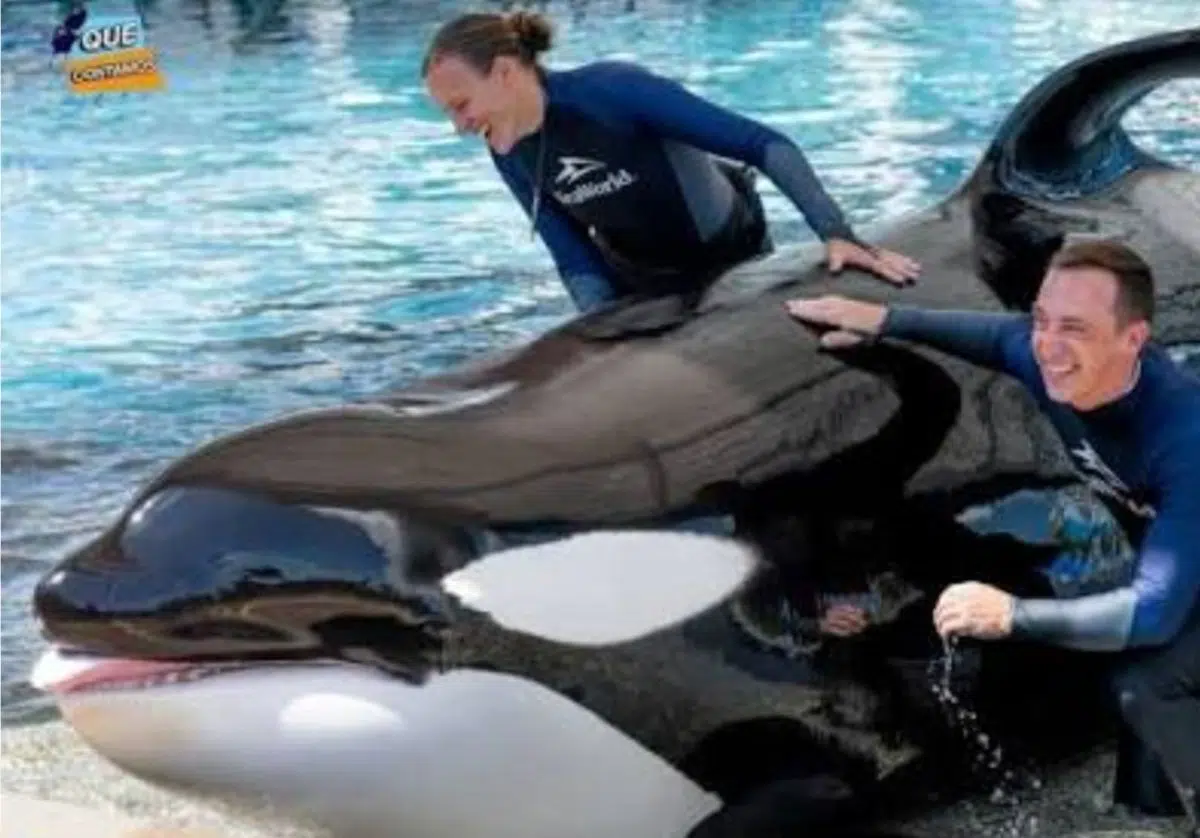
The specimen, which was extracted from its habitat in Iceland in 1978, died at the age of 48 after spending nearly half a century in captivity at SeaWorld Orlando.
The iconic orca Katina, recognized as the longest-living specimen at SeaWorld Orlando and the last of its kind in that facility to be captured in the wild, has died at the age of 48.
The announcement, made by the organization, marks the end of a historic chapter and controversial in the company’s trajectory, as Katina spent 46 of her 48 years of life confined in artificial facilities after her capture in the late 1970s.
The death of the orca Katina at SeaWorld Orlando not only represents the loss of the dominant member of her group but also highlights the end of animals captured directly from the ocean in this theme park.
Katina was separated from her natural environment off the coast of Iceland in 1978, when she was just two years old. After a brief period in a Canadian aquarium, she was permanently moved to the Florida facilities in 1984, where she became the central figure in the social structure of the orcas at the facility.
 Katina at SeaWorld Orlando
Throughout her life in captivity, Katina played a fundamental role in the company’s breeding program. She was the first orca to successfully give birth in a controlled environment, giving birth to Kalina in 1985.
In total, the specimen had seven offspring, several of which were transferred to other parks or died prematurely. Her position as matriarch granted her a unique status within the group, influencing the behavior and cohesion of the pod of orcas in the park.
Katina, an emblem of SeaWorld Orlando
Although SeaWorld Orlando has highlighted her longevity as an indicator of the care she received, various organizations dedicated to animal protection have used this event to point out the repercussions of prolonged captivity on large cetaceans.
Katina, who surpassed the average lifespan of orcas living in tanks, exhibited over the years various physical complications associated with her environment, including the wear of her dorsal fin.
With the death of the orca Katina at SeaWorld Orlando, the park bids farewell to its direct connection with open sea captures from the late 20th century.
The legacy of this specimen is marked by her extensive offspring and the ongoing international debate on the ethics of keeping these marine mammals out of their natural ecosystems for exhibition and entertainment purposes.