
By: Chad Hanson | January 05, 2026 | 5 min. read |
The 10th annual open house invited people living with paralysis to learn about the groundbreaking spinal cord injury research neuroscientists and rehabilitation specialists are conducting in Miami.
The 10th annual Miami Project to Cure Paralysis open house invited people living with paralysis to meet the researchers and learn about the groundbreaking research neuroscientists and rehabilitation specialists are conducting in Miami.
Opening at the Lois Pope Life Center, the event inspired something every bit as important as the science: hope.
June Bruno came to her first Miami Project open house five years ago. It was the first step in a series of dramatic improvements that introduced a mobility she never used to have.
“They got me from laying in a bed to 100% wheelchair,” she said while attending this year’s open house. “From the wheelchair, they got me to the walker and walking. I use the walker all the time around the house.”
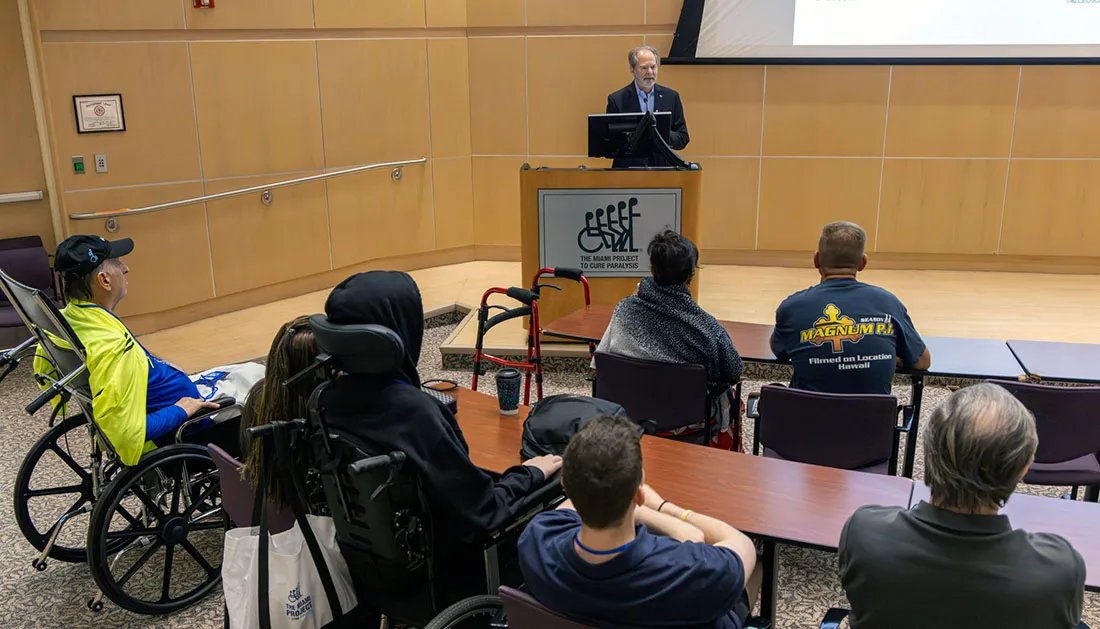 Miami Project Scientific Director Dr. W. Dalton Dietrich, speaking at the open house.
“This is an outstanding time where families and individuals living with paralysis can come and spend the day talking about the research that we’re doing,” said W. Dalton Dietrich, Ph.D., professor of neurological surgery at the University of Miami Miller School of Medicine and scientific director of The Miami Project. “It also allows them to ask questions that the scientists and the clinicians can answer regarding their own injuries.”
The spinal cord injury research highlighted at the open house that powers such progress included:
• Jae Lee, Ph.D., professor of neurological surgery at the University of Miami Miller School of Medicine, discussed regenerative and cellular strategies aimed at spinal cord repair.
• Matija Milosevic, Ph.D., assistant professor of neurological surgery at the Miller School, presented on intent-driven neuromodulation. This innovative approach uses neurological signals to control devices, offering new possibilities for patients with movement impairments.
• Seth Tigchelaar, M.D., Ph.D., a neurological surgery resident at the Miller School, provided an overview of Neuralink’s brain-computer interface technology. The Neuralink interfaces can facilitate direct communication between the brain and external devices.
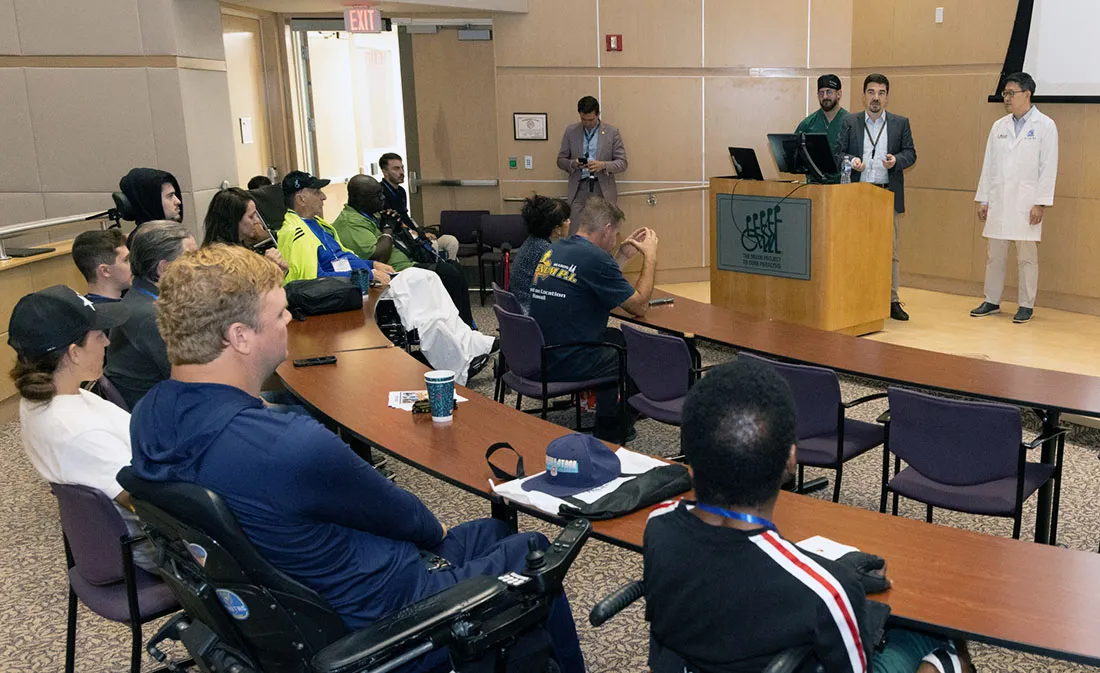 Dr. Matija Milosevic spoke about intent-driven neuromodulation at the open house.
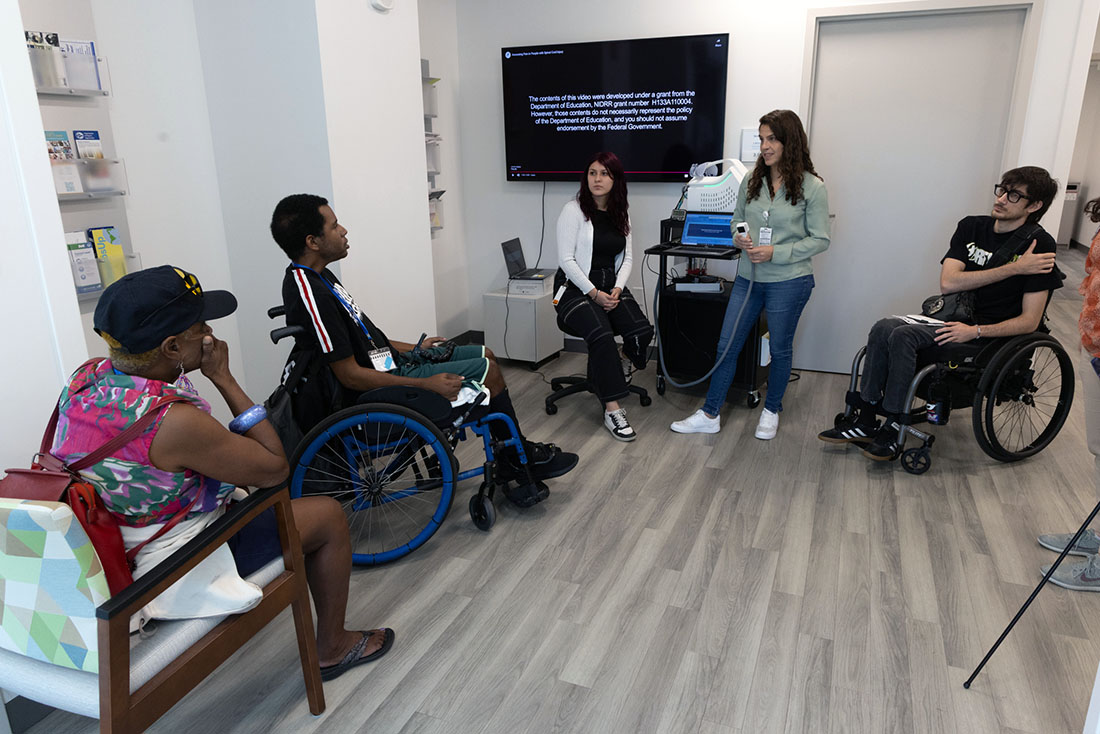
The open house’s second site, the Christine E. Lynn Rehabilitation Center, provided an immersive experience through a series of laboratory demonstrations, including:
• Gary Farkas, Ph.D., a Miller School research assistant professor of physical medicine and rehabilitation, showcased his research on the gut-brain axis, shedding light on the intricate connections between the digestive system and neurological function.
• James Guest, M.D., Ph.D., a professor of neurological surgery at the Miller School, discussed spinal cord stimulation aimed at restoring hand and arm function.
• Elizabeth Felix, Ph.D., a research professor of physical medicine and rehabilitation at the Miller School, presented research on quantifying sensory perception, which is critical for developing better diagnostic tools and therapeutic interventions for sensory disorders.
• Eva Widerstrom-Noga, Ph.D., a Miller School professor of neurological surgery, showcased innovative interventions for pain management, focusing on bodily illusion techniques that alter the perception of pain through visual and sensory manipulations.
Tags: brain-computer interface, Dr. Elizabeth Felix, Dr. Gary Farkas, Dr. Jae Lee, Dr. James Guest, Dr. Matija Milosevic, Dr. W. Dalton Dietrich III, Eva Widerstrom-Noga, Neuralink, neuromodulation, spinal cord injuries, The Miami Project to Cure Paralysis