
ORLANDO, Fla. — You might not expect to find fresh produce growing where you work or where you stay on vacation, but that’s exactly what’s happening at some Central Florida companies.
What You Need To Know
Hotels, hospitals and small businesses across Central Florida are growing food right on their property
Companies say on-site farming cuts supply chain risks and delivers fresher meals
High-tech container farms are producing hundreds of pounds of produce each week in a small footprint
The trend extends from large institutions to home growers, reflecting a growing slow-food movement
Businesses are transforming rooftops, courtyards, parking lots, and unused land into working farms, growing their own food to reduce reliance on suppliers and serve fresher meals.
At the JW Marriott Grande Lakes in Orlando, guests are often eating produce grown just steps from where they’re staying.
Farmer-in-residence Leslie Wilber oversees the hotel’s on-site farm, where a wide variety of crops are grown throughout the year.
“I’m currently growing a lot of leaf lettuce. Leafy greens, seasonal greens. But I also grow garnishes,” Wilber said.
The farm produces organic fruits, vegetables and spices in neatly separated planter boxes, creating a working farm in the middle of a resort.
Wilber said harvests happen frequently.
“And I’m harvesting three to four times a week,” Wilber said.
That food travels just 120 steps from the garden to the kitchen, where chefs say freshness and reliability make a big difference.
“You know, we really embrace the farm-to-table, the slow food movement,” said Graeme Little, executive chef at JW Marriott Grande Lakes.
The hotel serves about 200 meals in one restaurant alone, with roughly 90% of dishes incorporating farm-grown ingredients.
“We have squashes, tomatoes, eggplant, zucchinis, arugula, spinach. We have a lot,” Little said.
The Marriott is not alone.
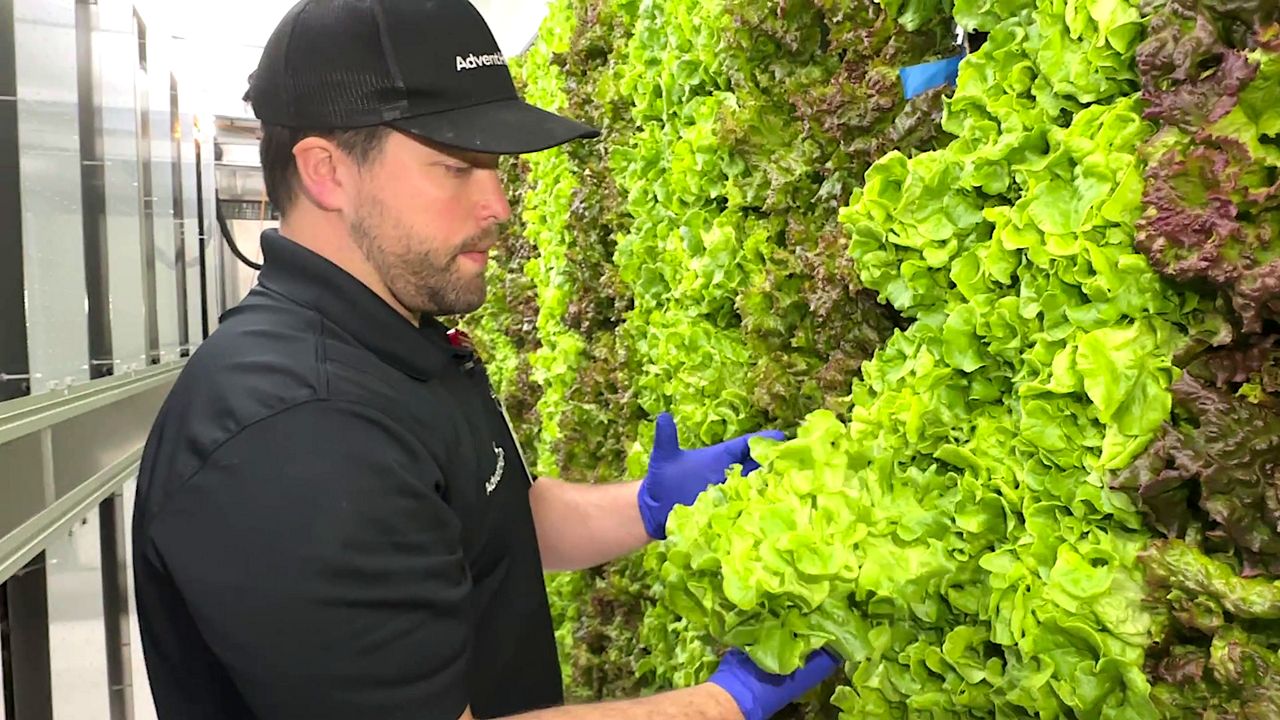
At AdventHealth, high-tech shipping containers are being used as vertical farms, producing fresh food for hospitals across Central Florida.
“We grow a majority of all of our herbs, lettuce, and different produce for the hospitals,” said Sean Toor, operations manager of the container farm at AdventHealth.
Using a fraction of the space required for traditional farming, each container produces about 600 pounds of food per week.
“So, this is a way that we only take up roughly nine parking spaces but grow as much produce as a 9-acre traditional agricultural farm,” Toor said.
By controlling the environment, Toor said the farms eliminate the need for pesticides, and protect crops from weather disruptions.
Crops are grown vertically and moved like large filing cabinets, making harvesting fast and efficient.
Sunlight and watering are controlled through an app, helping ensure a consistent supply.
“So, this is used for six of our hospitals here in the Central Florida Division, which feeds patients, employees, physicians,” Toor said.
The push to grow food closer to home is also gaining traction at the consumer level.
Joseph and Kat Longhany of Plant Prana Wellness are betting on microgreens, growing and delivering them fresh to customers while promoting home-growing kits.
“Upwards of 10,000-plus studies on microgreens, and they continue to point us in this direction as some of the most nutritionally dense, powerful foods we can eat,” said Joseph Longhany, company owner.
Microgreens are young vegetable or herb plants harvested just after sprouting, and the couple believes nutrition should be a bigger focus nationwide.
“So, this is a great way to incorporate more vegetables into their diet,” said co-owner Kat Longhany. “They grow them, and they’re able to sprinkle them on their food. And some people call them veggie sprinkles. So, it’s a really fun way to get their vegetables,”
Whether it’s farm-to-table hotels, freight farms at hospitals, or microgreens grown at home, the slow-food movement is showing up across Central Florida as more people and businesses rethink where their food comes from and how close to home it can be grown.