
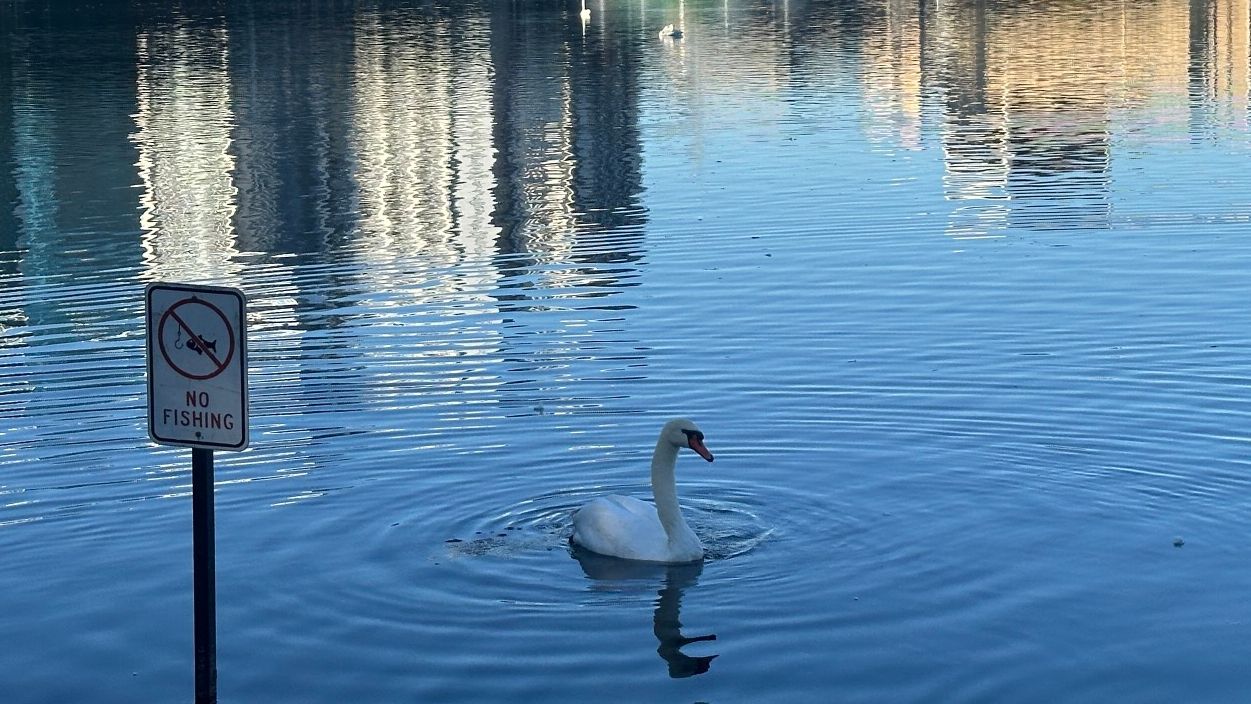
ORLANDO, Fla. — An official with the city of Orlando confirmed that the 21 birds near Lake Eola that were discovered dead in December died from avian influenza on Monday. Of those, 19 were identified as Royal Mute swans.
What You Need To Know
Of a total of 21 bird deaths, 19 have been identified as Royal Mute swans
Lake Eola birds’ cause of death was identified by professionals as avian influenza
Avian Influenza can be transferred to humans, but it is extremely rare
The City of Orlando has issued signs around Lake Eola Park for public safety
City staff first discovered the deaths on Dec. 17, and officials, along with local veterinarian experts and the Florida Fish and Wildlife Conservation Commission (FWC) came to the conclusion that the birds tested positive for avian influenza.
Orlando Public Information Officer Andrea Otero said that the city has disinfected “multiple surfaces” of Lake Eola Park, and will continue to do so. In addition, the city is placing warning signs around the area, urging residents and visitors of the potential danger.
Avian influenza can be spread to humans, although it is considered extremely rare.
Officials urge park visitors to avoid direct contact with the birds at the park, and also to avoid contact with any bird excrement they may find in the area.
Additionally, visitors are urged to wash their shoes or bike tires after visiting the park to limit the possibility of spreading avian influenza.
Orlando City Commissioner Patty Sheehan said that because the deaths happened over the holidays, officials had not been able to confirm the cause of death, but now they are working to determine what happened.
“It is likely this could be another avian flu outbreak, although we can’t be certain until tests are completed. We do not believe the deaths are suspicious. The deceased birds will be examined as soon as possible,” Sheehan said on Sunday.
For many locals and visitors, the swans swimming at Lake Eola Park are the highlight of downtown Orlando.
“They are absolutely divine when you’re doing that long walk and a couple of laps around the lake; it’s always nice just to see that beautiful movement of the swans interacting with one another and sometimes the babies,” Orlando resident Jennifer Garnett said.
The last avian flu outbreak at Lake Eola happened in February 2024, leaving 15 swans dead.
Sheehan said that this time most of the dead swans were either young or recent additions to the lake’s swan population – and only the mute swans appeared to be impacted.
“We have trumpeters, woofers, black necks, Australian blacks and Polish mutes. The last avian flu outbreak impacted all of the swans. This time it’s only the mutes,” Sheehan said.
She also reaffirmed that Lake Eola was still safe to visit while the investigation is underway.
“It is safe to come to Lake Eola Park. If you have concerns again, stay on the walkways. Don’t walk in the areas where the swans are walking. If you get poop on your shoes, clean it off,” she said.