
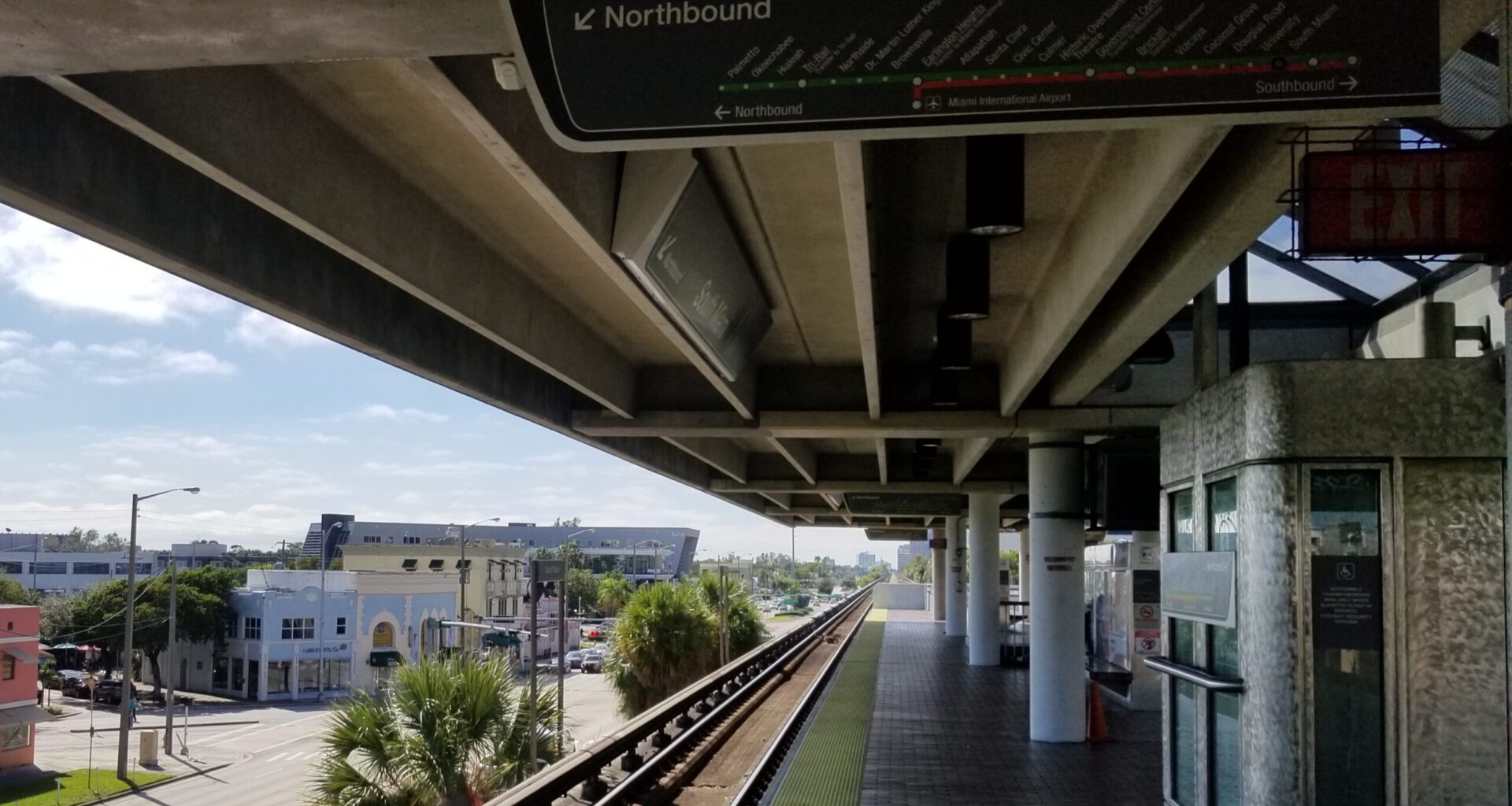
The cost to build a long-planned heavy rail line from downtown Miami to Hard Rock Stadium has nearly doubled in the past year, with the Florida Department of Transportation (FDOT) now estimating a price tag of $4.2 billion.
As planning continues, the state is no longer offering a construction start date or projected completion timeline for the North Corridor, one of six components of Miami-Dade County’s SMART Program.
The proposed 10-mile elevated rail line, which would run along Northwest 27th Avenue with eight stations and seven park-and-ride facilities, was estimated to cost $1.9 billion as recently as last May — a years-old price point.
By December, that figure rose to $2.2 billion. Last month, it jumped again after planners added a light maintenance facility at the north end of the route.
Miami Today first reported on the magnitude of the cost increase and the resulting shift in funding assumptions.
Rising costs have also sharply worsened the project’s cost-effectiveness metrics. The cost per passenger trip is now projected at $54.47, placing the project well below the Federal Transit Administration’s threshold for favorable ratings for federal construction funding. Projects costing $35 or more per trip typically receive low ratings, making it harder to secure federal dollars. High ratings are awarded to trips under $8.
Planning for the corridor has been plagued by delays. State studies were paused for more than two years after Miami-Dade County halted a public-private partnership effort in 2022, forcing analyses to be refreshed once the project returned to public control.
The Citizens’ Independent Transportation Trust, which oversees county transit sales tax revenues, has been briefed repeatedly on shifting timelines and costs.
To limit expenses, FDOT plans to place rail piers in the center of Northwest 27th Avenue to reduce property acquisition and to locate the maintenance facility on an existing county-owned site near the Turnpike.
With costs continuing to escalate, the state is now exploring phased construction, beginning downtown and extending north incrementally, to improve financial feasibility and strengthen the project’s chances of securing federal funding.
Miami-Dade adopted the Strategic Miami Area Rapid Transit (SMART) Program — originally called the SMART Plan — in April 2016 to study, secure funding for, and develop mass transit solutions for six high-volume commuting corridors countywide.
So far, just one of the program’s six routes — the upgraded 20-mile South Dade Transitway, which runs from Kendall to Florida City along a dedicated busway adjacent to U.S. 1 — has been fully funded and completed.
That corridor opened in October. It cost approximately $368 million — $100 million of which came from the federal government, with another $100 million from the state, not counting an additional $96 million for a fleet of 60 electric buses.
Other routes eyed for improvements include the Beach Corridor from Miami to Miami Beach, the East-West Corridor from the Miami Intermodal Center to Tamiami Station, the Northeast Corridor between Miami and Aventura on Brightline-owned tracks and the Kendall Corridor between Dadeland and Krome Avenue just east of the Everglades.