
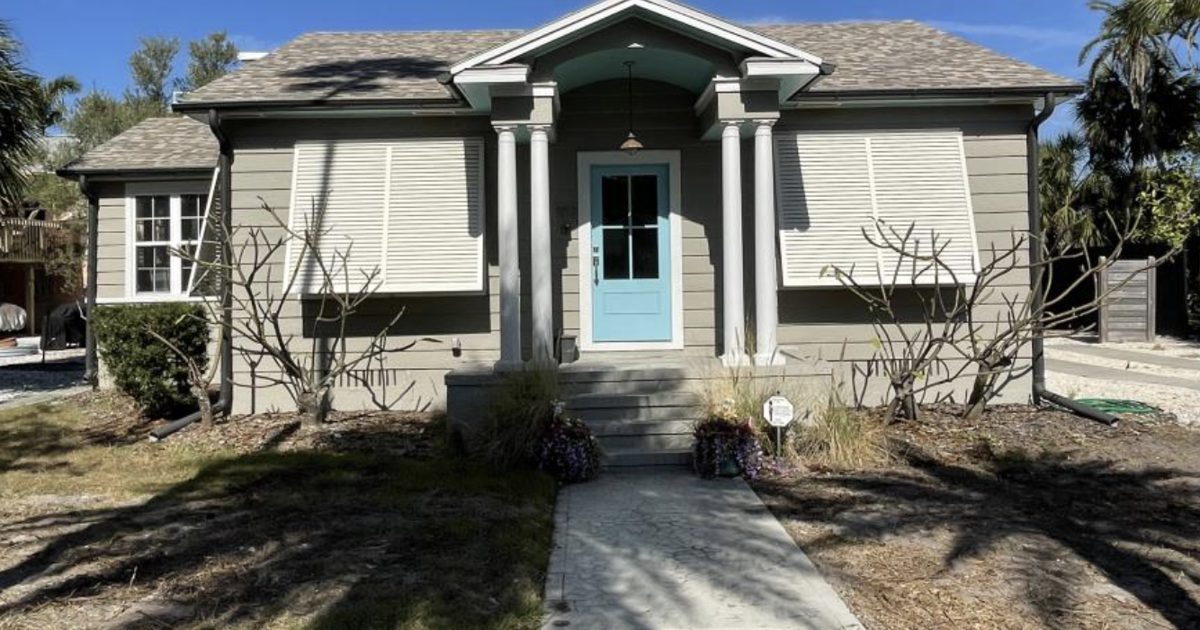
ST. PETE BEACH — Time and money have doomed a plan to replace the hurricane-damaged shuffleboard clubhouse at Pass-A-Grille Park with a donated historic home.
A homeowner offered to donate a two-bedroom, 1,440-square-foot wood frame house built around 1925 to replace the clubhouse destroyed by hurricanes Helene and Milton. But the house had to be moved by January — far too soon for a project city staff estimated would take 14 months to complete.
City Manager Fran Robustelli told commissioners last month the donated house would require moving it by trailer from 24th Avenue to the park at Ninth Avenue and Pass-A-Grille Way. The 1,440-square-foot structure would replace a 429-square-foot shuffleboard clubhouse, consuming more than 1,000 additional square feet.
“We have several trees in the park which may have to be removed if it cannot fit within the park footprint,” Robustelli said.
The city has $177,000 earmarked for replacing the shuffleboard building — $177,000 from insurance and its Capital Improvement Fund. Staff estimated it would cost $193,000 to rebuild the original clubhouse and $8,000 to demolish what remains.
But moving the donated house would cost an estimated $652,000 in today’s dollars, Robustelli said, citing a similar 2022 Sarasota project that cost $425,613 and took two years of planning plus a year to complete. That project was overseen by Public Works Director Camden Mills, who now works for St. Pete Beach.
The relocated house would also cost an additional $12,000 annually to insure, Robustelli said. Staff found more than a dozen signs and utilities along the moving route that would need to be removed and replaced.
Other complications: The house would need local historic designation and a Certificate of Appropriateness from the Historic Preservation Board before moving. It would require an engineering inspection to determine its condition and whether relocation was feasible. And it would need to be brought up to ADA standards for public use — a process that could take two years after the move.
“We don’t know if we moved the house to a temporary location what that would entail in the way of rental fees, insurance, property acquisition and how the city would pay for the funding shortfall,” Robustelli said.
Commissioner Jon Maldonado, whose district includes all of Pass-a-Grille, said the 14-month timeline “would break my pledge to the (house) owners that we would not do anything to impact their new rebuild.”
He said community support “started out pretty strong, people were very passionate about the story and this wonderful connection to the shuffleboard club. But as time went on and as fiscal realities started to set in, we quickly realized that this is something that we’re going to have to reconsider and learn from.”
“Unfortunately, time was the biggest impediment,” Maldonado said. “We don’t have the comfort of time to do that right now.”
He said he “could not stomach or justify spending $425,000. … The reality is this is not something we can get behind as a district.”
Commissioner Betty Rzewnicki said she initially heard favorable comments that gave way to questions about cost and priorities. She asked whether the $177,000 allocated for the shuffleboard building could help rebuild Merry Pier instead.
Robustelli said both projects draw from the General Fund and insurance proceeds, so the commission could reallocate the money.
Commissioner Lisa Robinson said she was “saddened by not being able to save a historic home.”
“I think it’s imperative that we do save as many of our historic homes here on the beach, for sure,” Robinson said. “Unfortunately, timing on this just doesn’t appear to work and again the finances.”
She urged residents planning to tear down historic homes to consider donating them to the city instead.
Maldonado noted the island lost 30 historic homes this year.
“It’s death by a thousand cuts,” he said.
But he offered “one silver lining” — a resident may acquire the house privately and relocate it within St. Pete Beach, potentially saving it from demolition.