
Downtown Orlando is set to undergo significant changes as the city implements new development projects aimed at improving traffic flow and enhancing the area’s walkability, as detailed in the Orlando Downtown Action Plan presented Thursday night at the Orlando Public Library.Residents, business leaders, and visitors learned about five projects designed to make downtown Orlando more walkable, picturesque, and business-friendly.The first phase of the Magnolia Avenue Roadway Improvement project, stretching from South to Livingston Streets, is scheduled to begin in early February.The project aims to convert the roadway from one-way to two-way traffic and remove designated Lymmo bus lanes to create a more functional corridor for vehicle traffic, according to project manager Jerry Washington.The Church Street reconstruction is set to start in April or May, also transitioning from a one-way to a two-way system.David Barilla, executive director of the city of Orlando Downtown Development Board and CRA, said, “In some areas, it’s been able to have business in two-way areas increase their profits by 50 percent just by the city made a change in how traffic flowed, that same contact has shown to decrease crime by 50 percent as well because now you have eyes looking on both sides of the street.”However, resident and preservationist Jeff Thompson expressed concerns about the removal of historic brick streets, emphasizing their cultural significance to Orlando.”They’re significant culture to Orlando. The first thing women ever got to vote on in the city was, I want bricks. I’m tired of my dress getting dirty in the dirty streets,” Thompson said.Additional projects include enhancements at 30 South Orange, where the old Quiznos was located, and the Lake Eola Gateway, which will feature more greenery, benches, and lighting.This includes the demolition of the five-story City Center Building at 205 East Central, which Barilla said “allows us to get that grand entrance way into Lake Eola.”Thompson also voiced concerns about the historic home next to the City Center Building, suggesting it could be repurposed as a restaurant.”It would be a shame to lose it that could so easily be repurposed as a great restaurant,” he said.The Canopy, a 9-acre area between south of Church Street and north of Central under I-4, will also see significant improvements.All projects are funded by the Community Redevelopment Agency with a funding package of less than $160 million, which includes other major projects such as two-way road conversions at Orange and Rosalind avenues.
ORLANDO, Fla. —
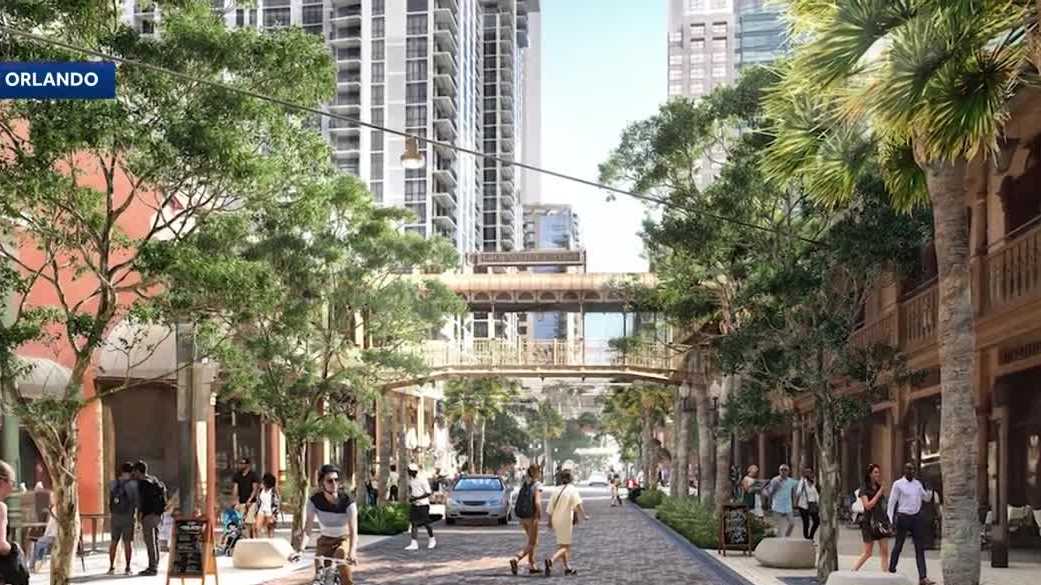
Downtown Orlando is set to undergo significant changes as the city implements new development projects aimed at improving traffic flow and enhancing the area’s walkability, as detailed in the Orlando Downtown Action Plan presented Thursday night at the Orlando Public Library.
Residents, business leaders, and visitors learned about five projects designed to make downtown Orlando more walkable, picturesque, and business-friendly.
The first phase of the Magnolia Avenue Roadway Improvement project, stretching from South to Livingston Streets, is scheduled to begin in early February.
The project aims to convert the roadway from one-way to two-way traffic and remove designated Lymmo bus lanes to create a more functional corridor for vehicle traffic, according to project manager Jerry Washington.
The Church Street reconstruction is set to start in April or May, also transitioning from a one-way to a two-way system.
David Barilla, executive director of the city of Orlando Downtown Development Board and CRA, said, “In some areas, it’s been able to have business in two-way areas increase their profits by 50 percent just by the city made a change in how traffic flowed, that same contact has shown to decrease crime by 50 percent as well because now you have eyes looking on both sides of the street.”
However, resident and preservationist Jeff Thompson expressed concerns about the removal of historic brick streets, emphasizing their cultural significance to Orlando.
“They’re significant culture to Orlando. The first thing women ever got to vote on in the city was, I want bricks. I’m tired of my dress getting dirty in the dirty streets,” Thompson said.
Additional projects include enhancements at 30 South Orange, where the old Quiznos was located, and the Lake Eola Gateway, which will feature more greenery, benches, and lighting.
This includes the demolition of the five-story City Center Building at 205 East Central, which Barilla said “allows us to get that grand entrance way into Lake Eola.”
Thompson also voiced concerns about the historic home next to the City Center Building, suggesting it could be repurposed as a restaurant.
“It would be a shame to lose it that could so easily be repurposed as a great restaurant,” he said.
The Canopy, a 9-acre area between south of Church Street and north of Central under I-4, will also see significant improvements.
All projects are funded by the Community Redevelopment Agency with a funding package of less than $160 million, which includes other major projects such as two-way road conversions at Orange and Rosalind avenues.