
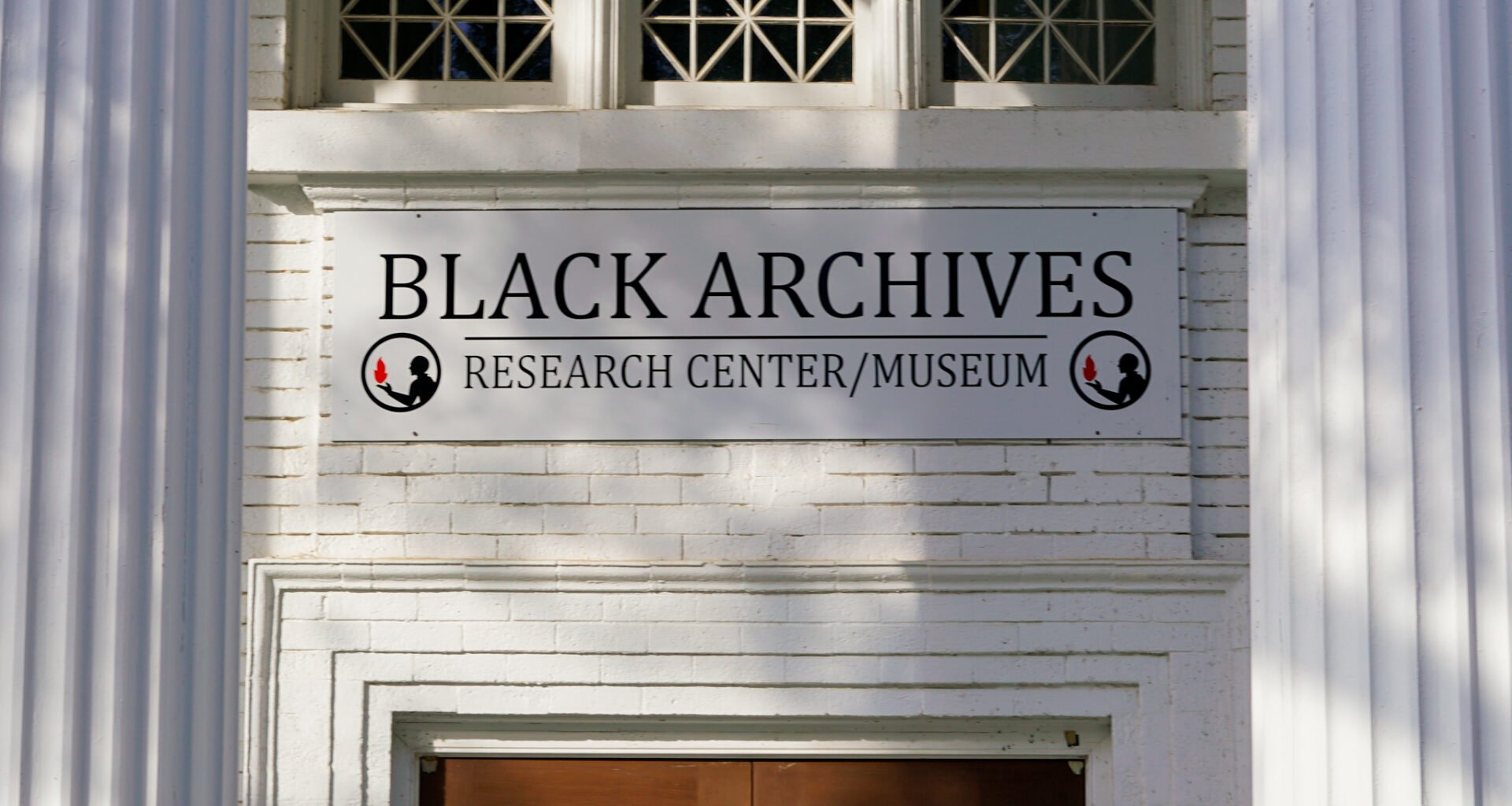
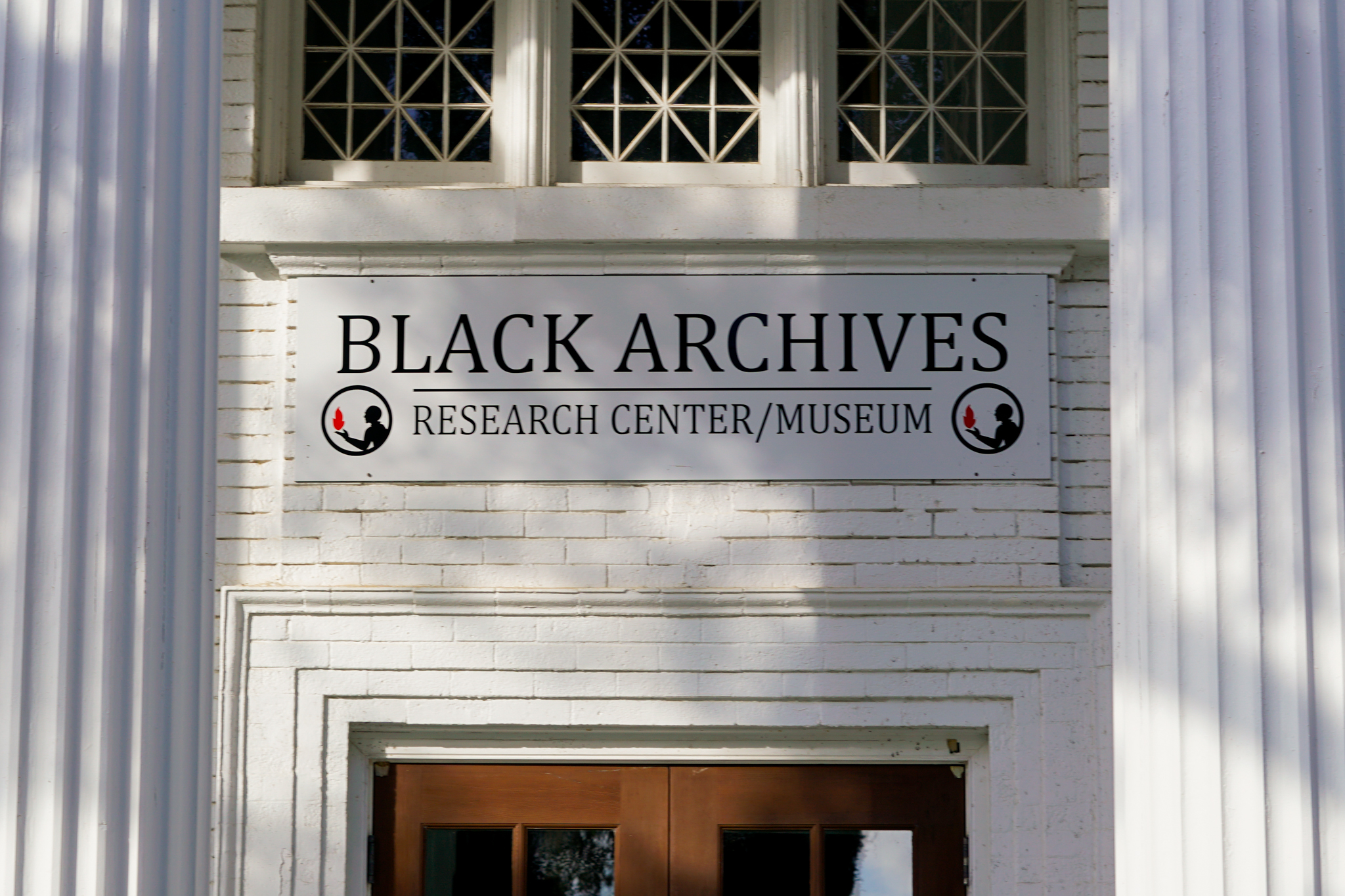
 Front entrance of the Meek-Eaton Black Archives. (Khalil-Lullah Ballentine/The FAMUAN)
As national debates over race, education and identity grow, Florida A&M University’s Meek-Eaton Black Archives remains a vital institution for preserving African American heritage and culture.
Located inside the historic Carnegie Library on FAMU’s campus, the Black Archives houses thousands of photographs, documents and artifacts that detail the Black experience in Florida and beyond. Students say its presence is more important now than ever.
“Having the Black Archives on campus is very important for students today and students to come because it keeps our history alive,” said Victoria Edwards, a fourth-year FAMU student. “If we don’t, then who will?”
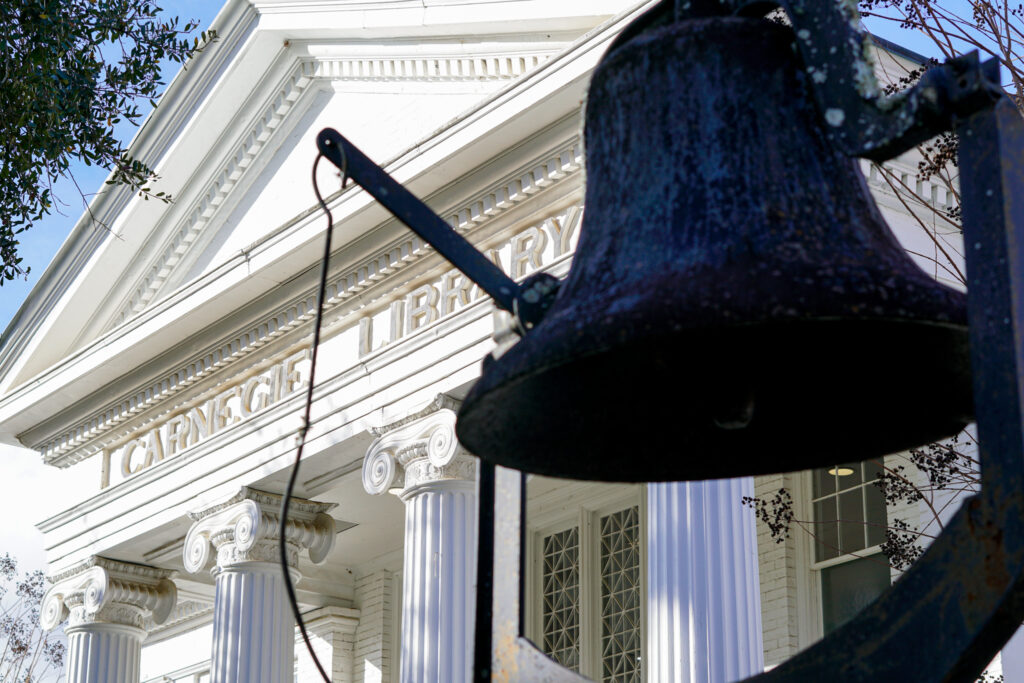 The historic Carnegie Library houses the museum. (Khalil-Lullah Ballentine/The FAMUAN)
A 2024 report by PEN America found more than 40 states have introduced or passed legislation since 2021, limiting how educators can teach about race, gender and systemic inequality. Florida has been a leading state in this trend, with policies that critics say downplay or erase key parts of Black history. The report also notes that many educators and institutions have avoided certain subjects altogether out of fear of violating vague or politically charged restrictions.
William Jiles, director of the Division of Journalism at FAMU, agreed that current political climates have had a chilling effect on education. He said many teachers now feel pressured to avoid certain topics, even when they know those lessons are necessary.
“A lot of people know what is right, but they are afraid of retribution,” Jiles said. “They have families to feed. So, they just go along with it.”
Jiles added that censoring Black history risks leaving future generations with an incomplete or distorted understanding of the country’s past.
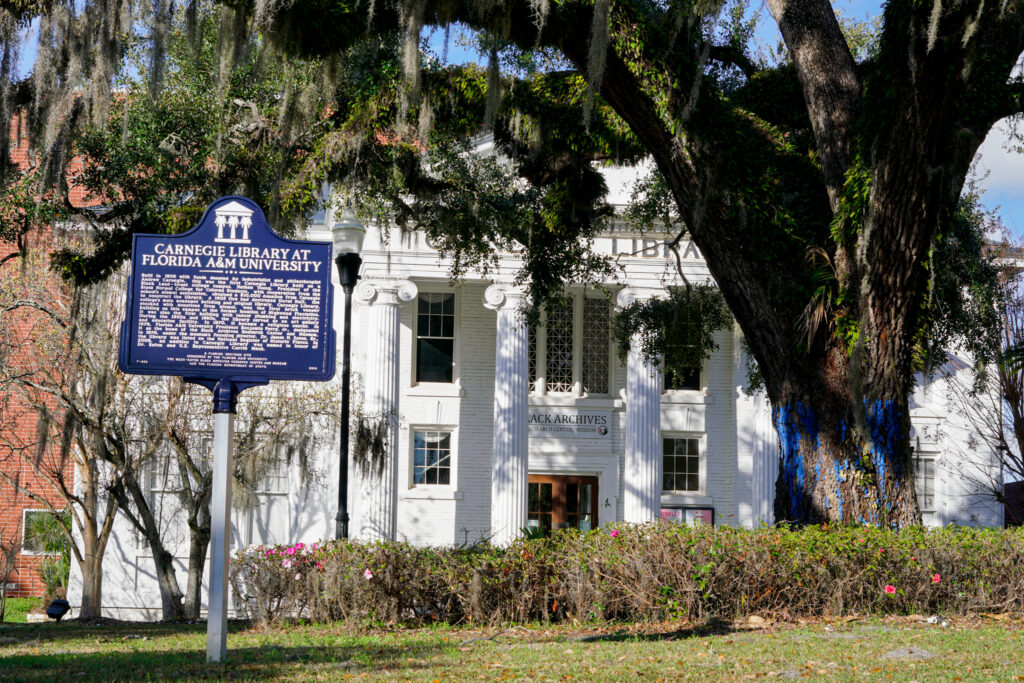 A sign on campus details the history of the Carnegie Library at Florida A&M University. (Khalil-Lullah Ballentine/The FAMUAN)
“In American history, there is good and bad,” he said. “If you only focus on the good, people are not going to learn the full story.”
Black cultural institutions across the country face similar challenges. A June 2024 Associated Press report highlighted concerns that the national backlash against diversity, equity and inclusion could threaten funding sources. Leaders worry that organizations dedicated to Black history may see reduced support at a time when their work is most needed.
Timothy Barber, director of the Meek-Eaton Black Archives, said the institution is not immune to the growing pressure, both politically and financially. He noted that Black cultural institutions are often the first to experience funding cuts and receive minimal support compared to their non-Black counterparts.
“There is always an attack on institutions like ours,” Barber said. “We are always the lowest-funded institutions. We are the first to get cut.”
He emphasized that institutions like the Black Archives play a critical role in protecting historical truth in a digital world where misinformation is easy to spread.
“With social media and AI, it’s easy to manipulate information,” Barber said. “The archives hold the primary sources.”
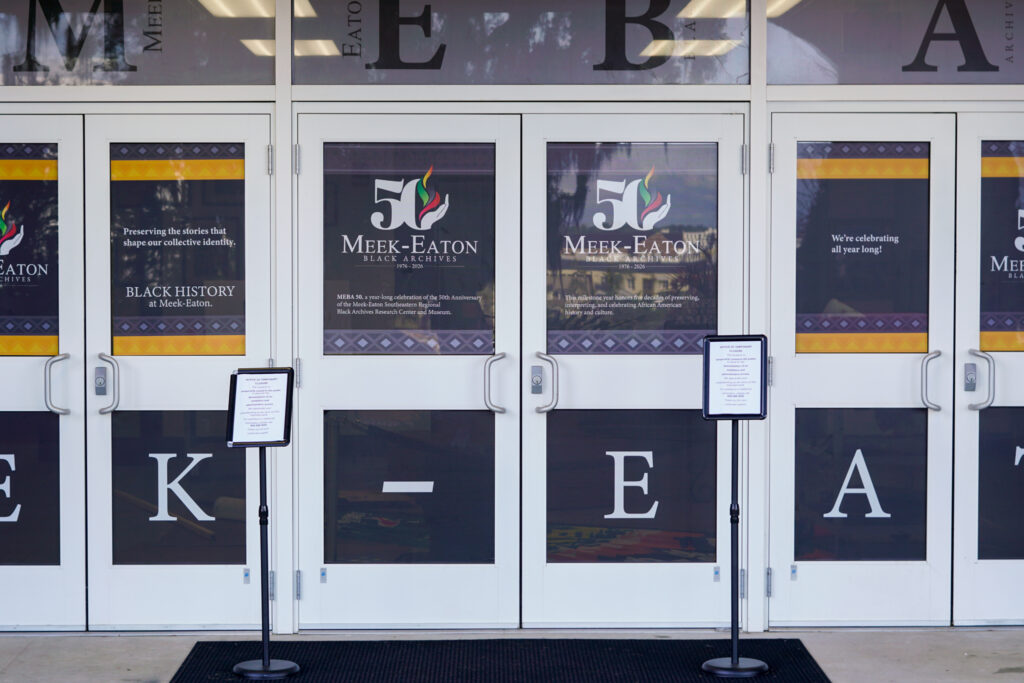 North entrance of The Meek-Eaton Black Archives. (Khalil-Lullah Ballentine/The FAMUAN)
Victoria Edwards, a fourth-year student at FAMU, shared the concern that future students may forget the Black Archives even existed.
“My fear is that one day students will walk past that building and say, ‘I wonder what that was,’ and have zero knowledge,” she said.
Barber remains committed to ensuring the Black Archives continues to educate and empower. Through rotating exhibits and community outreach, he hopes to make it a space that people return to often.
“We don’t want to feed people the history,” he said. “We want them to come in, experience it, and find out the truth on their own.”